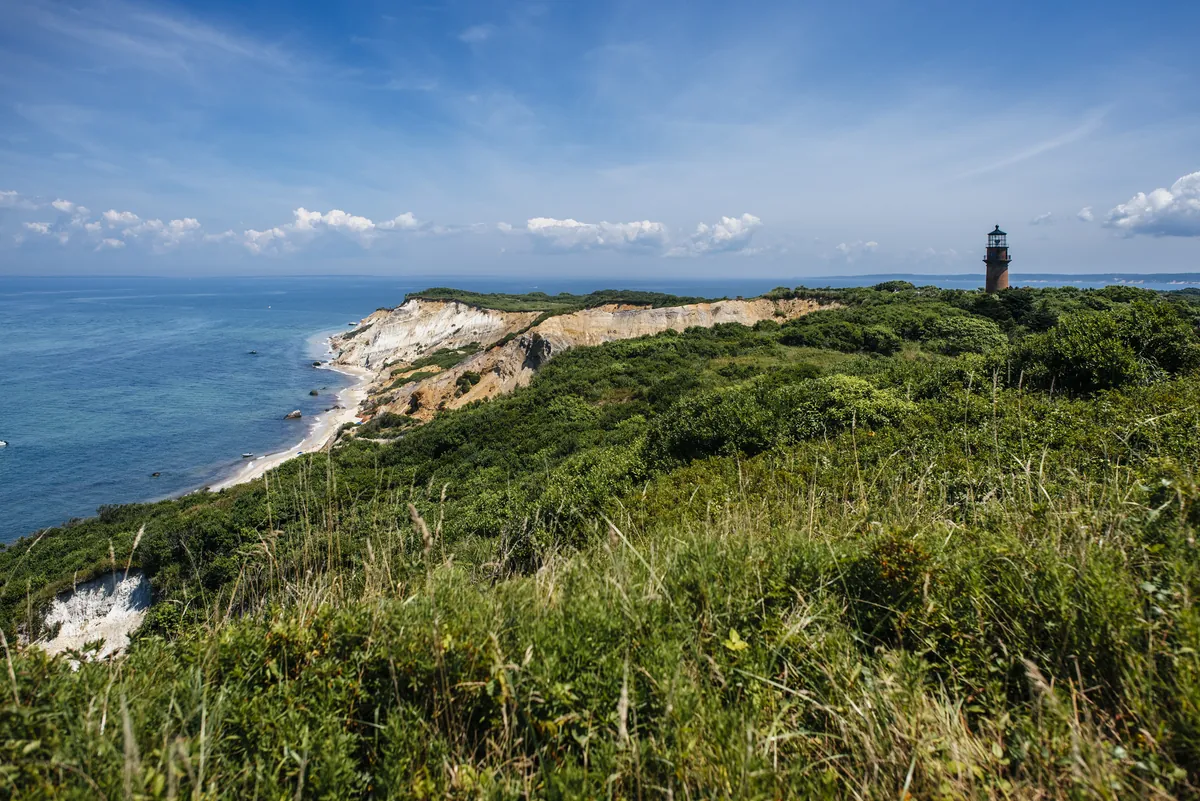
Cape Cod is an accident of ice. The glacier that covered New England retreated past the Cape by about 18,000 years ago and left behind a curved arm of terminal moraine and outwash plain jutting 65 miles into the Atlantic — thin-soiled, exposed on three sides to open ocean, geologically young enough that Provincetown itself is still forming, built from sediment eroded off the outer shore and carried by longshore drift to the peninsula's tip. The land is temporary. It will be underwater again, eventually. What happened here in the meantime is the story.
The Wampanoag had been working this peninsula for centuries before any European named it — farming its thin soils, managing its forests with controlled fire, living from the sea. They knew what the land could and couldn't bear, and they helped the Pilgrims survive at Plymouth after the arrival in the fall of 1620. In 1602, Bartholomew Gosnold gave the tip a name — Cape Cod, the ninth-oldest English place-name in the country — and in November 1620 the Pilgrims made their first landing near Provincetown. Sandwich was founded in 1637, Barnstable and Yarmouth in 1639. The Wampanoag lost their lands through cession and violent conflict as settlement pressed in; those who remained organized as the Mashpee Wampanoag Tribal Council in 1974 and won federal recognition in 2007.
The settlers cleared what the Wampanoag had managed carefully. They burned timber for heat — ten to twenty cords a home each winter — and grazed merino sheep on the coastal dunes. By the time Henry David Thoreau walked the Cape on four visits between 1849 and 1857, trees were scarce and the denuded sands were burying cultivated fields and fences. The land that couldn't sustain farming produced fishermen and whalers instead. The Industrial Revolution, which required waterpower the Cape lacked, largely bypassed it — so the Cape developed as a fishing and whaling center. Geography that foreclosed one path opened another.
What that economy left behind was a coastline and a character. Guglielmo Marconi made the first transatlantic wireless transmission originating in the United States from Wellfleet; in 1914 he began construction of a receiving station in Chatham that would communicate with ships at sea under the callsign WCC, supporting Amelia Earhart, Howard Hughes, and Admiral Byrd. The beach below Marconi's Wellfleet bluffs now bears his name. In 1961, President Kennedy — whose family compound sat in Hyannis Port — signed the legislation creating the Cape Cod National Seashore, protecting 40 miles of Atlantic-facing coast already slated for housing subdivisions. Edward Hopper owned a summer house in Truro and painted the Cape through the 1930s. Henry Beston spent a year in a cottage in Eastham and published *The Outermost House* in 1928. Provincetown became an art colony, then one of the largest LGBT resort communities in the country. The Cape Cod Baseball League, sanctioned as a collegiate circuit in 1963, became the proving ground where MLB scouts find future players each summer.
What the Cape made, ultimately, is a particular kind of American place — one where the summer ritual runs so deep it becomes inheritance. Families return to the same rental, the same fish shack, the same gate-kept stretch of beach, year after year. The year-round population of roughly 220,000 holds the highest average age in New England. The land keeps eroding, Provincetown keeps growing from deposited sand, and the two bridges remain the lifeline in and out. The impermanence was always the point.