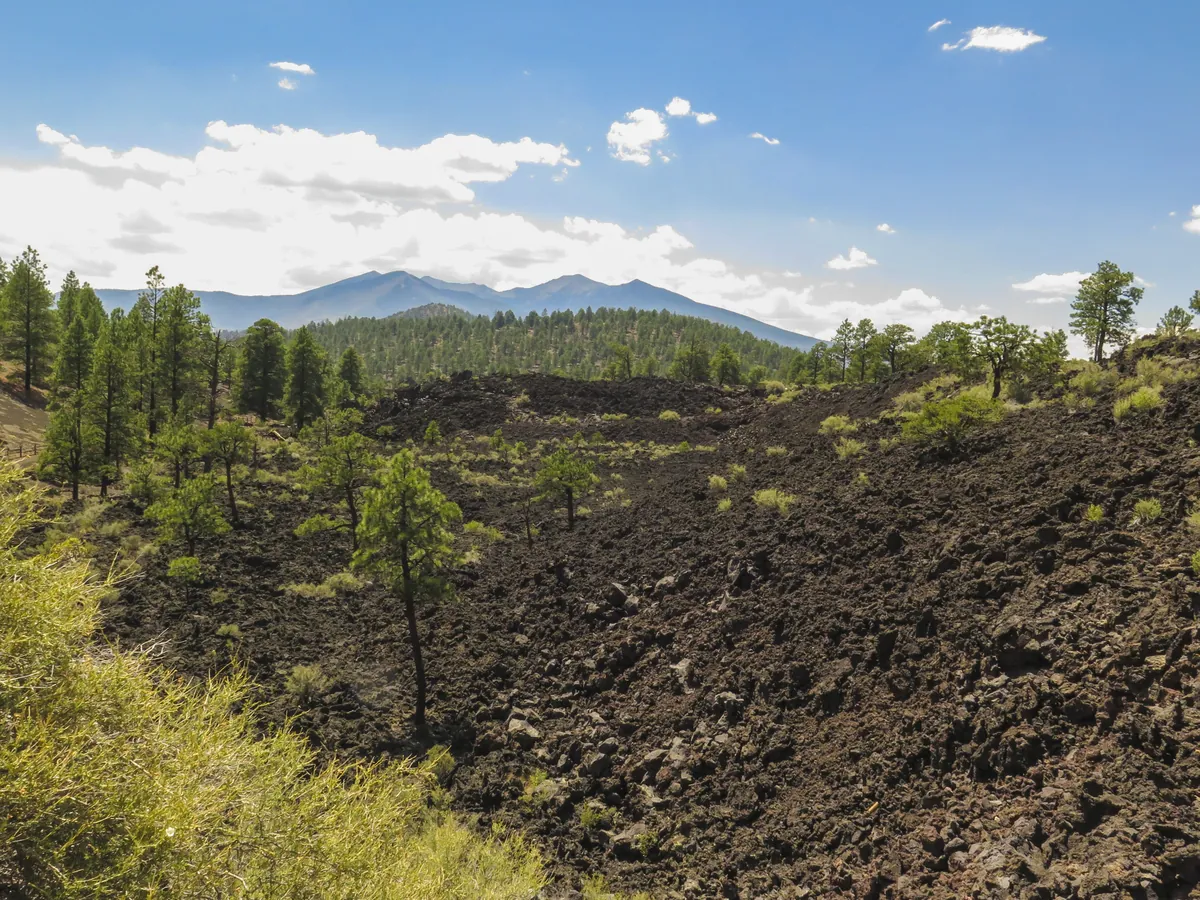
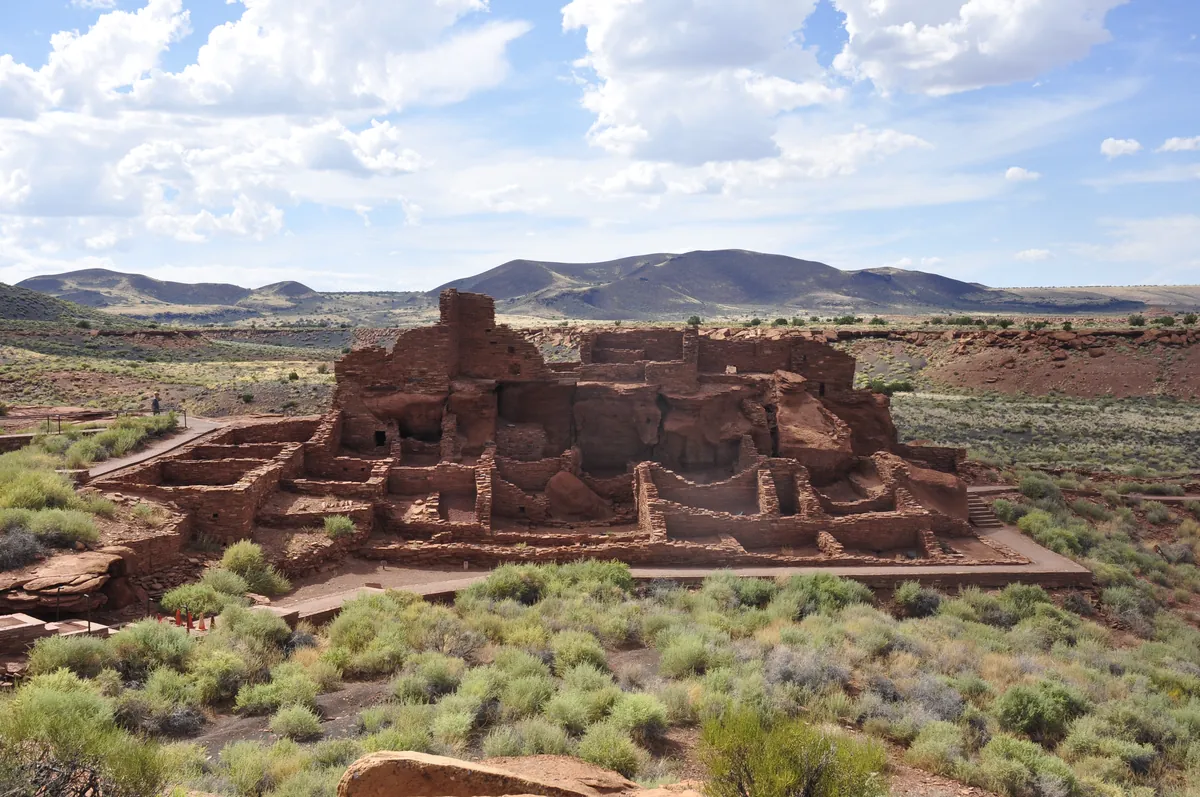
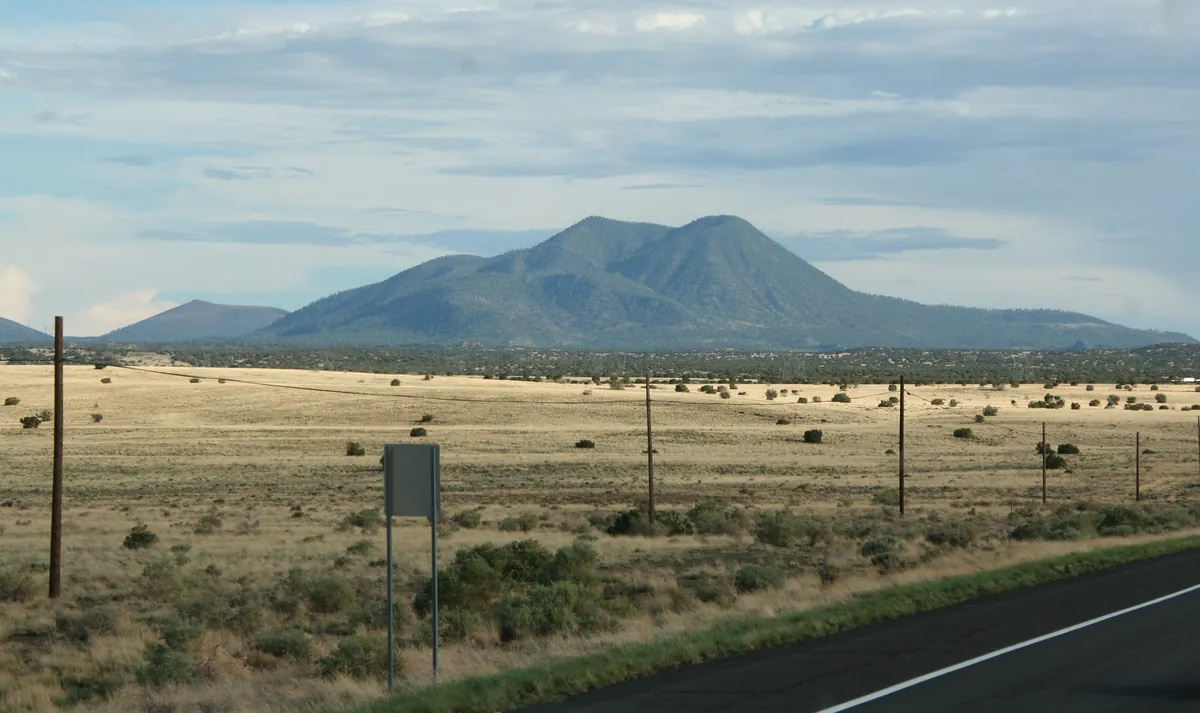
Around AD 1085, the ground north of what is now Flagstaff tore open, building a 340-meter cinder cone and burying more than 2,100 square kilometers in ash. That ash enriched the soil, and the Sinagua people — temporarily displaced — returned to farm it. Wupatki Pueblo rose to more than 100 rooms nearby, and the northernmost ballcourt ever found in North America appeared on what had been marginal land. By 1225, Wupatki was abandoned. The San Francisco Peaks, remnant of an older stratovolcano, still stand north of the city; the Navajo call the range Dookʼoʼoosłííd, and the Hopi regard it as home of the katsinam. An aquifer within the caldera now supplies much of Flagstaff's water. The eruption didn't end settlement here — it made it possible, and the land it shaped is still doing the same work.