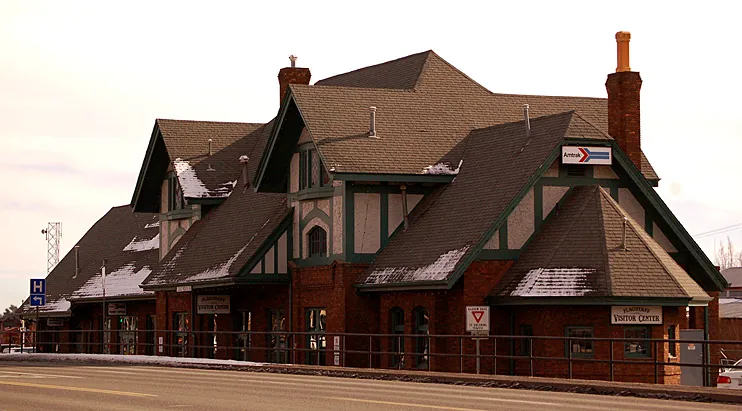
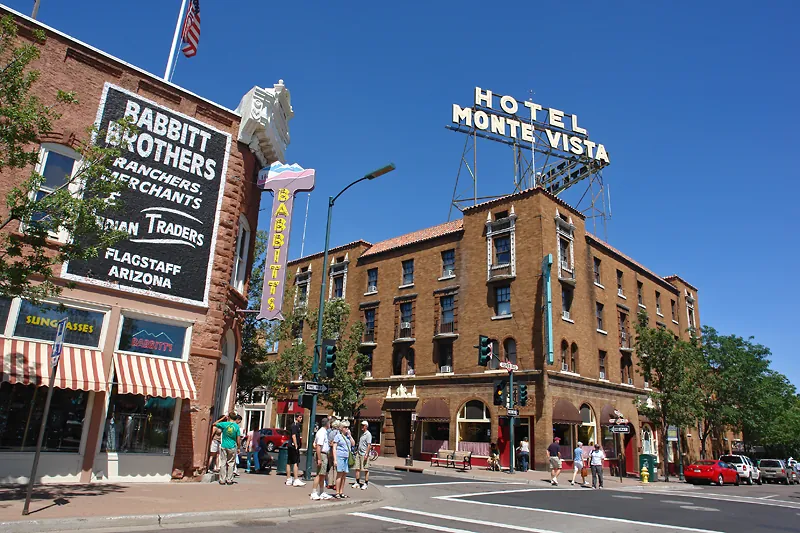
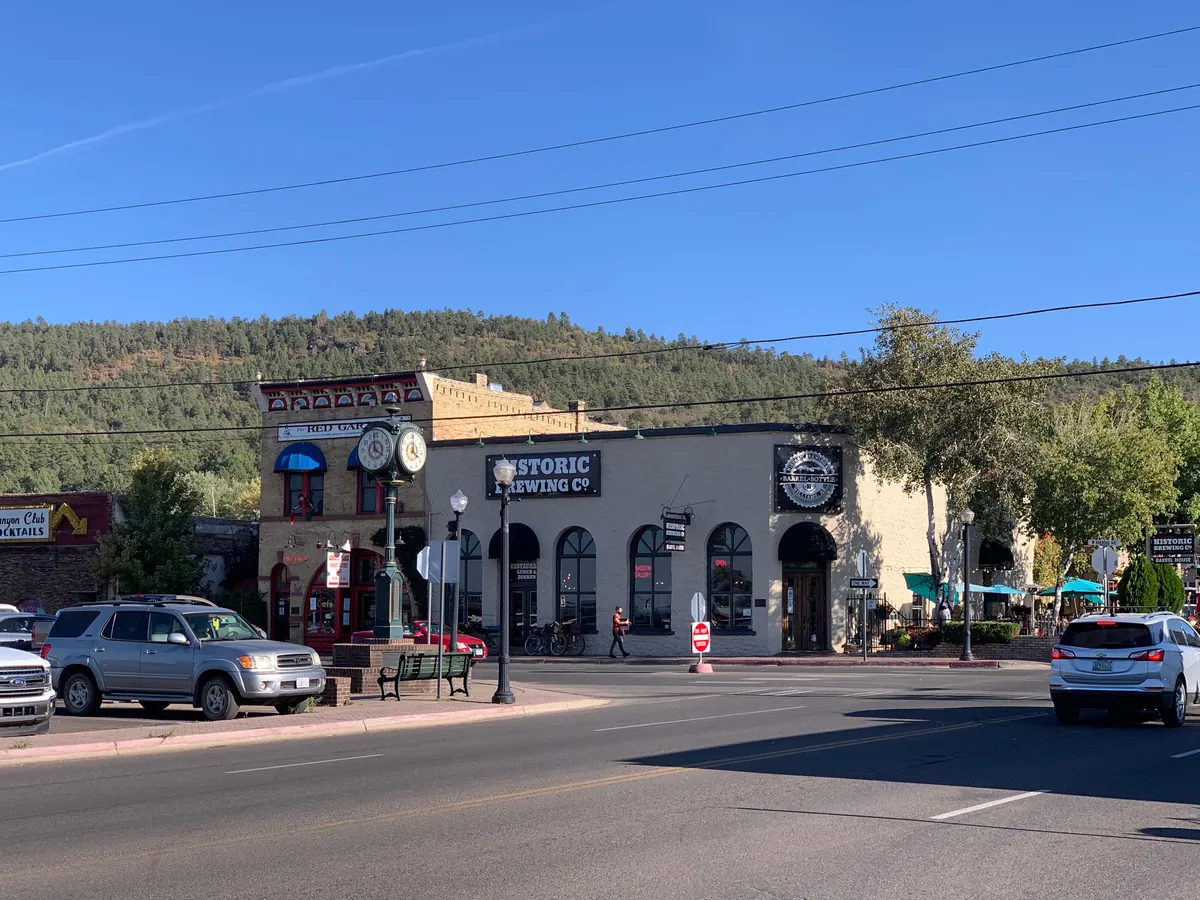
Local businessmen lobbied to bring Route 66 through Flagstaff, and when the highway arrived in 1926, the city's economic engine shifted from lumber to tourism. The railroad didn't retreat — that same year, the Atchison, Topeka and Santa Fe Railway opened a new depot on what would become East Route 66, replacing the 1889 sandstone station still standing across the street. Two transportation eras, face to face. The downtown corridor Route 66 runs through today still holds the commercial architecture, neon signage, and motor-court lodges built for that wave of travelers. The highway remains on the National Register. The depot still runs Amtrak. Every September, Route 66 Days marks the moment a lumber town decided to become something else — and the infrastructure of that decision, brick and neon and active rail, is still exactly where they put it.