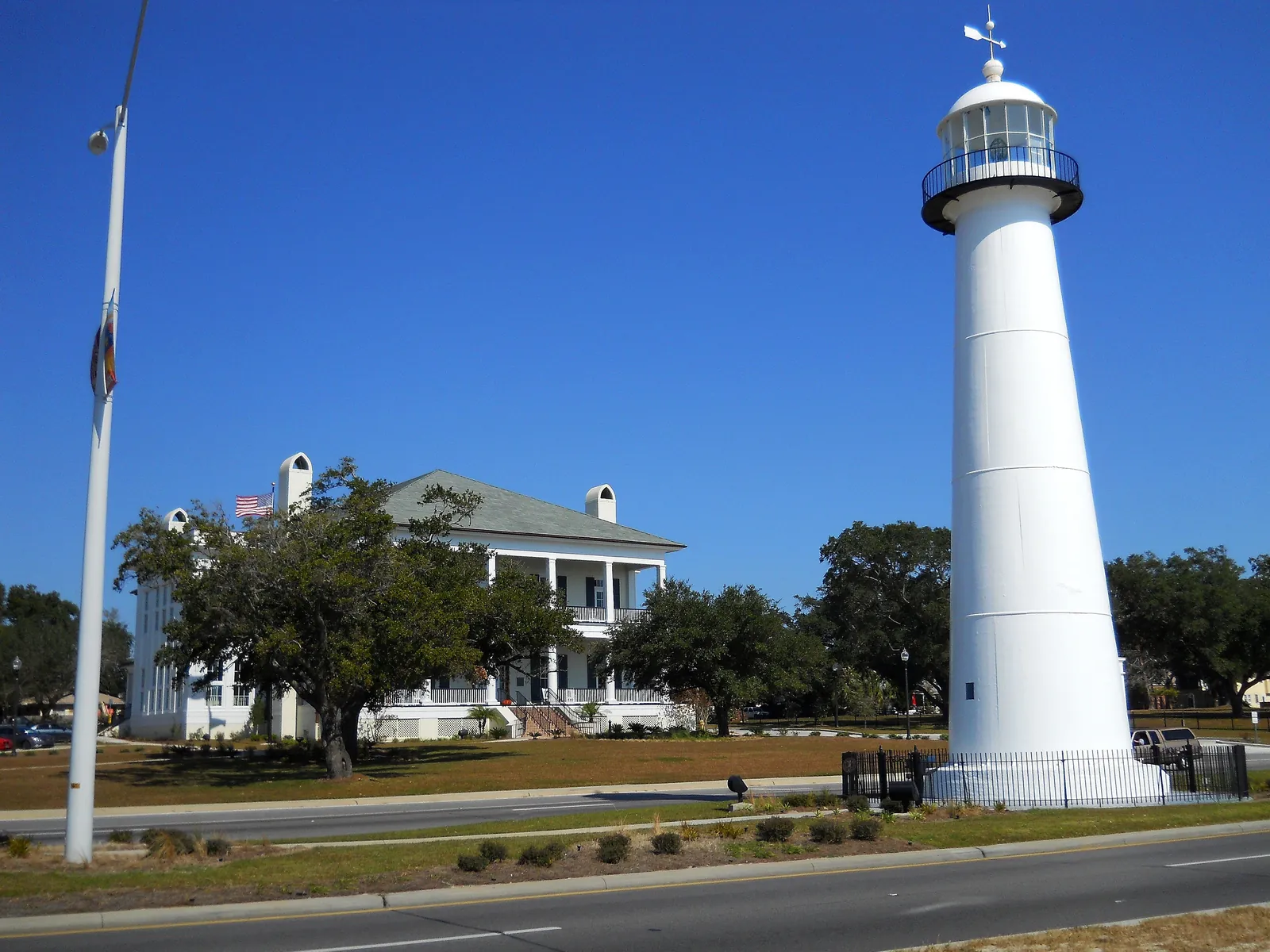
The Mississippi Gulf Coast sits at the northern rim of the Gulf of Mexico, where the Mississippi Sound separates a thin strand of land from the open water. This is not dramatic geography — no bluffs, no natural harbor of consequence — but that position made it the first door that European powers tried to open into the continent's interior. The coast faced south toward the Caribbean and west toward Louisiana, and whoever held it held the approach to the Mississippi River.
Pierre Le Moyne d'Iberville arrived in 1699, landed at Ship Island, and three days later came ashore on the coast itself. He built Fort Maurepas and declared it the first capital of French Louisiana. The ambition was enormous: a base from which to control the river, the trade, the continent. The reality proved harder. Crops failed. Fresh water was scarce. Discipline collapsed. By 1701, the capital had moved to Mobile; by 1702, the fort was abandoned. The coast had served its purpose as a staging point — just not the purpose anyone intended. It started French Louisiana and then got left behind by it.
What the coast became after that was shaped more by water than by policy. The Biloxi Lighthouse went up in 1848 to guide fishermen home. Then in 1870, the Louisville and Nashville Railroad connected New Orleans and Mobile along the coast, and the seafood industry transformed overnight. Entrepreneurs Lazaro Lopez, F. William Elmer, W. K. M. Dukate, William Gorenflo, and James Maycock pooled $8,000 and opened the first oyster packing plant at the foot of Reynoir Street in Biloxi in 1881. Dukate traveled to Baltimore to study canning methods and came back with both improved techniques and a seasonal labor pool — Polish workers who arrived by boxcar every season. The city of roughly 1,500 people in the early 1880s held 3,000 by 1890. The shrimp and the oyster built that town.
The early 20th century brought a different industry. The coast marketed itself as "America's Riviera" — a warm-weather alternative to Florida, with golf, gambling, and a beach eventually claimed as the longest manmade beach in the world. The gambling was illegal but tolerated at certain resorts; it went legal in the early 1990s in Harrison and Hancock counties, and the coast became the second-largest gaming market in the country by gaming space. What had started as a failed colonial outpost had reinvented itself, repeatedly, through whatever the Gulf and the road and the railroad made possible.
Hurricane Camille hit on August 17, 1969. Hurricane Katrina hit on August 29, 2005. Each caused destruction the coast's own residents called historic. After Katrina, the Port of Gulfport recovered with federal support; low-income communities in places like North Gulfport were left to rebuild largely without it, a disparity documented at the time and not forgotten since. The coast has always rebuilt. What gets rebuilt, and for whom, has not always been equal.
The ethnic diversity that Kenneth P'Pool, deputy historic preservation officer at MDAH, identified as the coast's defining characteristic — maintained by its position on the Gulf, connected to the wider world in ways that inland Mississippi never was — is the thread that runs from the French colonial moment through the Polish cannery workers through the tourist trade through the casino era. This place was always a port of entry for something. What came through and what stayed is the coast's whole story.