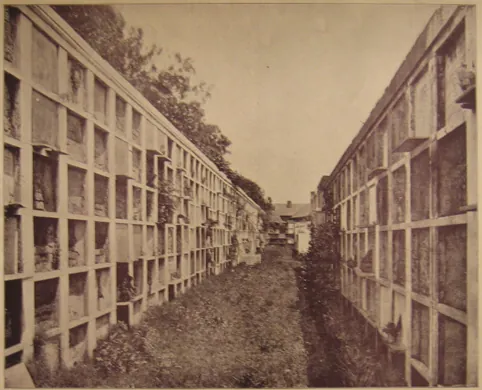
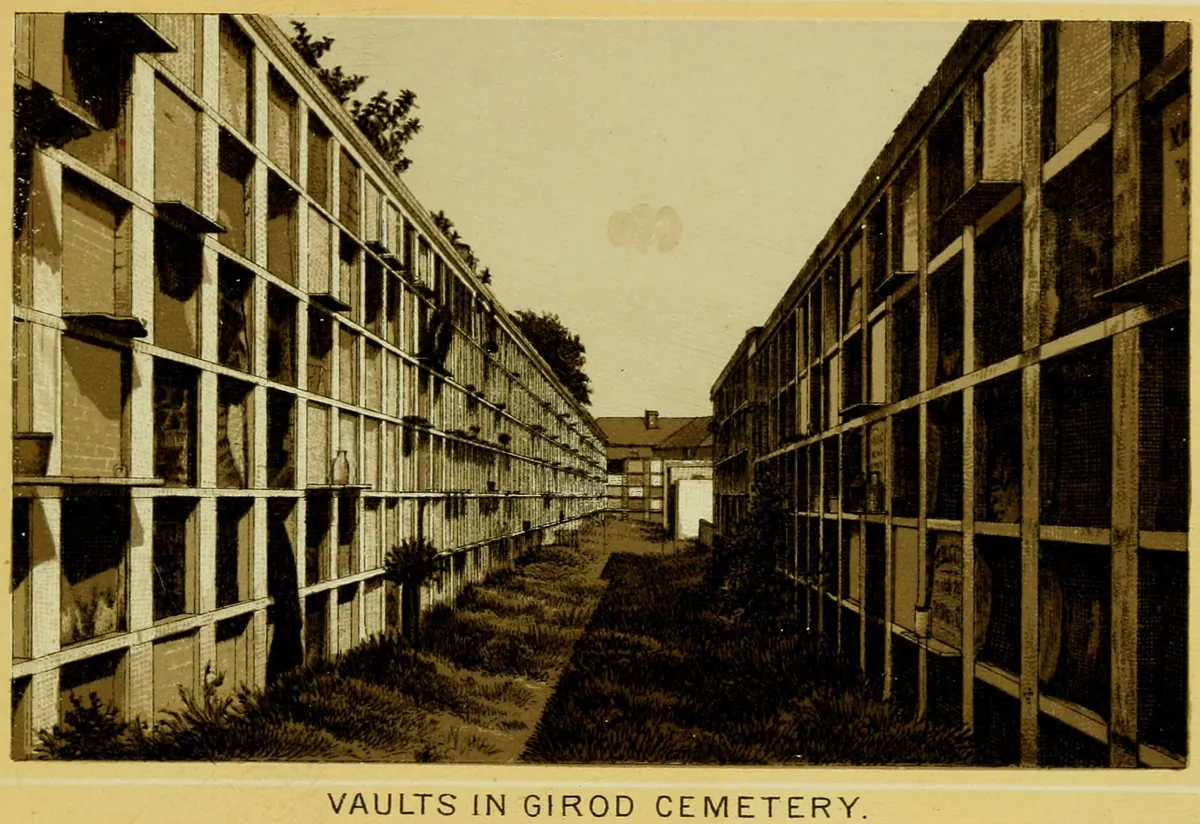
In 1822, the Episcopal Church purchased a parcel of land in Faubourg St. Mary and consecrated it as a Protestant burial ground — the Girod Street Cemetery. The Catholic cemeteries of New Orleans did not accept Protestants. The Americans flooding into the city after the Louisiana Purchase needed somewhere to put their dead.
Over 135 years, approximately 22,000 New Orleanians were interred there. The cemetery had three main walkways and 22 cross aisles, perimeter wall vaults with more than 2,300 burial spaces, and a section that came to be called the yellow fever mound — though historians later established it actually held cholera victims from the epidemic of 1832 and 1833.
By the early 20th century, wealthier white families had moved their dead to newer, more fashionable cemeteries. Vandalism increased. Ironwork was stripped, tombs broken into, remains scattered. The city's health department condemned the site as unsanitary in 1945. On a drear morning in early January 1957, a bishop performed a deconsecration ceremony in the rain. Workers then began the exhumations.
The removal of remains was conducted on a segregated basis. Black deceased went to Providence Memorial Park. White remains went to Hope Mausoleum.
By the early 1960s the cemetery's footprint had been erased. Construction began on the Louisiana Superdome in the early 1970s. Today, Girod Street Cemetery's unmarked ground lies beneath LaSalle Street, partially under Superdome parking garages 2 and 2A, and partially under the Opening Act entertainment venue. Champions Square — where Saints fans gather before games — sits on top of it.
In the late 1980s, during construction of the adjacent Hyatt Regency complex, workers uncovered 20 skeletons. The discovery fed a legend that had been growing quietly since the Saints' earliest, losing seasons: that the franchise was cursed by the displaced dead. The Saints lost consistently enough that the legend found willing believers.
The Saints won Super Bowl XLIV in 2010. The curse, such as it was, appears to have been satisfied — or the city simply outlasted it, the way New Orleans outlasts most things.
Memories
Editorial content compiled with AI assistance. Place details verified against public records.