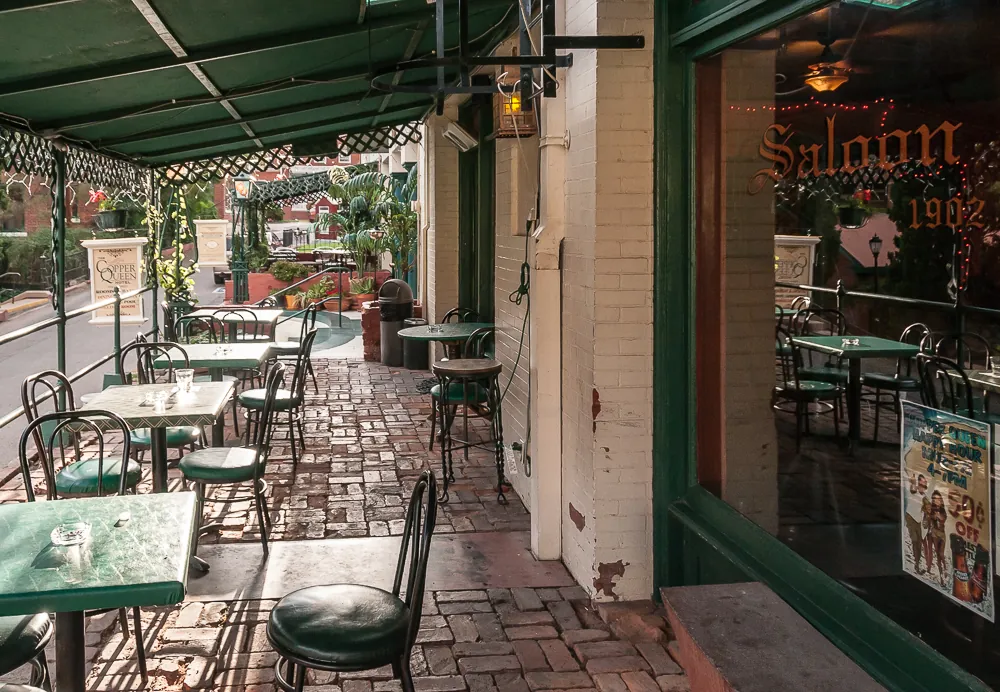
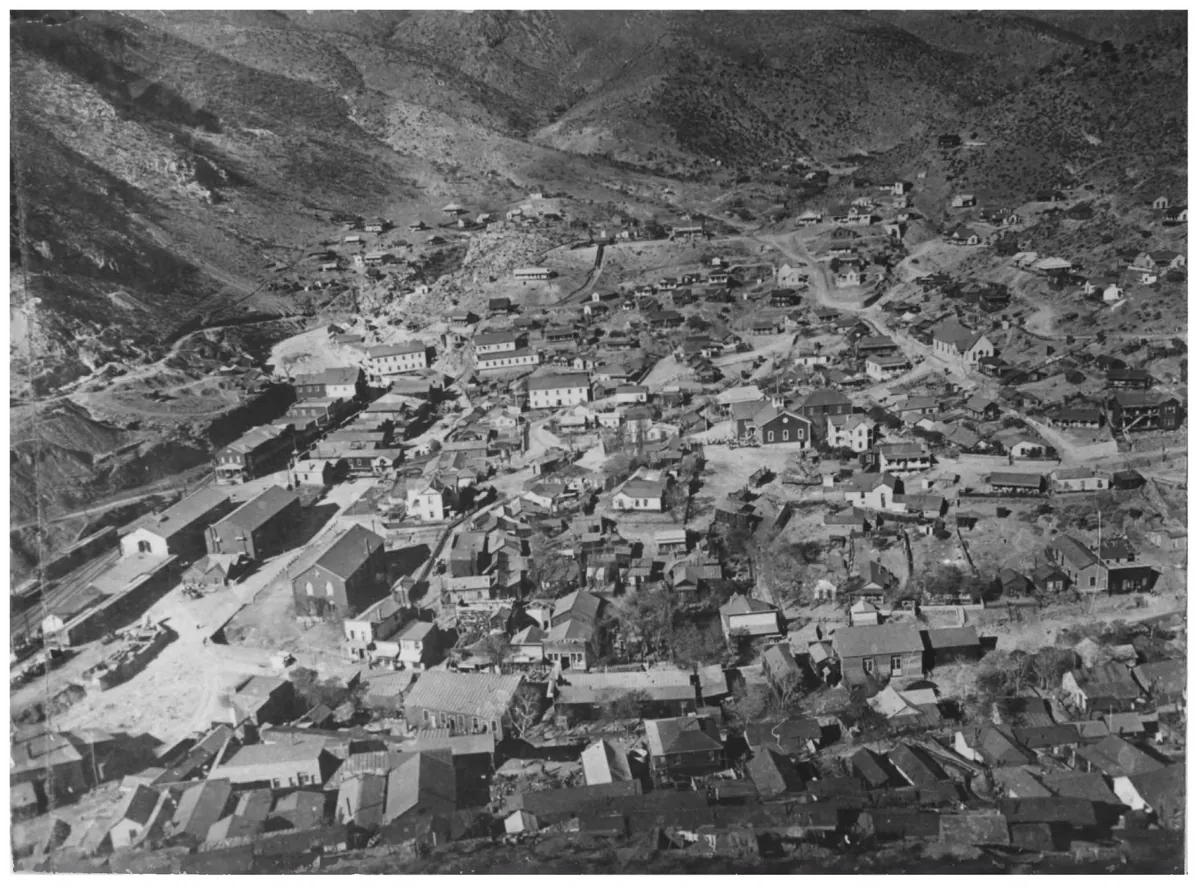
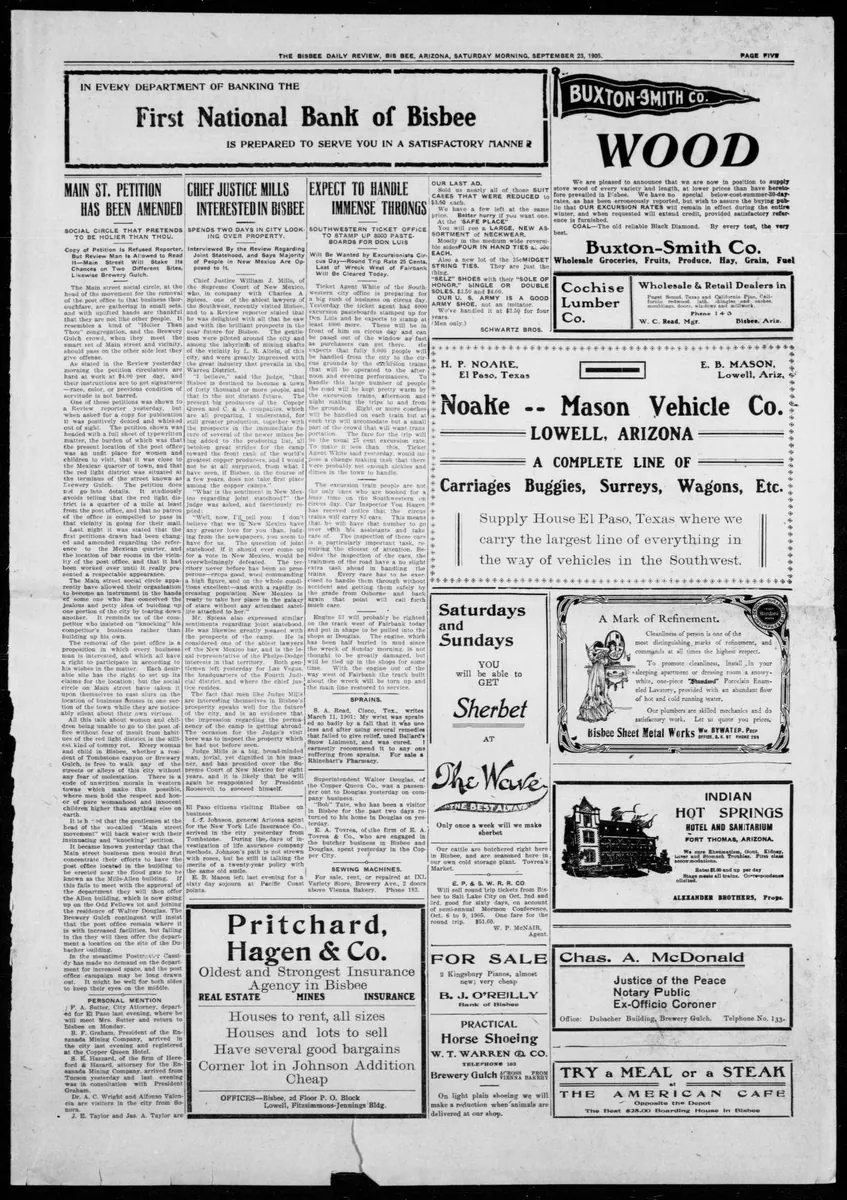
The gulch got its name from the Muheim Brewery, and for a quarter-century it earned the rest of its reputation a woman and a whiskey glass at a time. Between 1892 and 1917, Brewery Gulch ran wide-open — the part of Bisbee where the Copper Queen miners came when the shift ended and the day's wages were burning holes in their pockets.
At its height the district held somewhere between fifteen and forty-seven saloons, depending on who was counting and what year they were counting in, plus twenty-odd houses where upwards of a hundred women worked. The record names a few of them: Anita Romero ran a house. Helen McHenry, a Black woman who'd gone by Mrs. Mary McGeary, ran another. Cora Miles kept a place where opium was documented. Rose Miller had hers. There was a spot called the Hog Ranch, and numbered cribs — No. 9, 27, 33, 41, 71, 128 — where the trade was more transient. Con and Lillian Shea, Angie LeGrand, Bert Welch: proprietors whose names survived in the town's memory when the district itself did not.
The end came from Washington, not Bisbee. In 1917, with the country at war, federal regulation barred a red-light district within three miles of a military installation. The Army had a camp at Lowell. The Gulch closed. It never reopened.
What's left now is quieter but still standing. The brewery building that named the place is there. So is the St. Elmo Bar — the oldest bar in Bisbee, still pouring. The official HMDB marker stands at Review Alley and Howell Avenue, where you can read the names and think about what a mining town needed, and what it built to meet that need, and what happened when someone three thousand miles away decided it was done.
More archive
Memories
Editorial content compiled with AI assistance. Place details verified against public records.