Top picks in Bar Harbor & Acadia
The places most worth your time here.
Connect your Cour circle to see which places friends and family recommend here.
Connect Cour →Landmarks
46 places worth the detour
tap the eye to open · swipe or use buttons to browse
Mount Desert Island sits off the southern coast of Maine, its granite peaks rising bare above the Atlantic — bare enough that Samuel de Champlain, sailing close in September 1604, named it *Isle des…
Read the full storyReading
By the late 1890s, more than 175 summer homes stood in Bar Harbor — called cottages by the families who built them, though the word strained under the weight of what they actually were. These were not people who merely arrived; they gave things. In 1881, two Philadelphia cottagers, De Grasse Fox and Brooks White, donated the land for St. Sylvia's Catholic Church, and architect William Ralph Emerson donated the building plans. Mrs. John S. Kennedy funded the YWCA building in 1913 to house the young women who came to work in those same cottages. Maria Van Antwerp DeWitt Jesup spent roughly $77,000 building the town's library, then added a $50,000 endowment to keep it running — and at the August 1911 dedication, signed the deed over to Bar Harbor outright. The library still stands. So does the church. The town they built outlasted them.
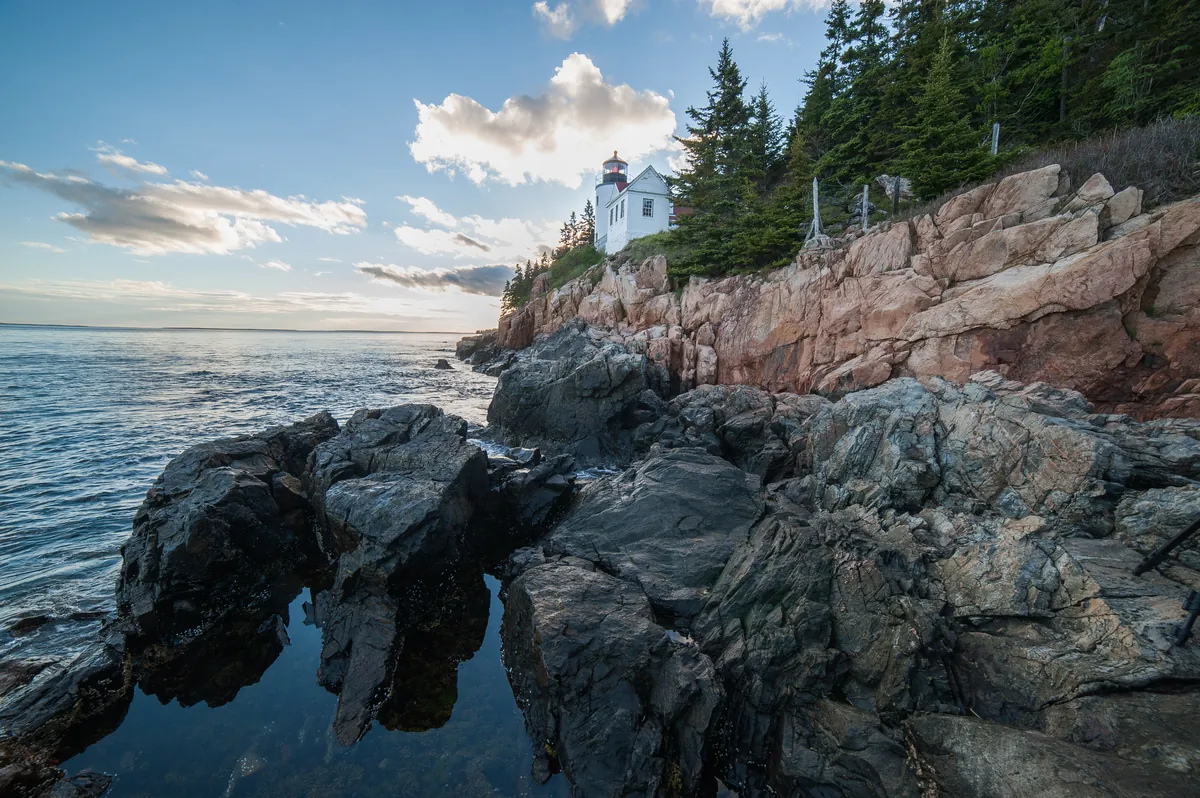
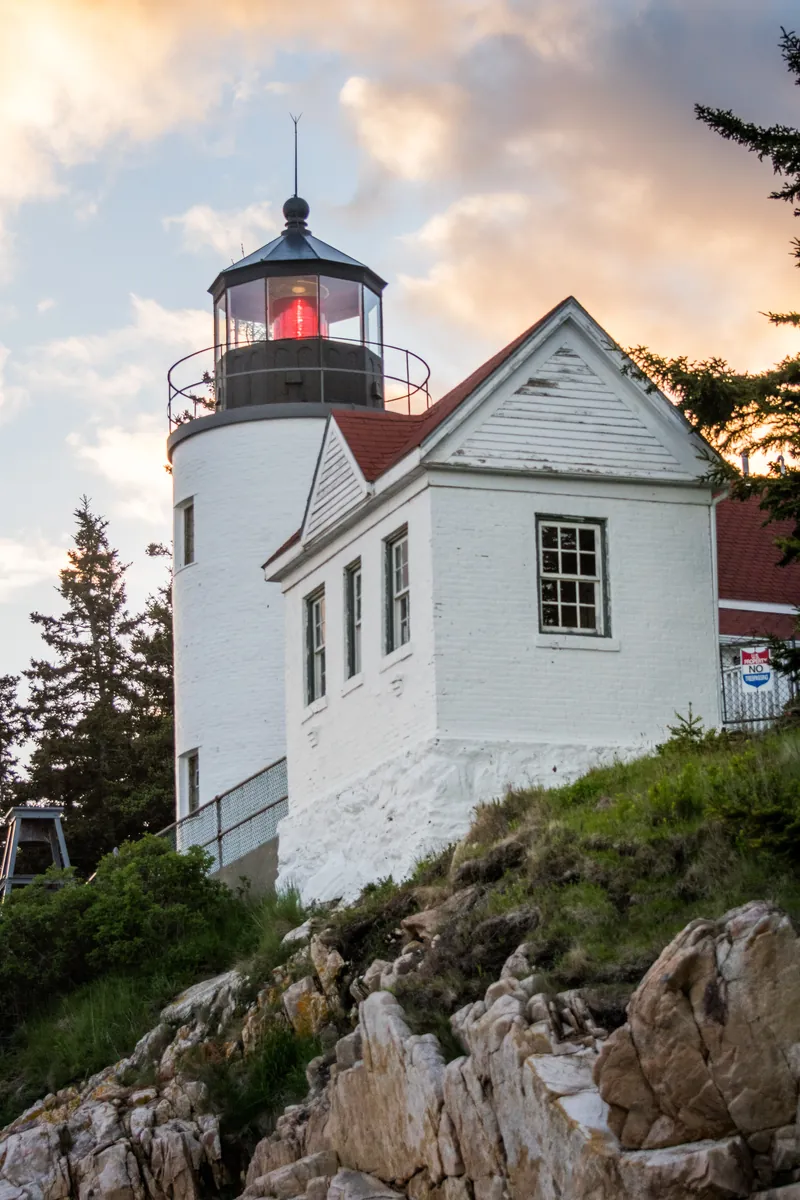
The working coast here doesn't perform itself for visitors — it just keeps moving. Bass Harbor Head Light has marked the entrance to Blue Hill Bay since 1858, its fourth-order Fresnel lens still turning, its occulting red signal still useful to boats that need it. From that same southwestern corner of Mount Desert Island, the ferry runs to Swan's Island and Frenchboro — islands where people still live by what the water gives. Down the shoreline in Southwest Harbor, Hinckley built its first boats in 1928 among working lobstermen, grew into a name in American yacht building, and never left the coastline that shaped the work. The Oceanarium, founded in 1972, runs a lobster hatchery that releases larvae back into coastal waters. The industries changed scale and form. The relationship to the water didn't.
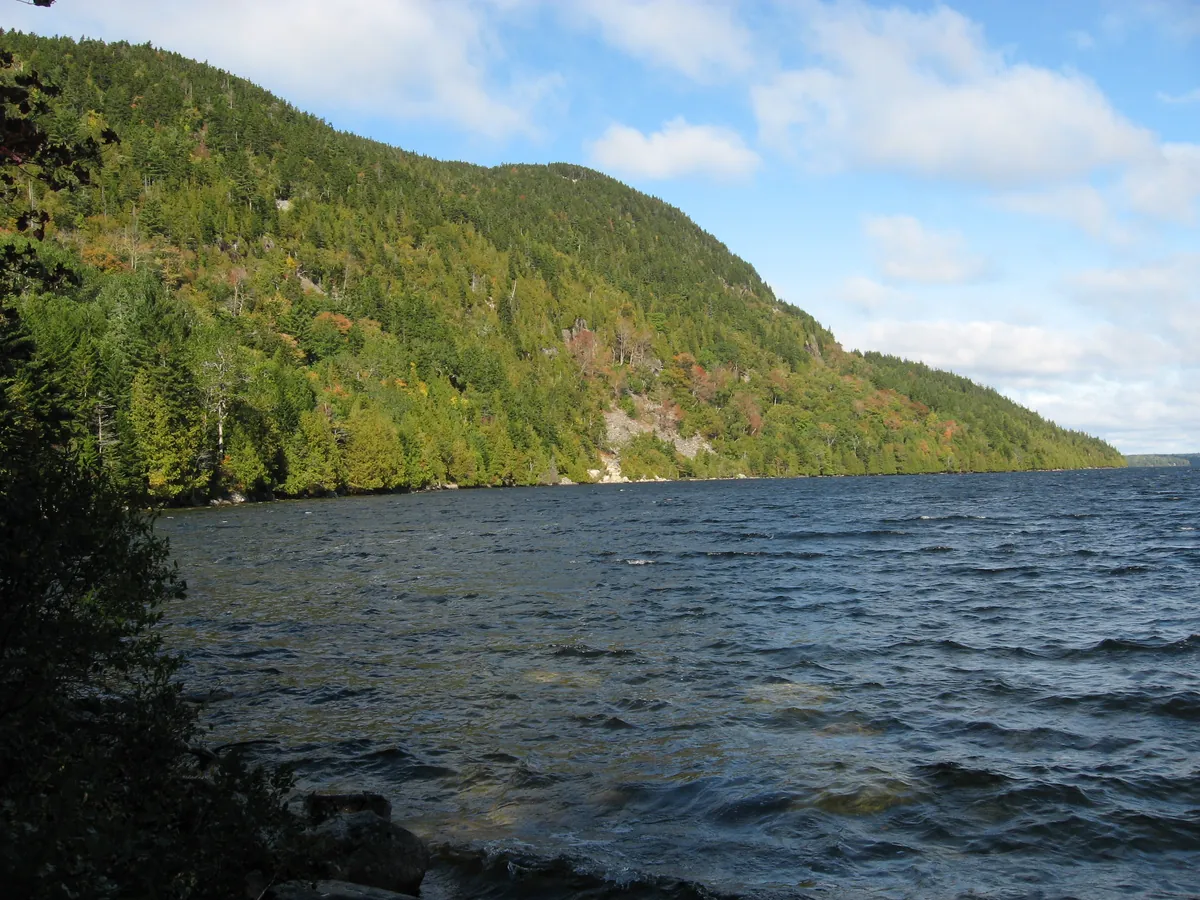
The Wabanaki named this island Pemetic — "range of mountains" — and understood immediately what the land was. The modern park's origin is more tangled: President Woodrow Wilson designated Sieur de Monts National Monument in 1916, the name chosen by George Dorr after a French explorer's title. Congress remade it into Lafayette National Park, then Acadia in 1929. Dorr stayed on as the park's first superintendent until 1944. Today the park encompasses roughly 49,000 acres across Mount Desert Island, the Schoodic Peninsula, and Isle au Haut — protecting the tallest mountain on the Atlantic Coast — and draws nearly four million visitors a year. The carriage road network, financed and built by John D. Rockefeller Jr., remains its quietest path through that terrain. The spring at Sieur de Monts, where the Monument began, still marks where the story started.
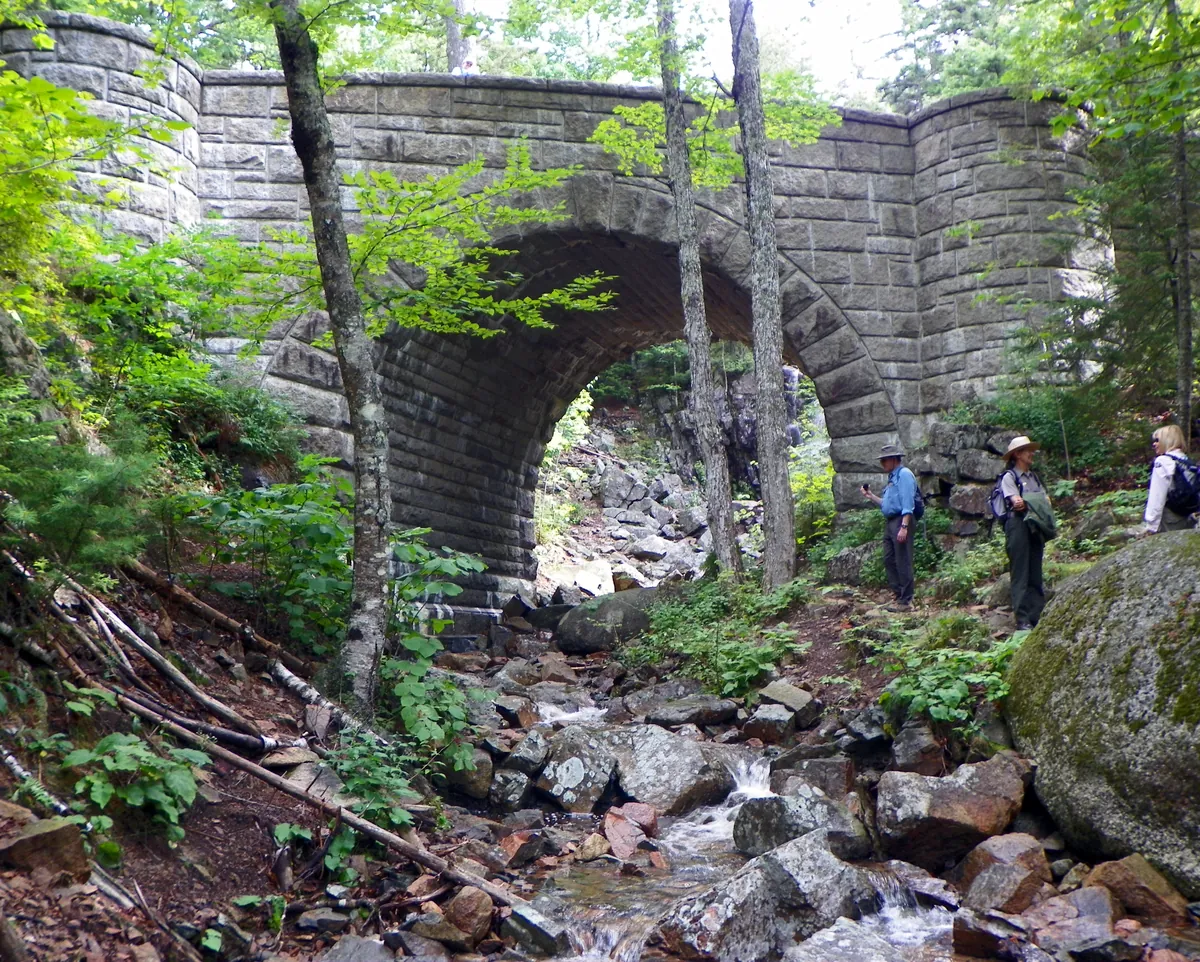
Between 1915 and 1940, John D. Rockefeller Jr. financed, designed, and directed the construction of roughly 57 miles of crushed stone carriage roads across Mount Desert Island — a system built deliberately without automobiles, at the exact moment automobiles were winning everywhere else. Sixteen of the 17 stone-faced, steel-reinforced concrete bridges came from his money. He later guided the Park Loop Road to completion in 1958, 27 miles that took 37 years to finish, threading Sand Beach, Otter Cliff, Jordan Pond, and Cadillac Mountain onto a single road. He purchased the land around Little Long Pond for its scenery; in 2015 it was donated and opened to the public. He helped finance the rescue of Beatrix Farrand's plant collection into the Asticou Azalea Garden in 1956. One man's sustained attention, across four decades, built most of what people come here to walk through.
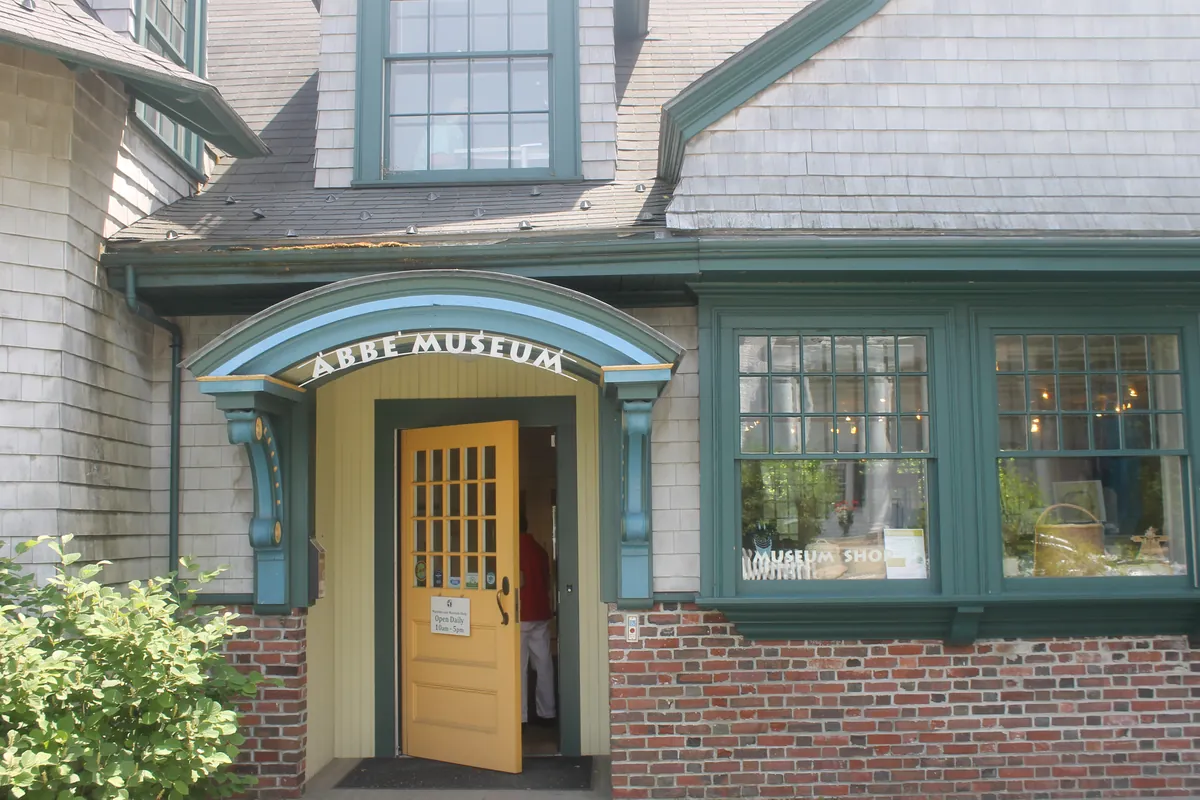
They called it Pemetic — "range of mountains" — and they were right about what mattered. The Wabanaki people camped along the shores of Somes Sound for thousands of years, long before Abraham Somes established the first European village on Mount Desert Island in 1761, long before a summit road climbed Cadillac Mountain, long before four million visitors a year arrived to look out over Frenchman Bay. What the Wabanaki knew — that this island, this sound carved by glaciers, these peaks rising to 1,530 feet at the eastern seaboard's highest point — was worth staying close to, worth naming carefully. The Abbe Museum in Bar Harbor now holds the largest collection of Maine Native American basketry in any museum. The name Pemetic didn't survive on the maps. What survived is harder to erase: the fact of a people who were here first, and are here still.
Tickets & Shows
Before you go
A Bar Harbor native who ran the Criterion Theatre wrote it. Natives, Rusticators, Tourists — the island's class war, still running.
Watch who gets pushed out before you walk in. This is Mount Desert Island's real economy, told by the people living it.
Plan your trip
The only thing left to do is go.
Some of these are partner links — if you book through them, Portage may earn a commission at no extra cost to you.
Editorial content compiled with AI assistance. Place details verified against public records.