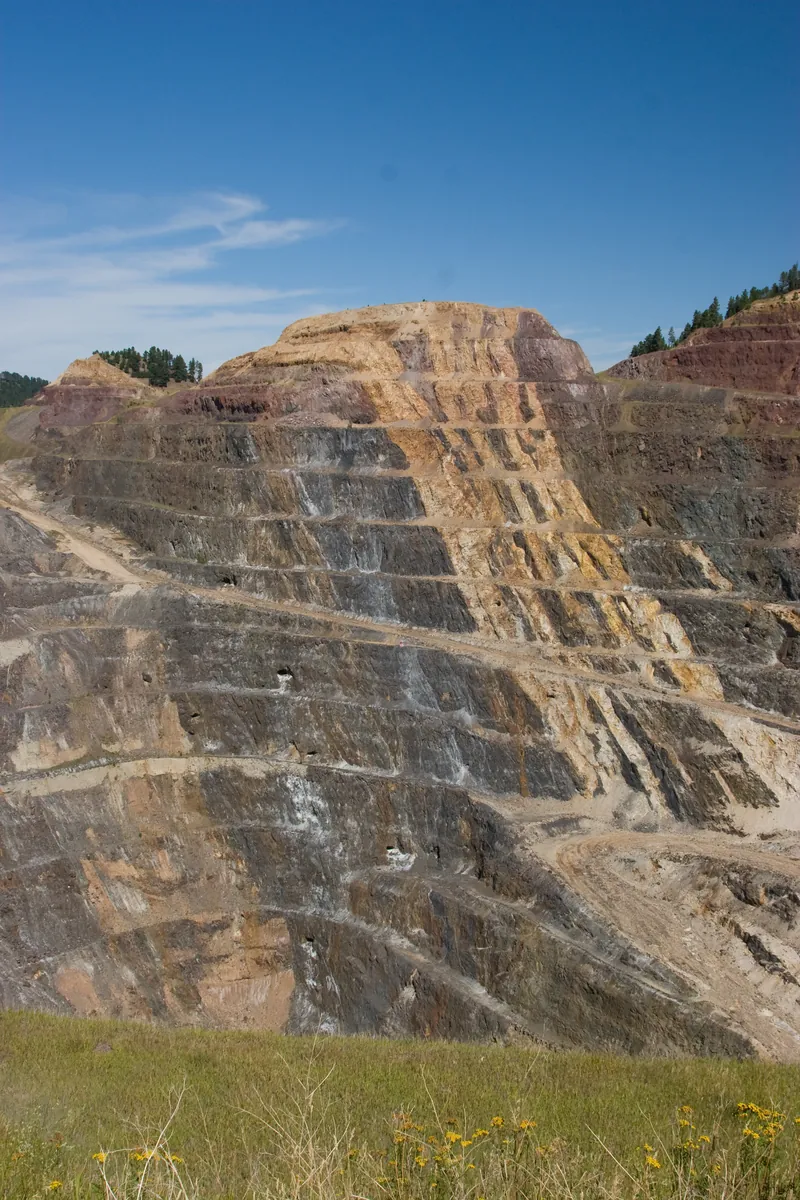
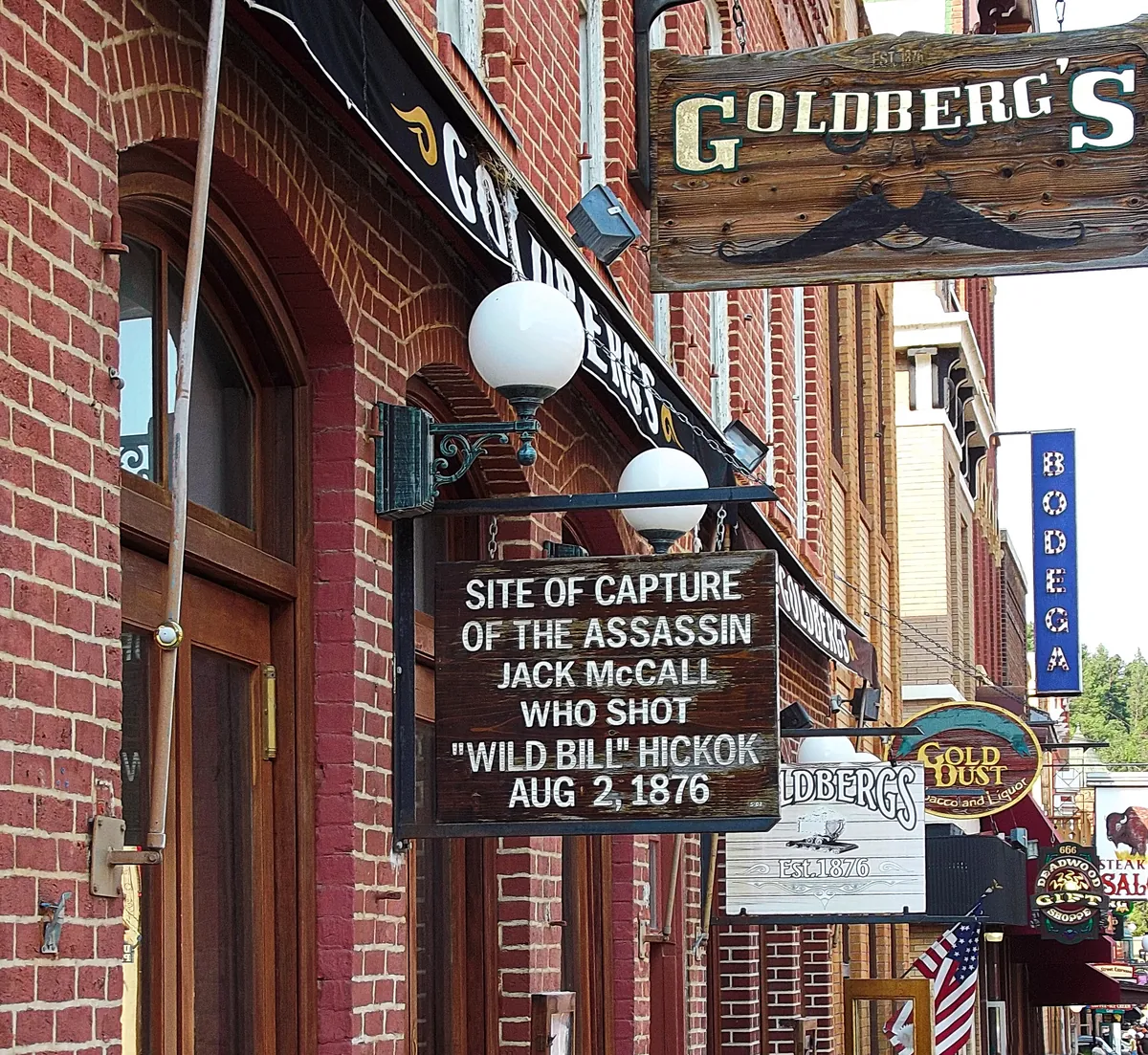
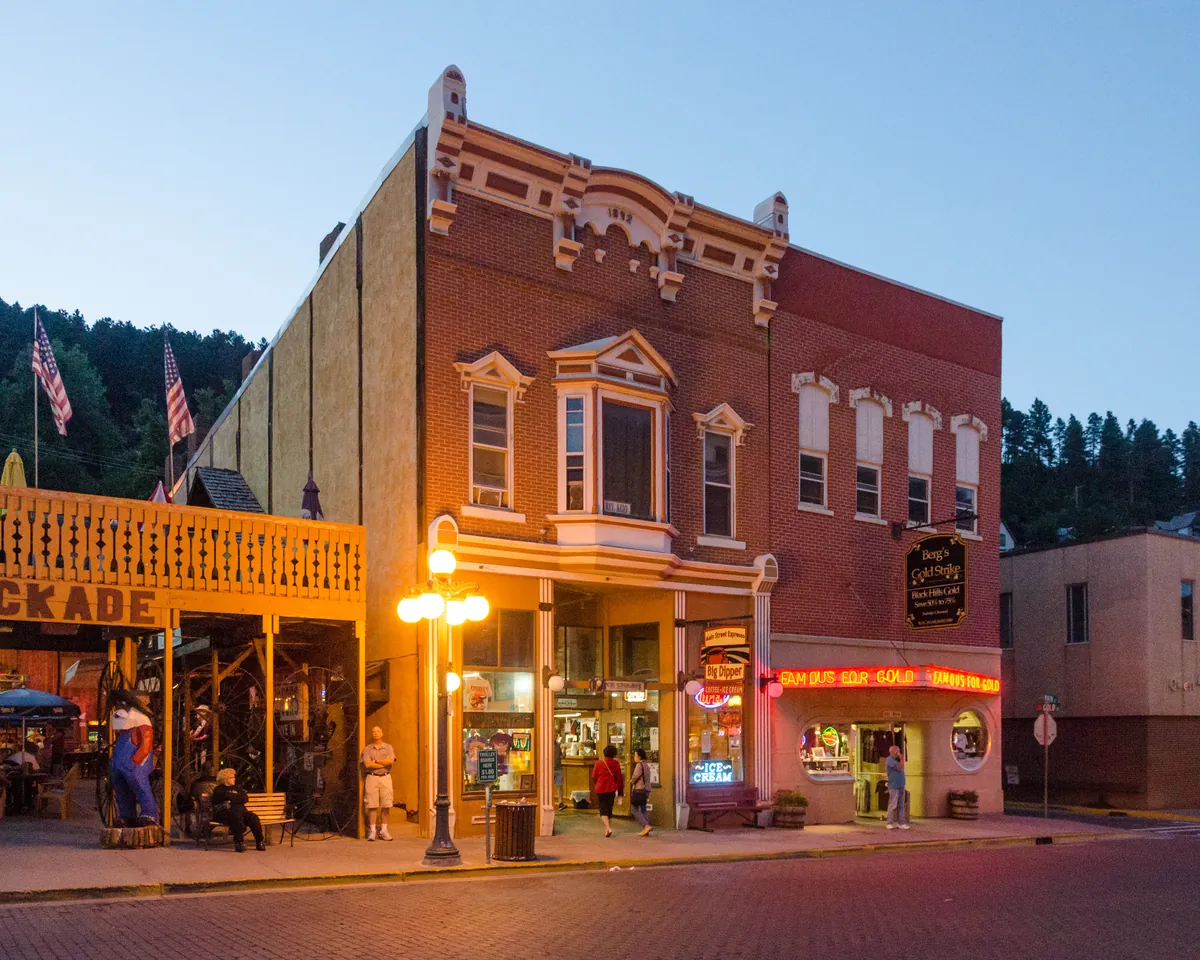
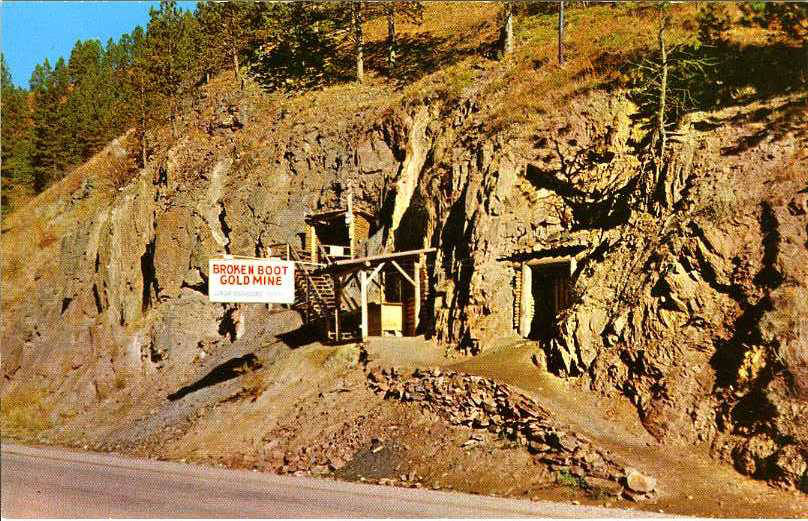
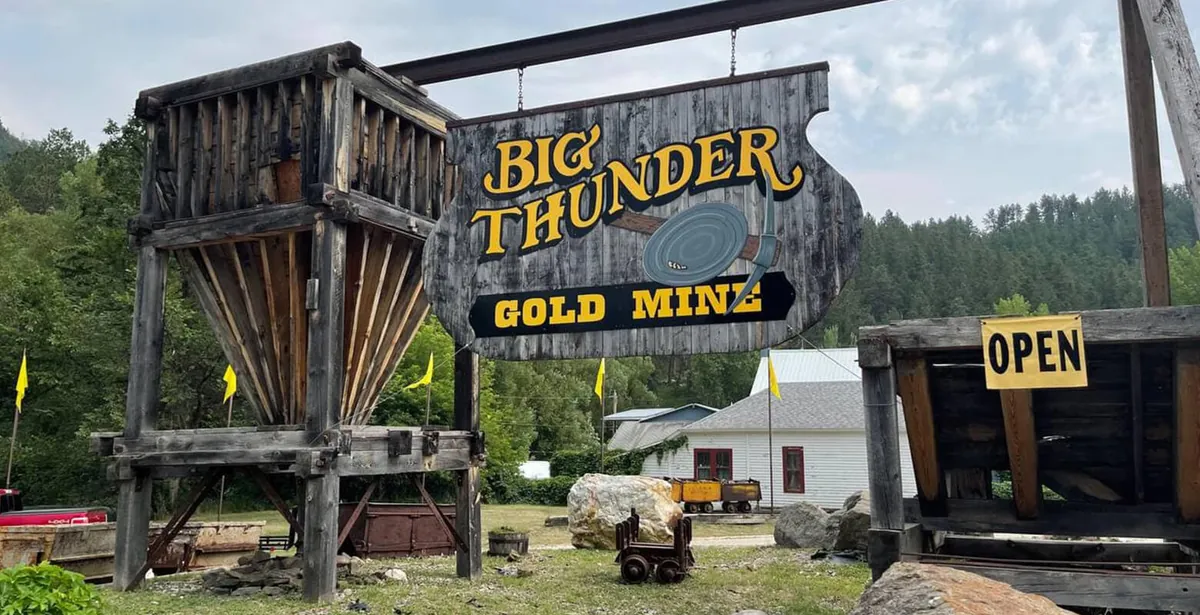
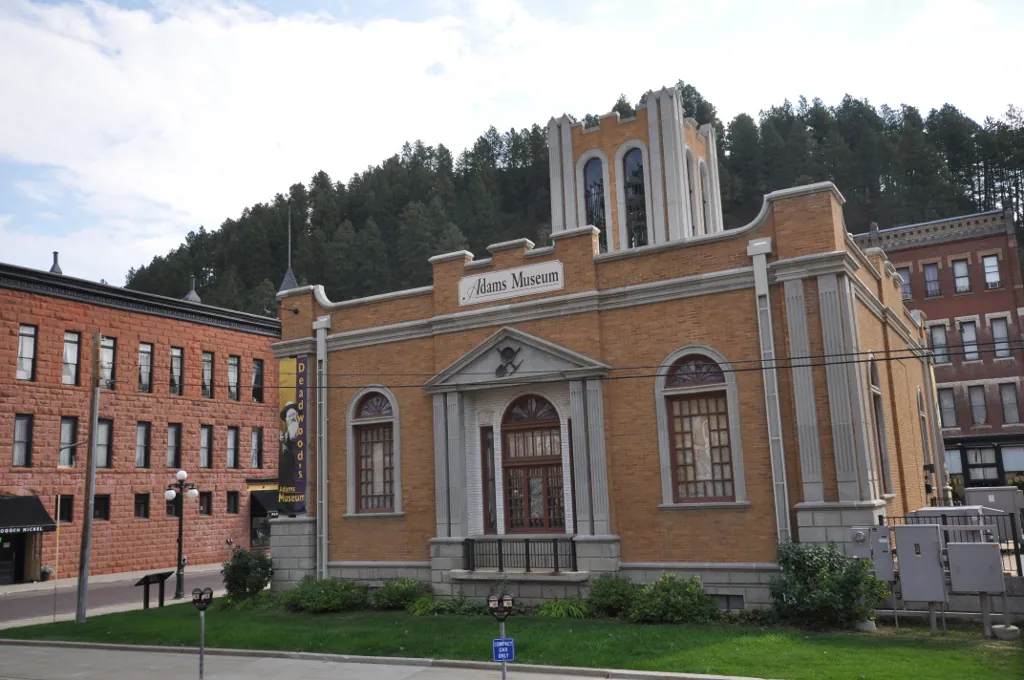
The Black Hills were Lakota land — guaranteed by the Fort Laramie Treaty of 1868, exempted from settlement forever. Then Custer's 1874 expedition announced gold, and the promise collapsed. Miners poured in from Colorado and Montana, built illegal boomtowns on stolen ground, and drove into the earth with a ferocity the landscape still wears. Deadwood peaked at 25,000 people and buried Wild Bill Hickok. The Homestake Mine, staked in 1876, pulled more than forty million troy ounces before closing in 2002 — the largest and deepest gold mine in the Western Hemisphere. Smaller operations like the Broken Boot and Big Thunder mines found modest ore, then found other uses, then found tourists. The economy has shifted from extraction to hospitality, but the terms haven't changed much: the hills still draw people who come looking for something valuable buried in the dark.