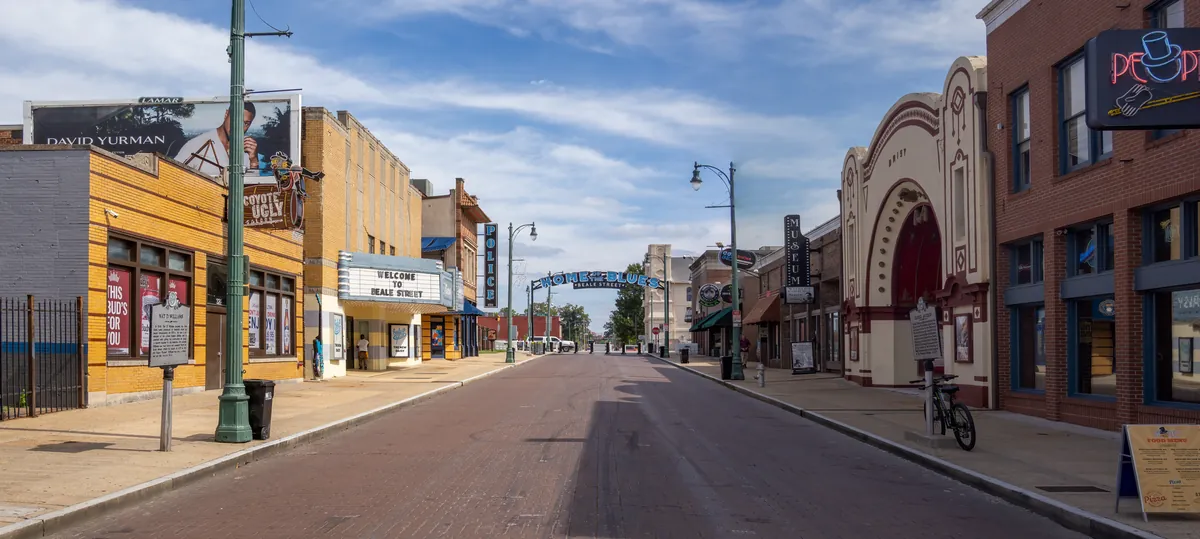
Robertson Topp laid out this street in 1841 and named it for Edward Fitzgerald Beale, a Mexican-American War officer. Its western end drew traders working the Mississippi River docks; the east end became an affluent suburb. Black traveling musicians began performing here in the 1860s. The Young Men's Brass Band, formed in 1867, were the first to call it home.
The yellow fever epidemics of the 1870s killed thousands and forced Memphis to forfeit its city charter in 1879. During that collapse, Robert Church bought land around Beale and became the first Black millionaire from the South. In 1899 he paid for Church Park at Fourth and Beale — a recreational and cultural center with an auditorium that seated two thousand. Blues musicians gathered there. Woodrow Wilson, Booker T. Washington, and Franklin D. Roosevelt spoke from its stage.
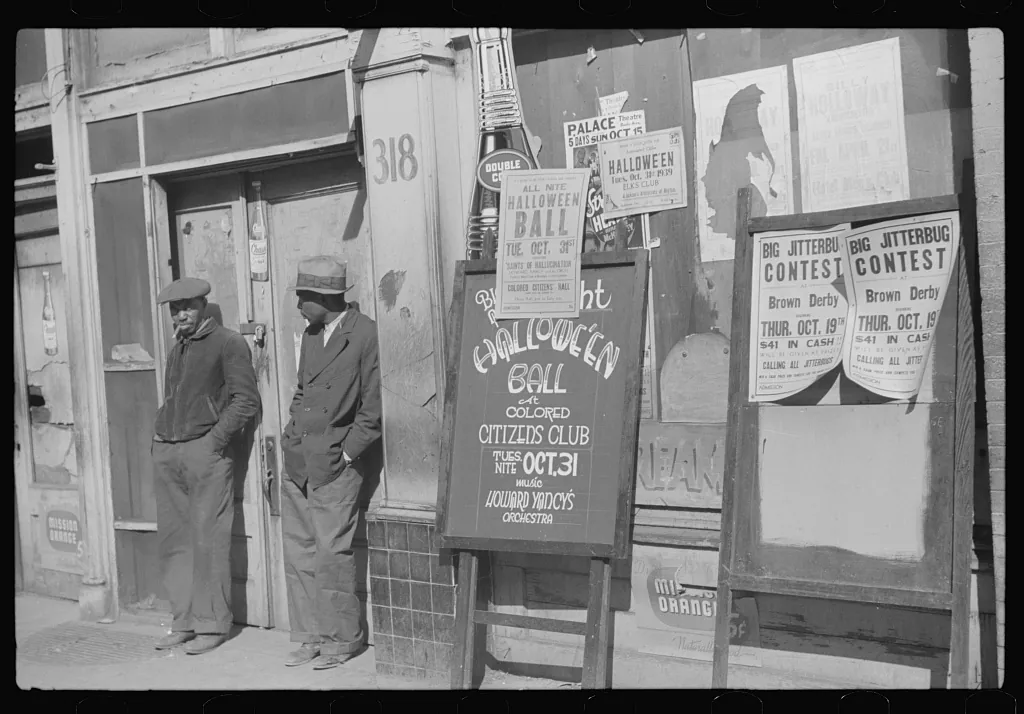
In 1903 the mayor needed a music teacher for his Knights of Pythias Band and called Booker T. Washington at Tuskegee, who recommended a trumpet player in Clarksdale named W. C. Handy. Handy moved to Memphis and worked Beale roughly 1905 to 1917. In 1909 he wrote a campaign song for political boss E. H. Crump, later renamed "The Memphis Blues." In 1916 he wrote "Beale Street Blues," which influenced the city to change the name from Beale Avenue to Beale Street. From the 1920s to the 1940s, Louis Armstrong, Muddy Waters, Albert King, Memphis Minnie, B. B. King, Rufus Thomas, and Rosco Gordon played here and developed the style called Memphis Blues. B. B. King was billed as "the Beale Street Blues Boy."
By the 1960s the street had emptied. Urban renewal razed surrounding blocks. On May 23, 1966, the stretch from Main to Fourth was designated a National Historic Landmark. On December 15, 1977, Congress declared it the Home of the Blues. The title was Congress formalizing what musicians had already made true.
- ·Laid out 1841; named for Edward F. Beale, Mexican-American War officer
- ·Robert Church (first Black millionaire from the South) bought surrounding land 1870s
- ·W.C. Handy worked here c.1905–1917; wrote 'Beale Street Blues' (1916)
- ·National Historic Landmark designated May 23, 1966
- ·Declared 'Home of the Blues' by Act of Congress on December 15, 1977
More archive
Memories
Editorial content compiled with AI assistance. Place details verified against public records.