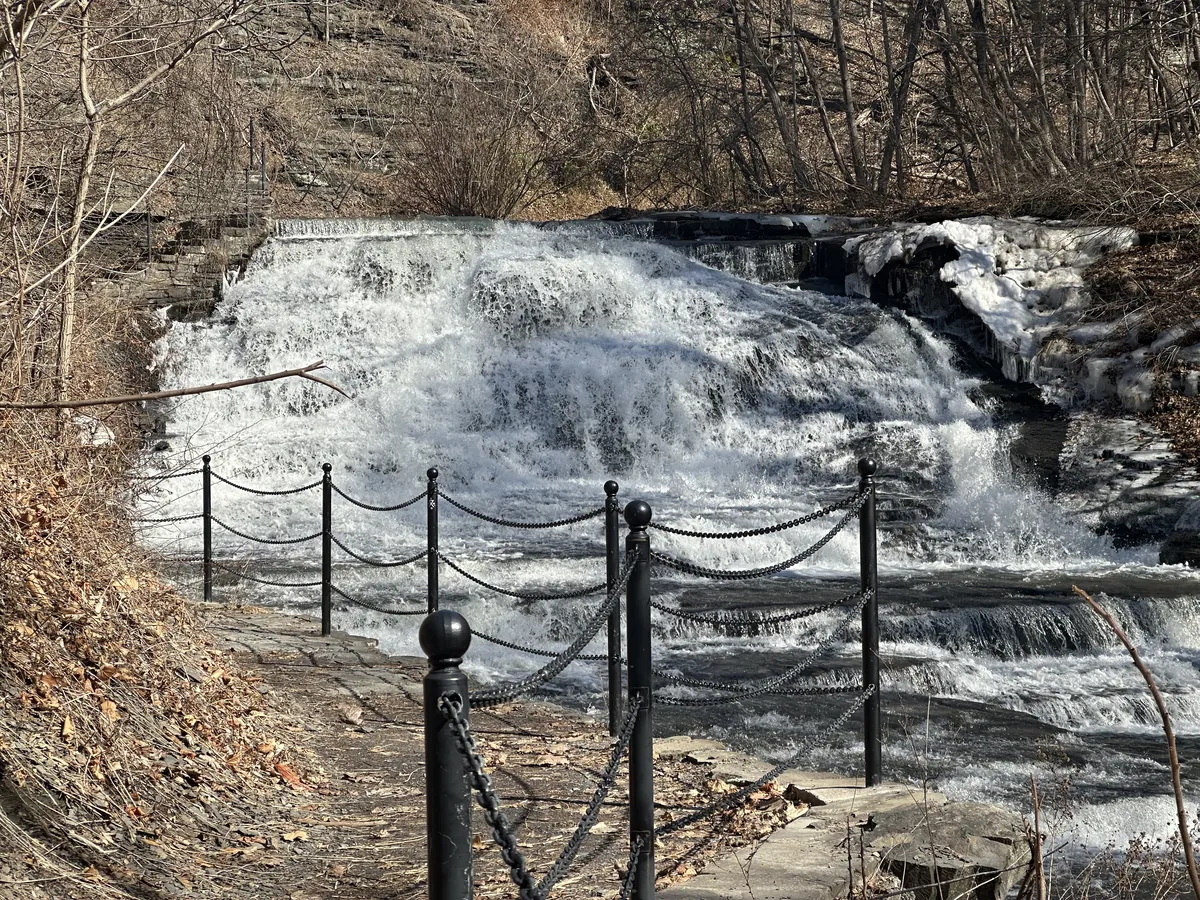
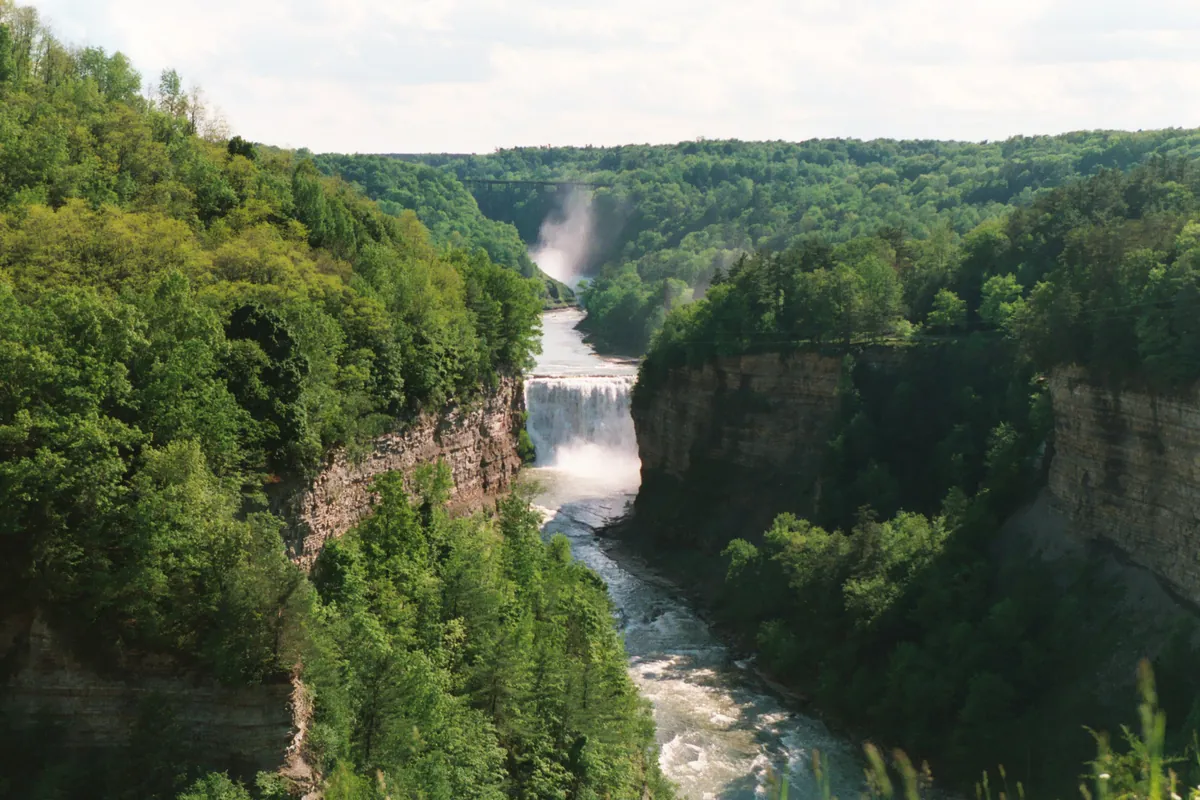
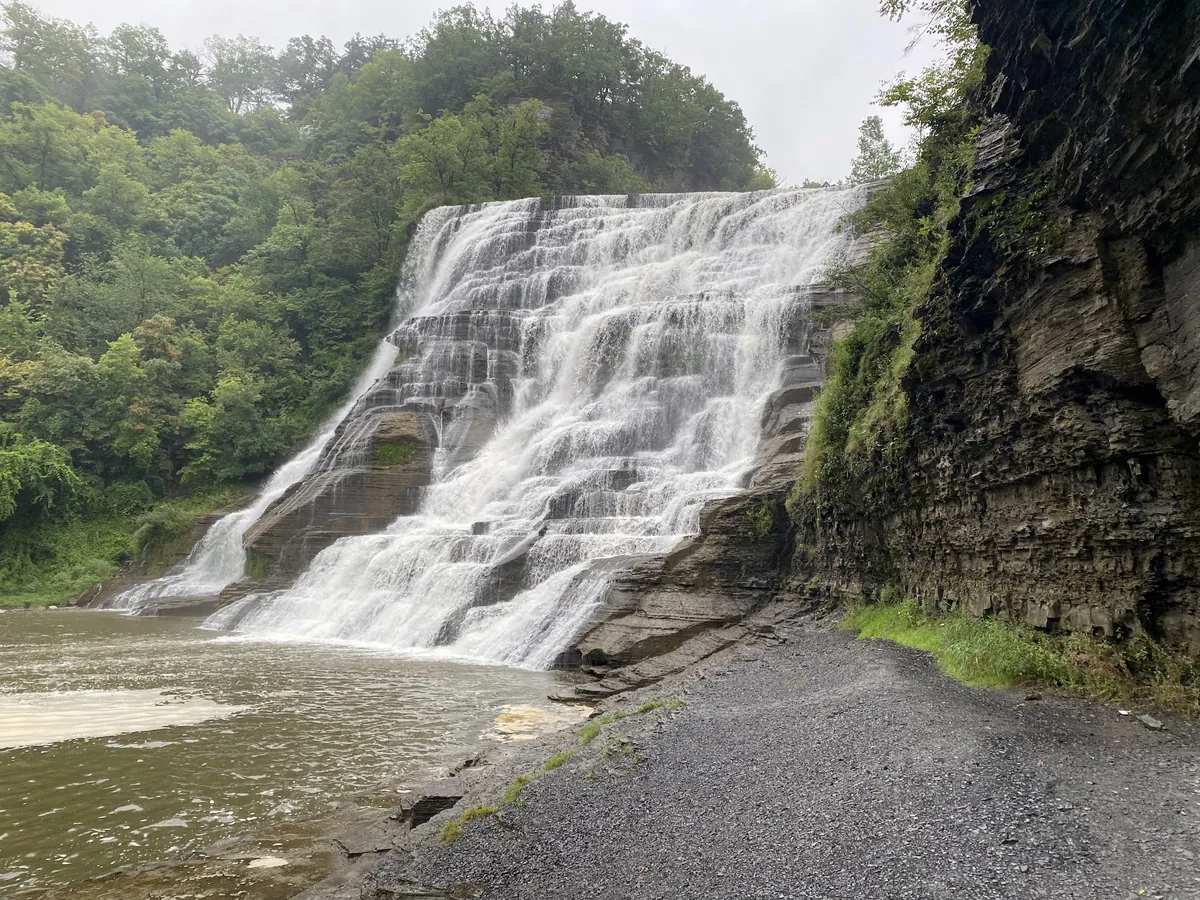
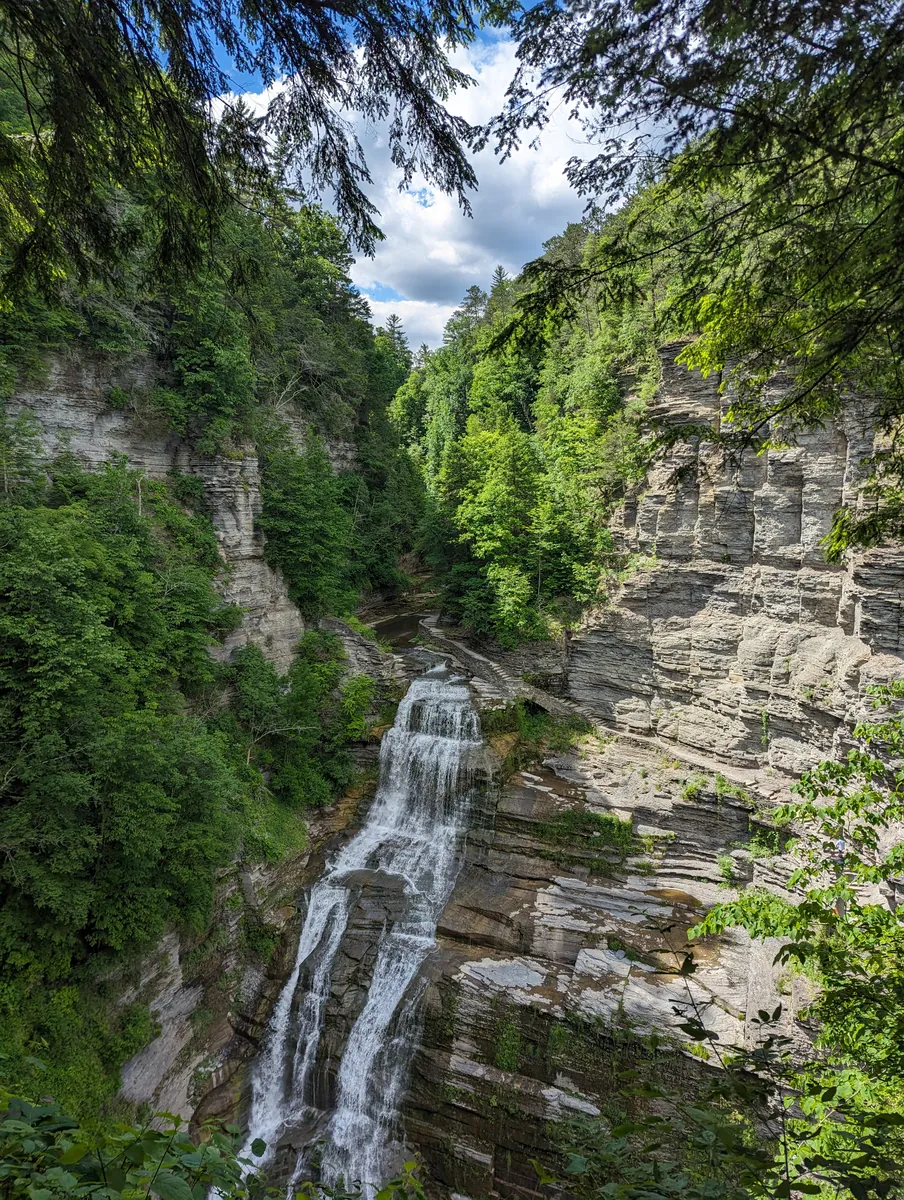
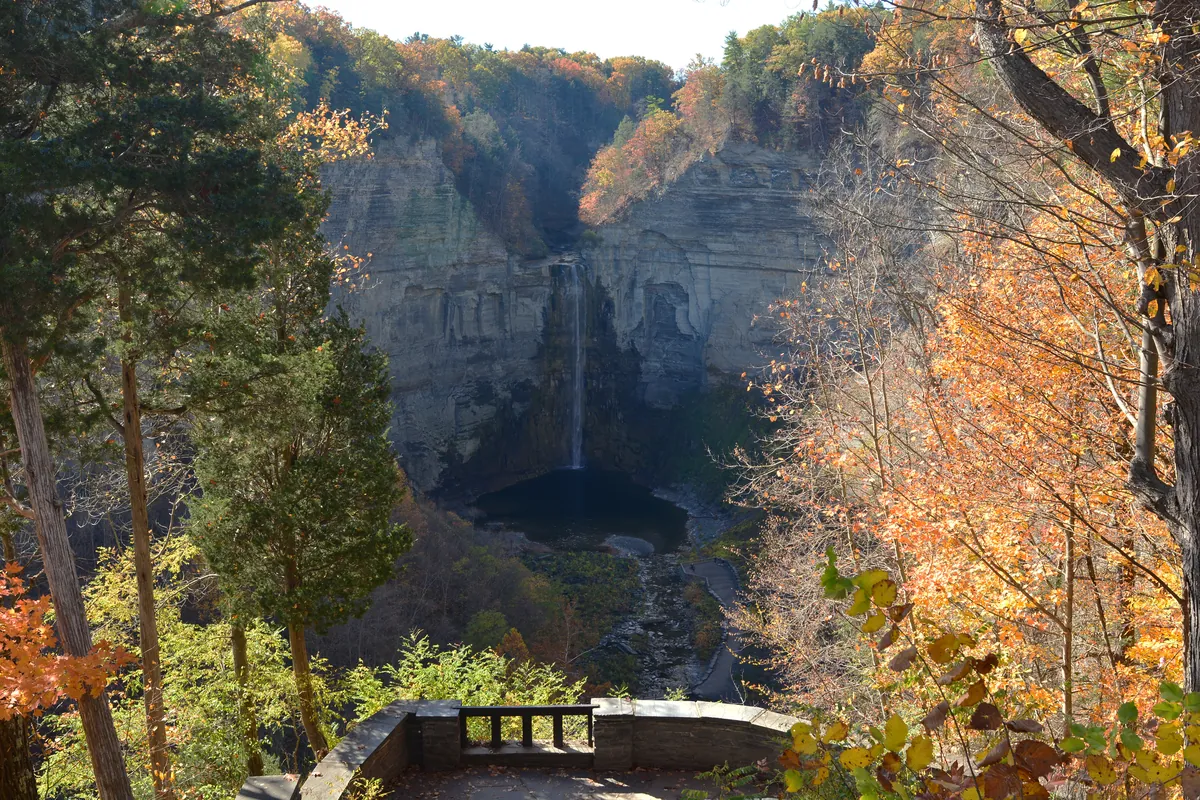
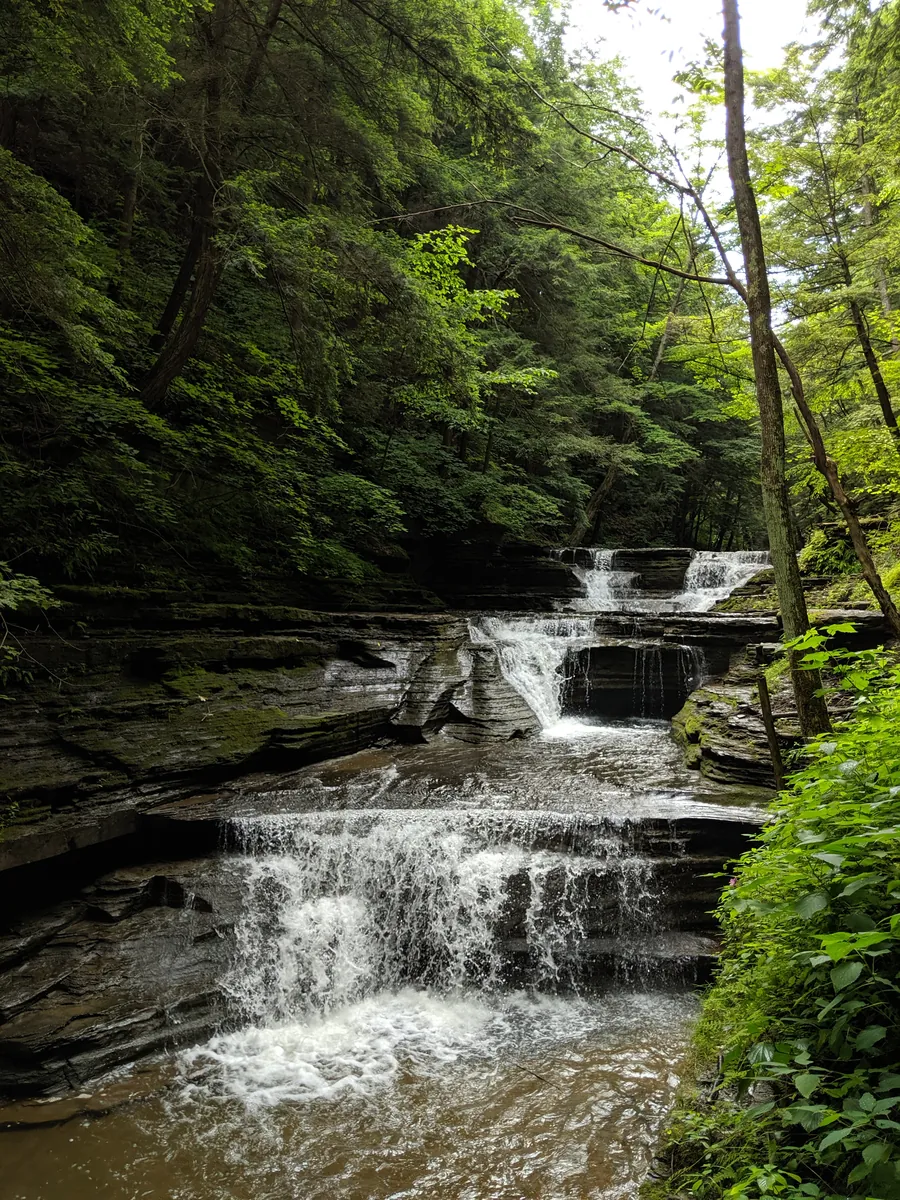
The glaciers didn't leave the Finger Lakes gently. When the last continental ice sheet pulled back — twenty to thirty thousand years ago — it diverted rivers into new valleys, hung tributary streams hundreds of feet above lake level, and left behind a geology of layered Devonian shale and sandstone built to fracture. Water did the rest. At Taughannock, the falls drop 215 feet — 33 feet more than Niagara — into a gorge still being slowly widened by freeze-thaw cycles working the shale at the base. At Buttermilk Falls, ten waterfalls drop 600 feet along a single gorge trail. At Letchworth, the Genesee River inherited a glacier-diverted valley and cut canyon walls rising 550 feet over 17 miles. The gorges here are not scenery — they are the operating mechanism of the landscape, still cutting, still fracturing, the same way they have since the ice let go.