Top picks in Grand Rapids
The places most worth your time here.
Connect your Cour circle to see which places friends and family recommend here.
Connect Cour →Landmarks
19 places worth the detour
tap the eye to open · swipe or use buttons to browse
The Grand River drops out of the interior of Lower Michigan and hits a fall line about twenty-five miles east of Lake Michigan. Ships could navigate upriver to that point and no further — the rapids…
Read the full storyReading
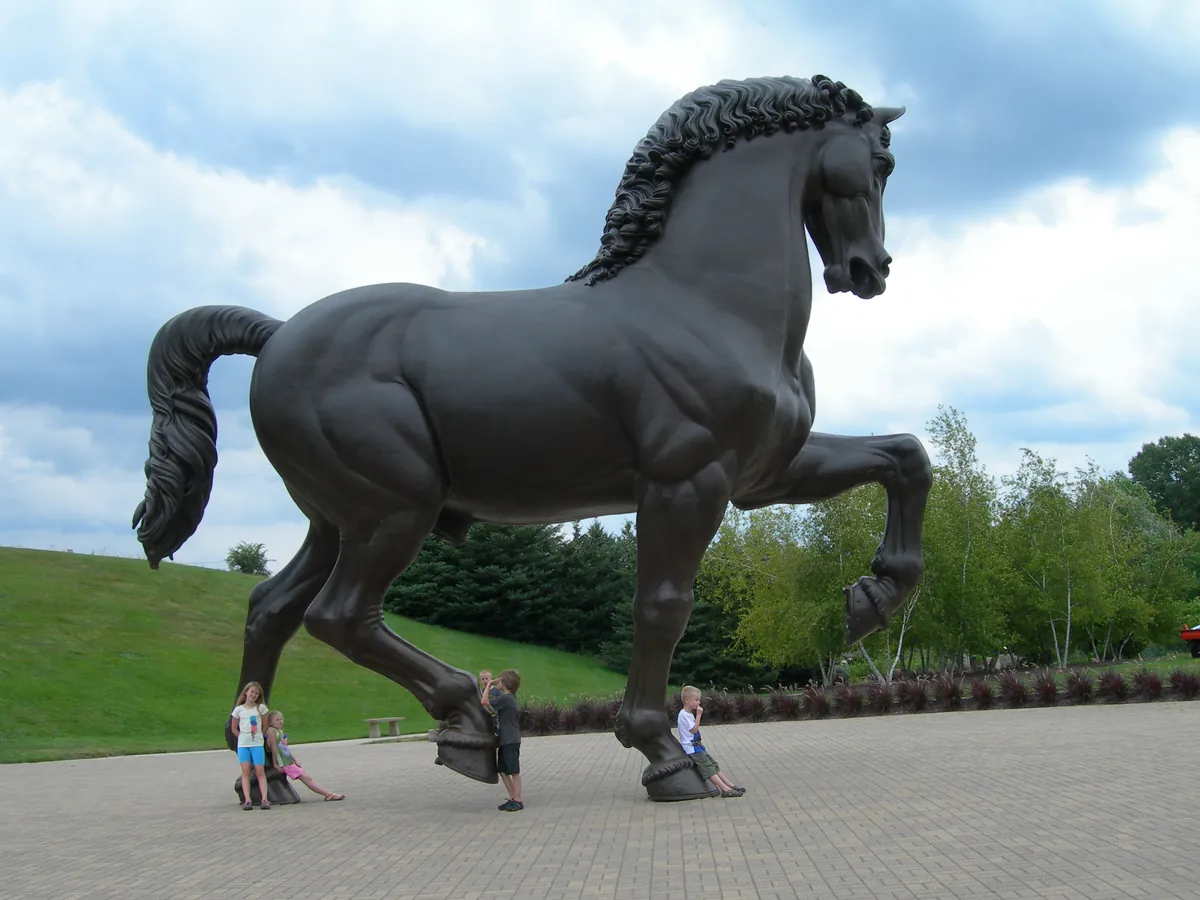
In 1910, Mrs. Della Foote Perkins helped establish the Art Association of Grand Rapids with a single mandate: build a permanent collection, open to all citizens. That civic instinct kept compounding. In 1969, Alexander Calder's *La Grande Vitesse* went up downtown — the first public artwork in the United States funded by the National Endowment for the Arts. When Meijer Inc. found a different site for a planned superstore in 1991, the original 70.7 acres became Frederik Meijer Gardens & Sculpture Park, which opened in 1995 and now holds Moore, Rodin, and Akamu across 158 acres. Then in 2009, ArtPrize arrived: any artist, any venue, any visitor with a vote, $500,000 in prizes, and 200,000 people the first year alone. Grand Rapids didn't stumble into an arts identity — it built one, deliberately, across more than a century.
Grand Rapids has always been a city where private money and public life blur at the edges. Louis Campau bought 72 acres from the federal government for $90 and called it Grand Rapids. That instinct — one person's decision reshaping common ground — runs forward through every era. In 1969, Alexander Calder's *La Grande Vitesse* became the first public artwork in the country funded by the National Endowment for the Arts, installed downtown. Amway co-founder Jay Van Andel later funded the renovation of the Pantlind Hotel and the construction of the Amway Grand Plaza Hotel tower. Meijer Inc. donated 70.7 acres earmarked for a superstore; what opened there in 1995 was a botanical garden and sculpture park holding Moore, Rodin, and Akamu. The pattern is consistent: resources that could have stayed private became the bones of a shared city.
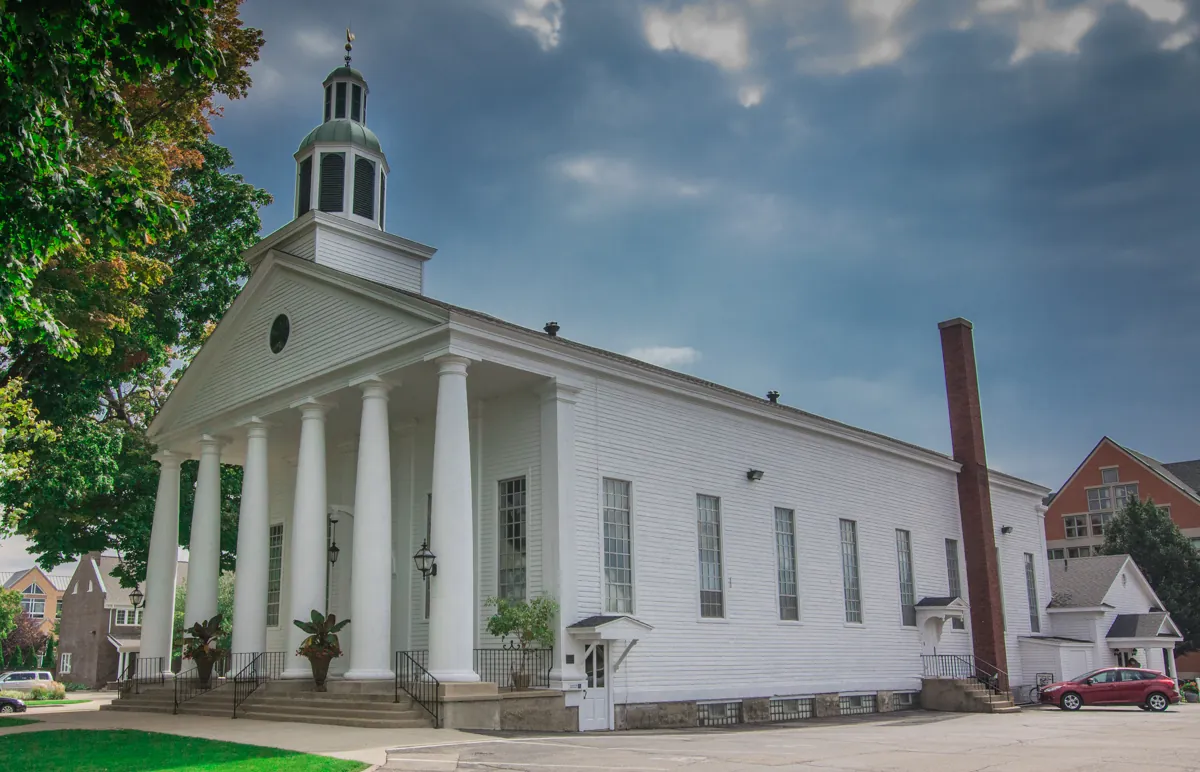
In 1847, Albertus Van Raalte led a group of Dutch Calvinist settlers to the banks of a river in West Michigan and built a church. That church — Pillar Church, now on the National Register of Historic Places — still holds services. The fire of 1871 took nearly all of downtown Holland, but the community rebuilt, and what endured became the seed of a longer identity. A working Dutch windmill, De Zwaan, was purchased from a retired miller in the Dutch province of North Brabant in 1964, shipped to Michigan, and still grinds flour on Windmill Island. Prince Bernhard of the Netherlands was there for the 1965 opening; his ten guilder bill is still on display. The Holland Museum carries the full arc — the 1847 arrival, the fire, the Tulip Time Festival that grew from those roots. Some cities perform their heritage. Holland, Michigan, still operates it.
The Grand River stopped ships 25 miles short of Lake Michigan, and that bottleneck made everything. The Odawa and Potawatomi were here first — Ah-Nab-Awen, the "resting place" in Anishinaabe, marks the ground they occupied long before European contact. In 1806, Joseph and Madeline La Framboise built the first European-American trading post in West Michigan on the river. After Joseph died, Madeline kept the operation running, eventually merging with the American Fur Company. Then came Louis Campau in 1826 — trading post, blacksmith shop, 72 acres bought from the federal government for $90 — and the place had a founder. The city that grew from that transaction would become a lumber processor, then a furniture capital, then a craft-beer destination. But the original logic never changed: a river that stopped you in your tracks, and people who decided to stay.
Before you go
A Vietnamese family lands on Baldwin Street with five dollars. Food becomes the map of what Grand Rapids costs to enter.
Schrader filmed his own Grand Rapids church and factory, cast his parents — the city despised him for it. That discomfort is the truth.
Plan your trip
The only thing left to do is go.
Some of these are partner links — if you book through them, Portage may earn a commission at no extra cost to you.
Editorial content compiled with AI assistance. Place details verified against public records.