Top picks in Pine Mountain & Warm Springs
The places most worth your time here.
Connect your Cour circle to see which places friends and family recommend here.
Connect Cour →Landmarks
34 places worth the detour
tap the eye to open · swipe or use buttons to browse
The Pine Mountain Range is a geological anomaly — a ridge that rises to 1,395 feet at Dowdell's Knob, making it among the highest elevations at this latitude anywhere in the eastern half of the…
Read the full storyReading
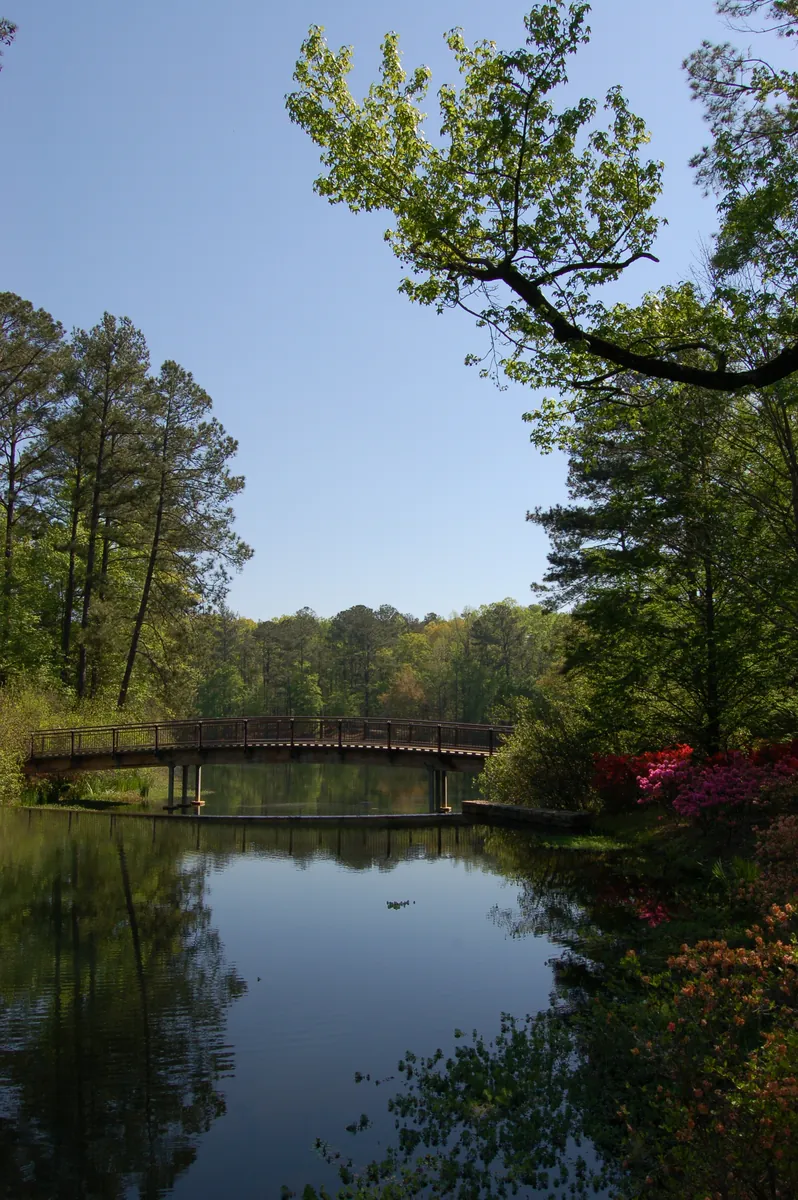
Franklin Roosevelt first came to Warm Springs in 1924, seeking relief from the paralytic illness he'd contracted three years earlier. He kept coming back. A decade later, the Civilian Conservation Corps established a camp near what is now the park entrance on Highway 354, and from that base young men built the Liberty Bell Pool, the Roosevelt Lodge, stone and log cabins, and two lakes — Lake Delanor and Lake Franklin — out of the Pine Mountain Ridge. At Dowdell's Knob, the park's highest point at 1,395 feet, Roosevelt used to picnic and bring polio patients with him. Because the western half of the park preserves that CCC design largely intact, it was designated a National Historic Landmark District in 1997. The cabins still stand. The lakes still hold water. What those young men made by hand on this ridge has outlasted nearly everything.
Tradition holds that Muscogee Creek people brought ailing warriors to these springs long before anyone wrote anything down — the water runs at nearly 90°F, warm enough to matter, and that fact drew people across centuries. Savannah families came fleeing yellow fever. Atlanta money rode the railroad to Bullochville. By the time Franklin Roosevelt arrived in October 1924, paralyzed from the waist down, the Meriwether Inn was already in decline. He felt enough improvement in that warm water that in 1926 he bought the resort and roughly 1,200 acres, incorporated the Georgia Warm Springs Foundation in 1927, and turned a fading Victorian retreat into the first hospital devoted solely to treating polio. He built his Little White House here in 1932, visited sixteen times as president, and died here on April 12, 1945. The institute still operates. The water still runs warm.
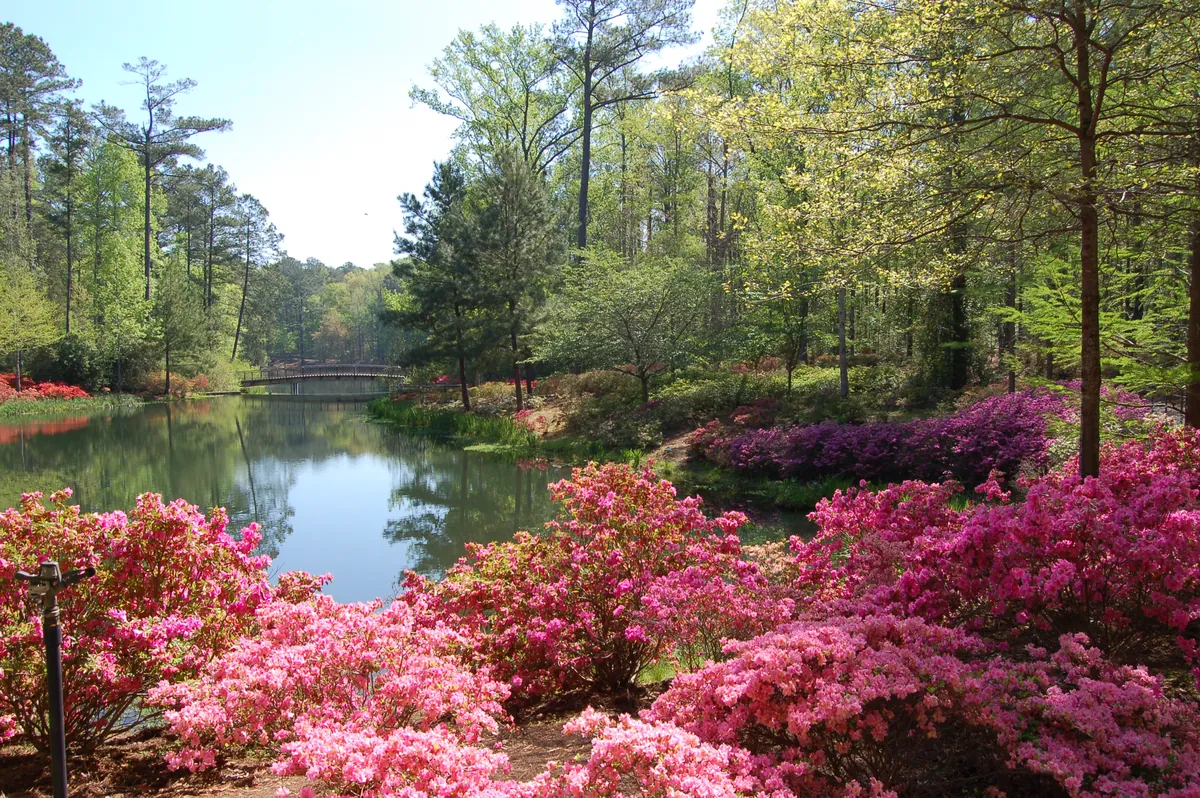
Cason Callaway found a rare plumleaf azalea growing in worn-out Harris County cotton land in 1930 — depleted after nearly a century of cultivation — and decided the place deserved better. What he built from that single discovery opened in 1952: 13,000 acres of restored Georgia hill country, with eroded gullies filled, streams dammed into 13 lakes, and Virginia Callaway working alongside landscape architect Gilmore David Clarke to plant more than 20,000 trees, shrubs, and native flowers. The demonstration vegetable garden he started late in his life was named for him after his death in 1961. A glass-enclosed tropical butterfly conservatory, named for the founder of Days Inn through his widow's support, followed decades later. The gardens Callaway shaped from exhausted farmland now cover 2,500 acres — proof that the most interesting thing a piece of ground can do is become something its soil never promised.
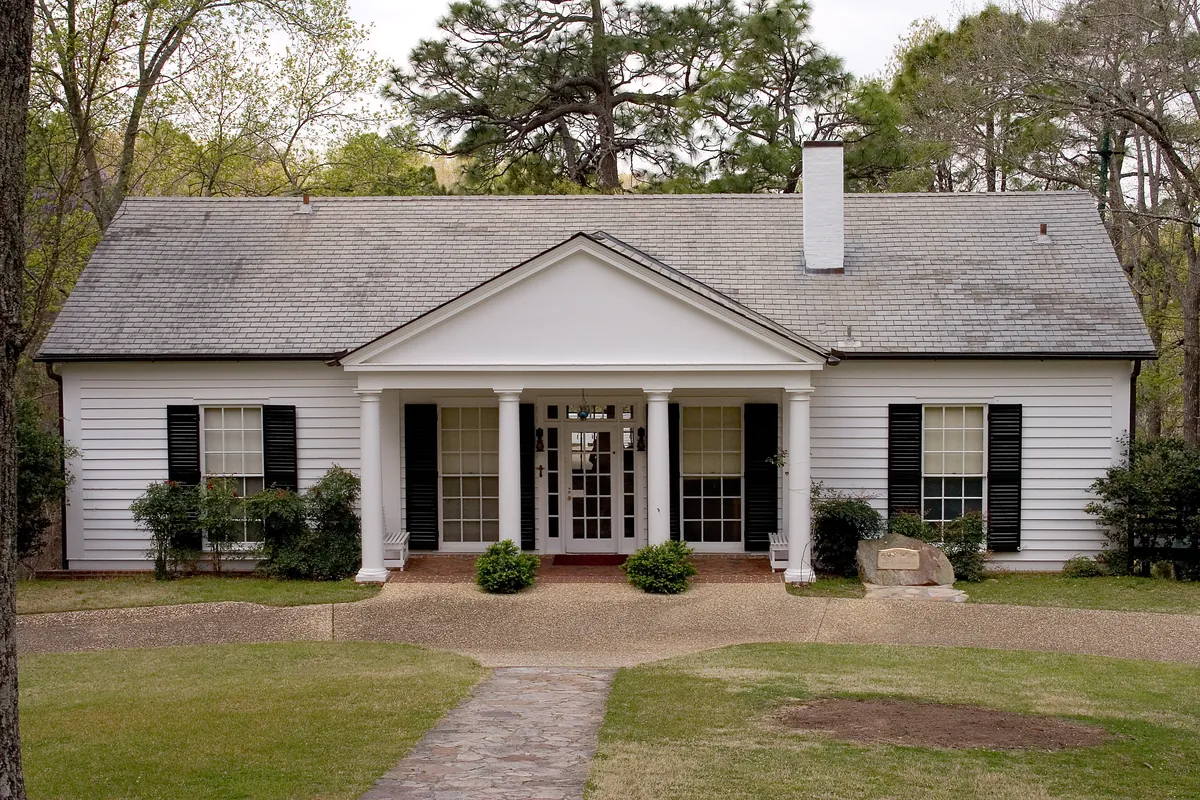
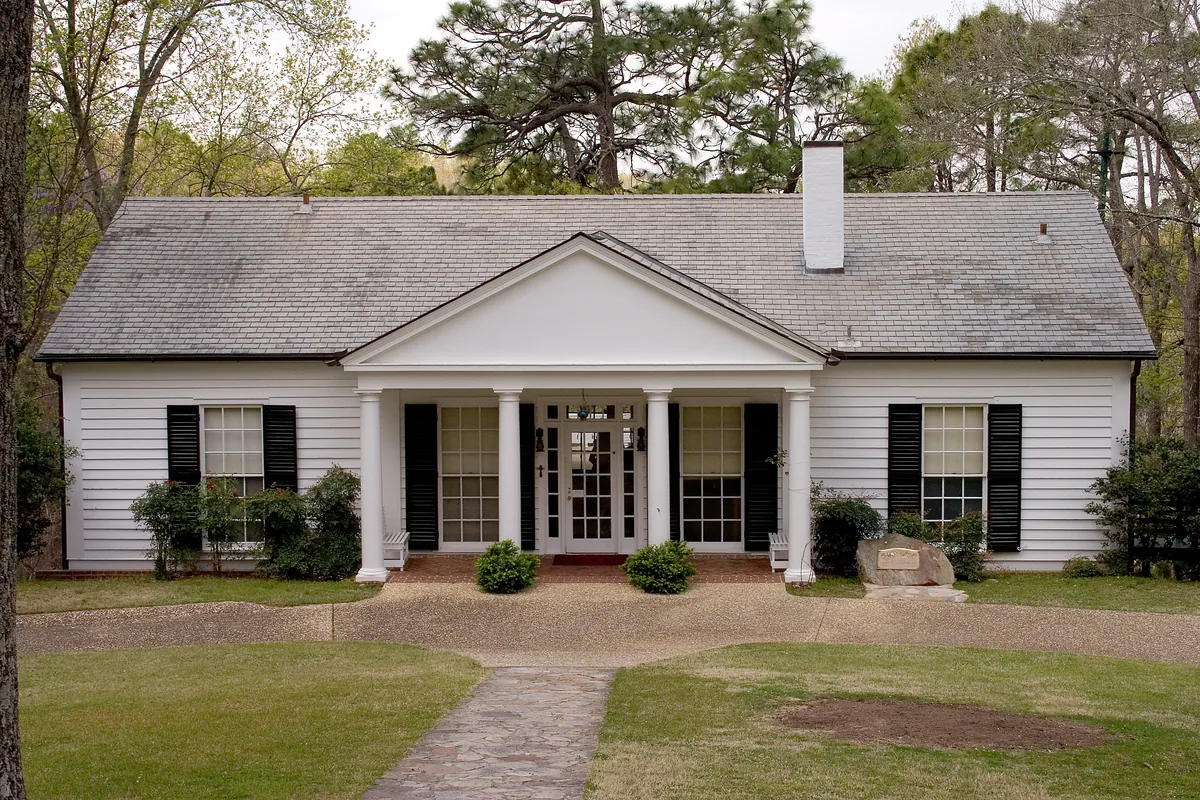
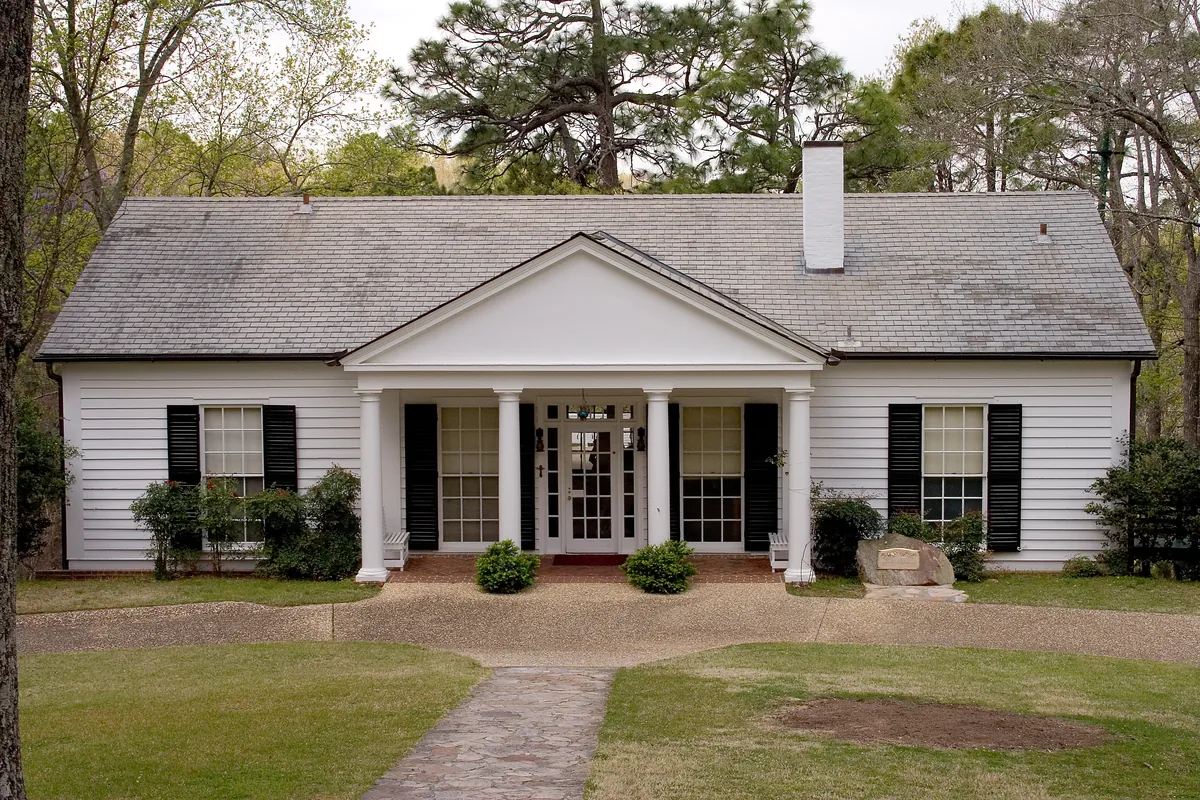
The springs at Warm Springs had been drawing people to this corner of Meriwether County long before anyone recorded them — tradition holds that Muscogee Creek people brought ailing warriors here to heal. Franklin Roosevelt arrived in October 1924, paralyzed from the waist down, drawn by water that held at 88 degrees and the hope it might ease what polio had taken three years earlier. It didn't cure him, but he kept coming back. In 1926 he bought the resort property and roughly 1,200 acres. In 1927 he incorporated the Georgia Warm Springs Foundation, turning a declining Victorian resort into the first hospital devoted solely to treating polio. In 1932 he built a six-room Georgia pine house on the grounds. He made sixteen trips here as president. On April 12, 1945, sitting for a portrait, he suffered a cerebral hemorrhage and died. The house has been preserved as it was that day. The portrait is still unfinished.
Tickets & Shows
Plan your trip
The only thing left to do is go.
Some of these are partner links — if you book through them, Portage may earn a commission at no extra cost to you.
Editorial content compiled with AI assistance. Place details verified against public records.