Good forHistory buffs
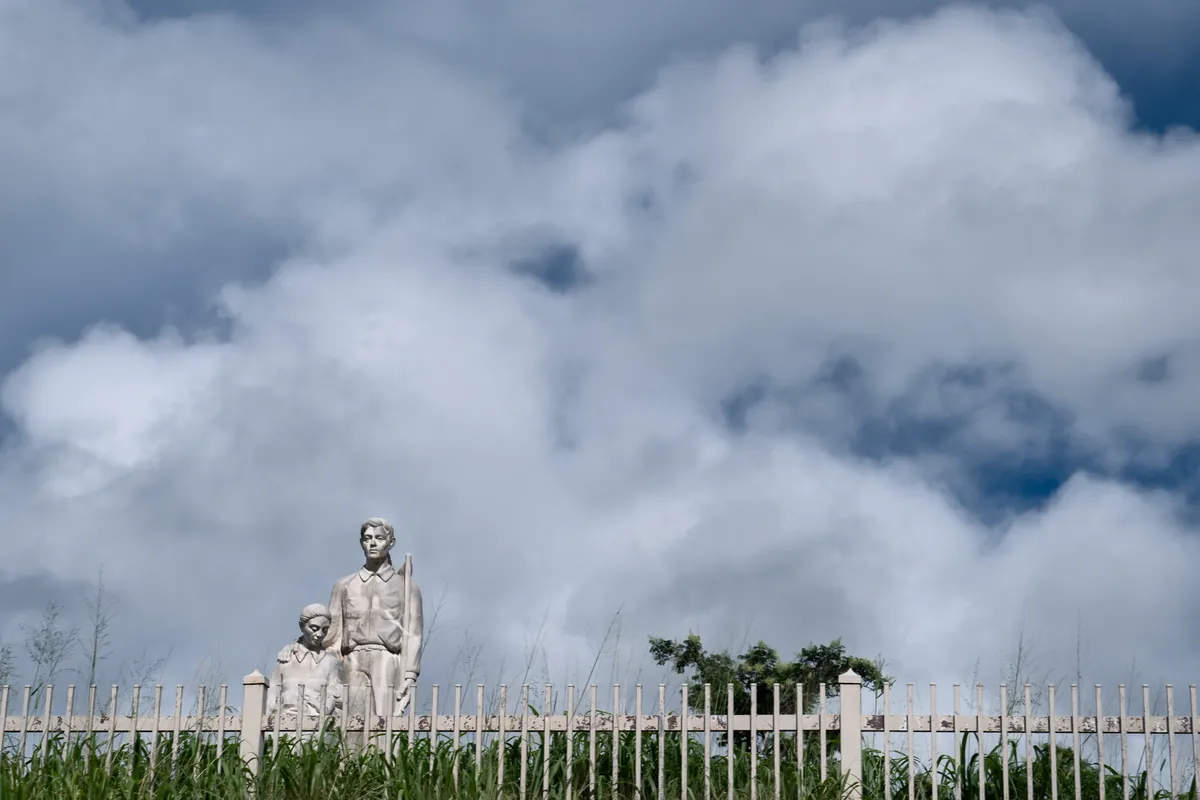
Sculptor Tomás Batista completed this government tribute to the Puerto Rican jíbaro — the island's rural farming workers — between 1973 and December 1976. The statue stands on a stucco pedestal along the southbound lanes of Highway PR-52 at kilometer post 49, in Barrio Lapa, Salinas, at the geographic transition between the humid central mountains and the dry southern zone. The site shares space with the only highway rest area in Puerto Rico.
Quick facts
- ·The jíbaro class emerged from the 1849 libreta de jornaleros system instituted under Governor Juan de la Pezuela: landless rural men (aged 16-60, owning no more than five cuerdas of land) were legally required to register as wage laborers and carry a passbook-like libreta recording their identity, work history, and an employer's conduct/character notes. A hacendado who withheld a worker's libreta could prevent him from leaving the estate, since authorities detained anyone found without one. Contemporaries called this coercive labor regime 'esclavitud blanca' (white slavery); it was not repealed until July 13, 1873. (Source: enciclopediapr.org/content/la-libreta-de-jornaleros/)
- ·The class tensions of the coffee/sugar hacienda economy erupted in the Grito de Lares uprising of September 23, 1868, centered in a coffee-growing region with roughly 500 coffee haciendas. Of a sample of identified rebels/prisoners, 39% were day laborers (jornaleros) and only 4.5% were hacendados. Ending the coercive libreta regime was an explicit grievance and objective of the laborer-rebels -- Manuel Rojas himself ordered jornaleros to break or burn their libretas before the assault, and the revolt's provisional government proclaimed the libreta regime abolished. The revolt's military chief, Manuel Rojas, was himself a coffee hacendado (owner of the 'El Triunfo' coffee estate near Lares, from which the rebel assault was launched), illustrating the class divide the plantation economy created between landowners and jíbaro labor. (Sources: struggle-la-lucha.org/2020/09/26/clases-y-presos-del-grito-de-lares-de-1868/; enciclopediapr.org/content/el-grito-de-lares-1868/)
- ·By 1877, there were 843 registered coffee haciendas spread across approximately 69 of Puerto Rico's municipalities. (Source: jaimemontilla.com/coffee-industry -- note: figure confirmed via that page's content, though the full page could not be directly rendered and was retrieved via cached search snippet)
Memories
Be the first to leave a memory at Monumento al Jíbaro Puertorriqueño.
Sign in to see memories your family has left at this place.
Editorial content compiled with AI assistance. Place details verified against public records.