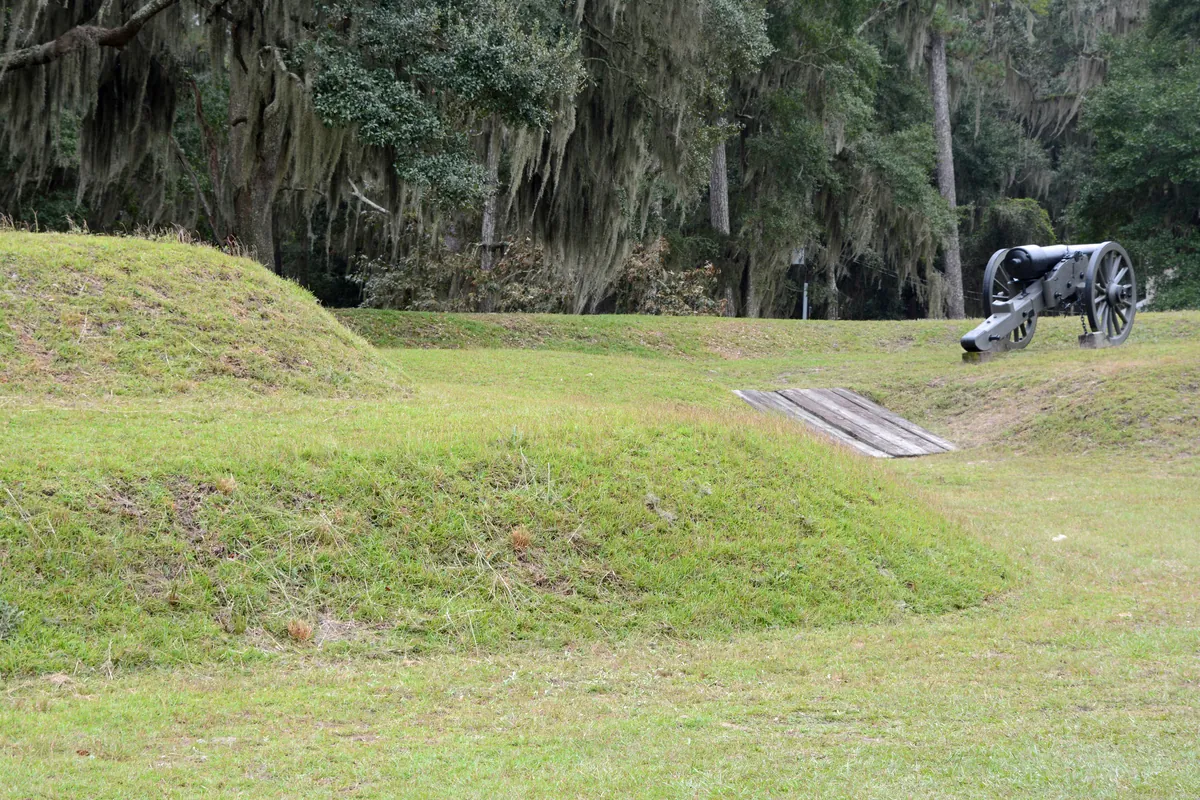
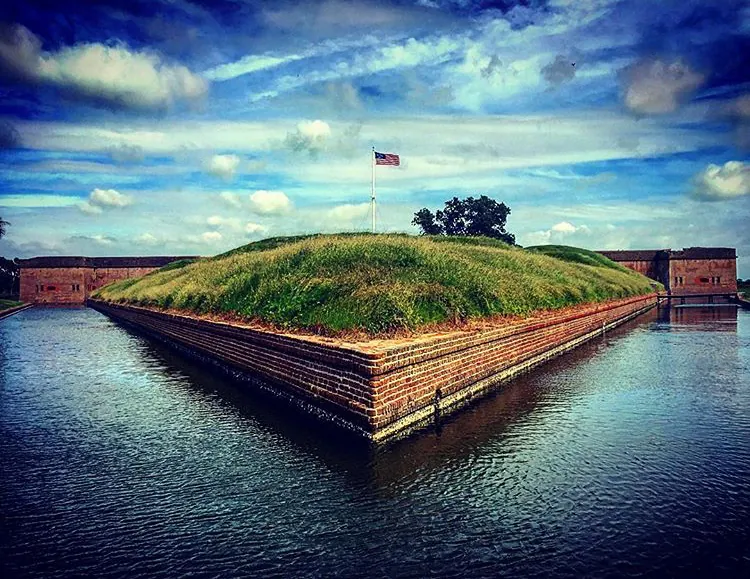
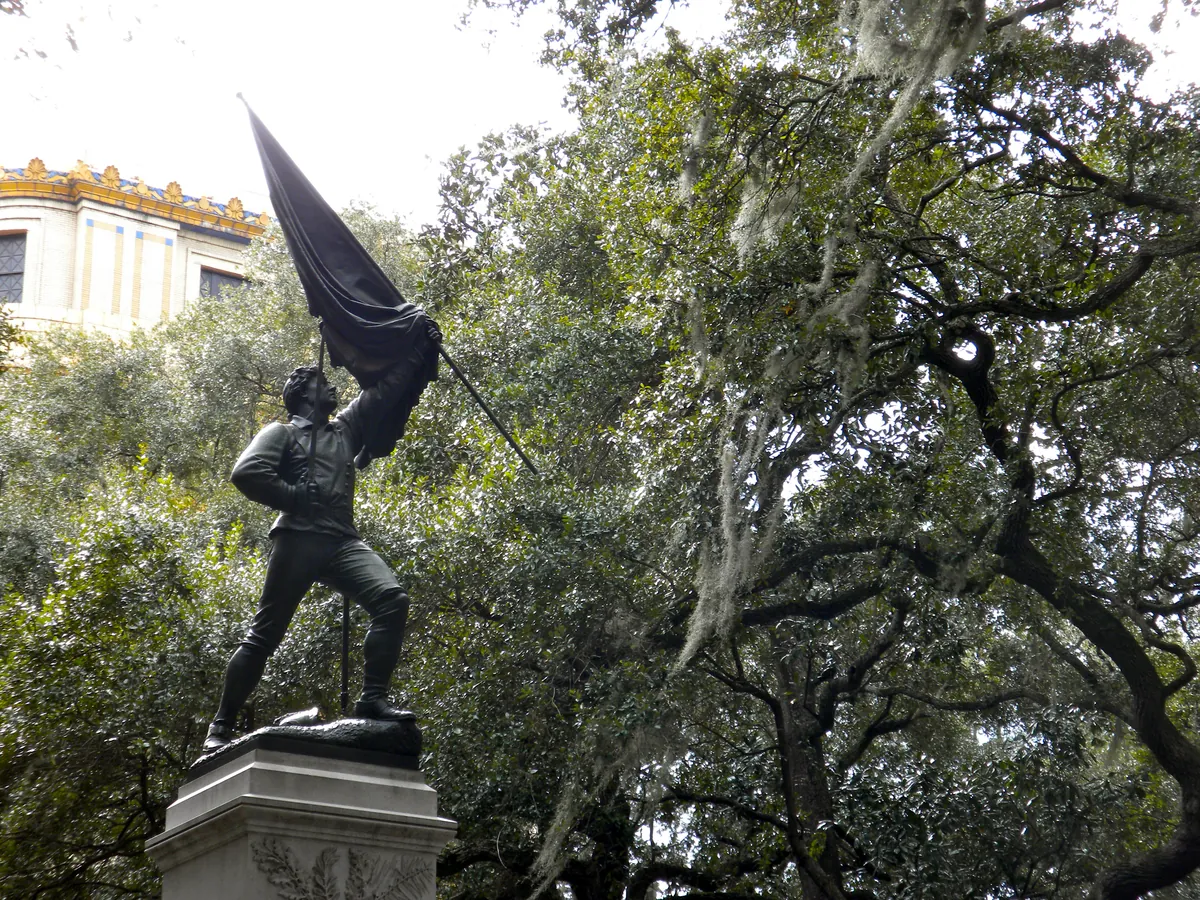
Savannah's value was always about the river. Twenty miles of water between the bluff and the Atlantic made this port worth taking, worth holding, worth dying for — and every army that moved through Georgia understood that calculus. The British seized it in 1778 and held it until 1782, and when the combined American and French forces tried to dislodge them in 1779, they failed. A sergeant named Jasper recovered his company's banner during that siege, mortally wounded; Madison Square still carries his monument. Fort Pulaski's eleven-foot walls and 25 million bricks were supposed to end that conversation permanently — until Union rifled cannons breached them in April 1862 and ended the age of masonry fortification entirely. Fort McAllister held seven Union assaults before finally falling in December 1864, opening the river. Then Savannah negotiated its own surrender rather than burn. The city survived because someone chose the city over the cause.