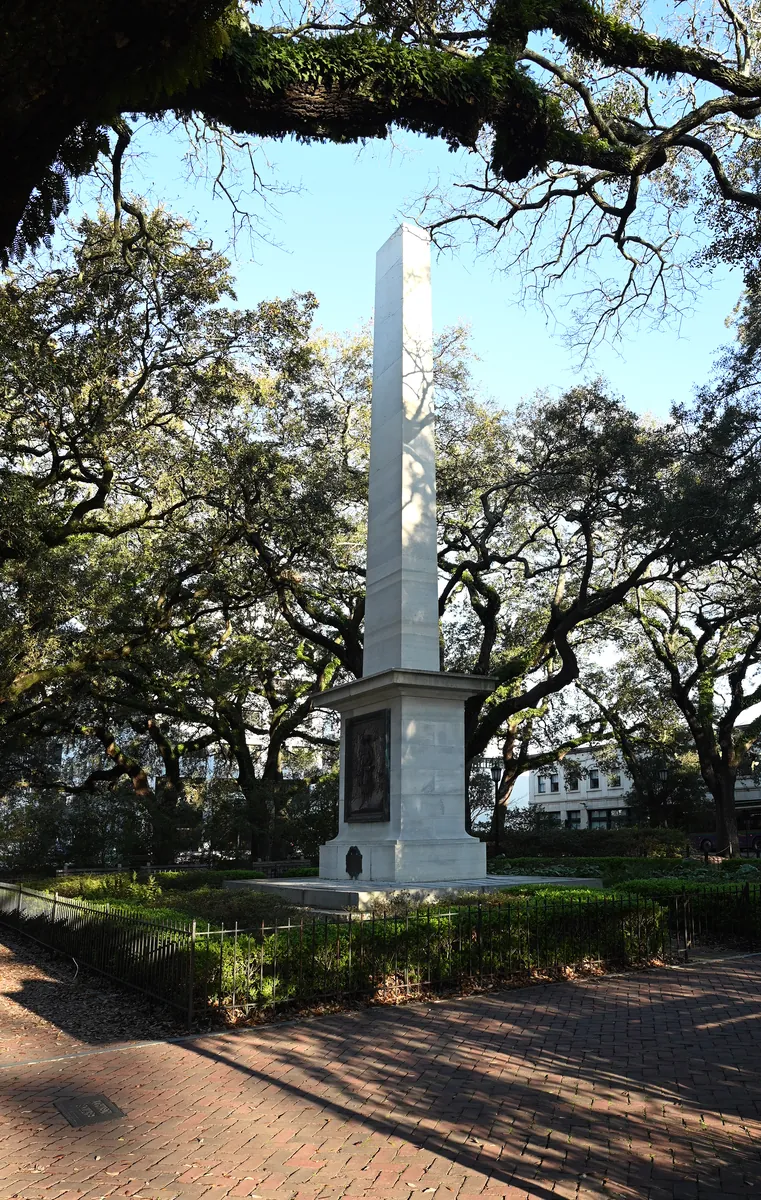
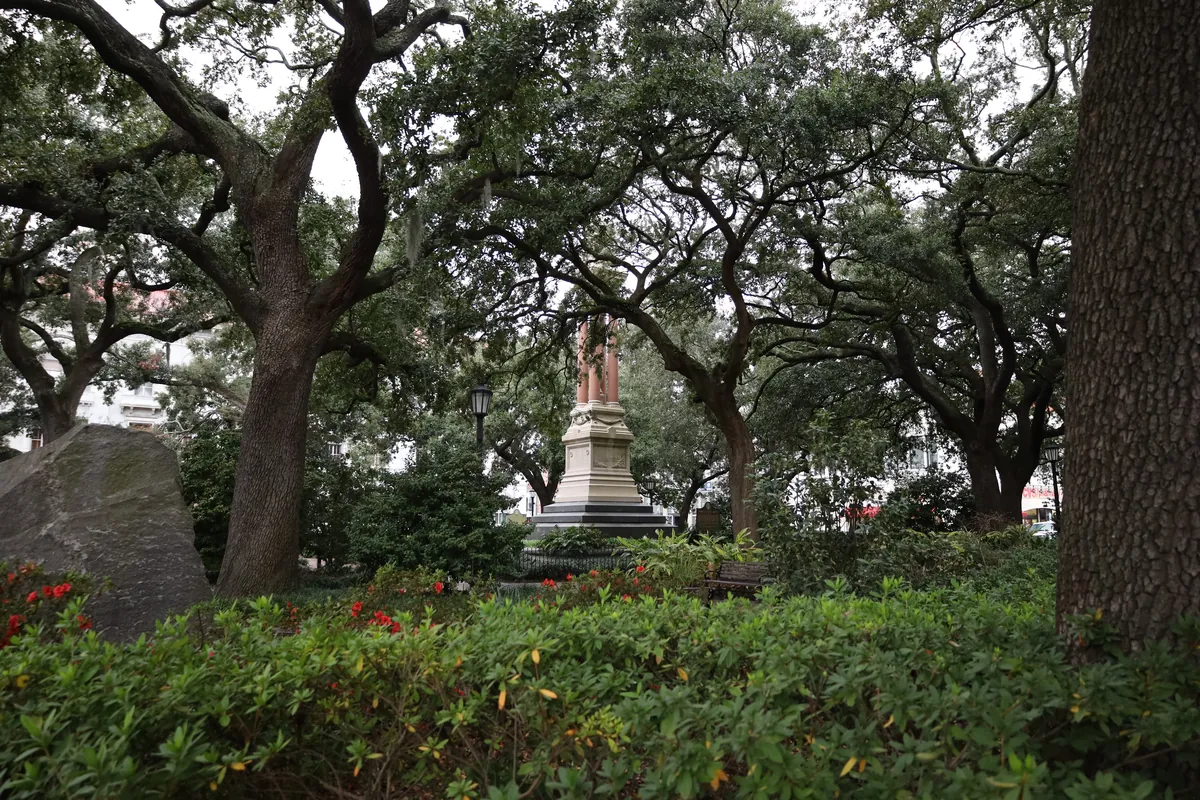
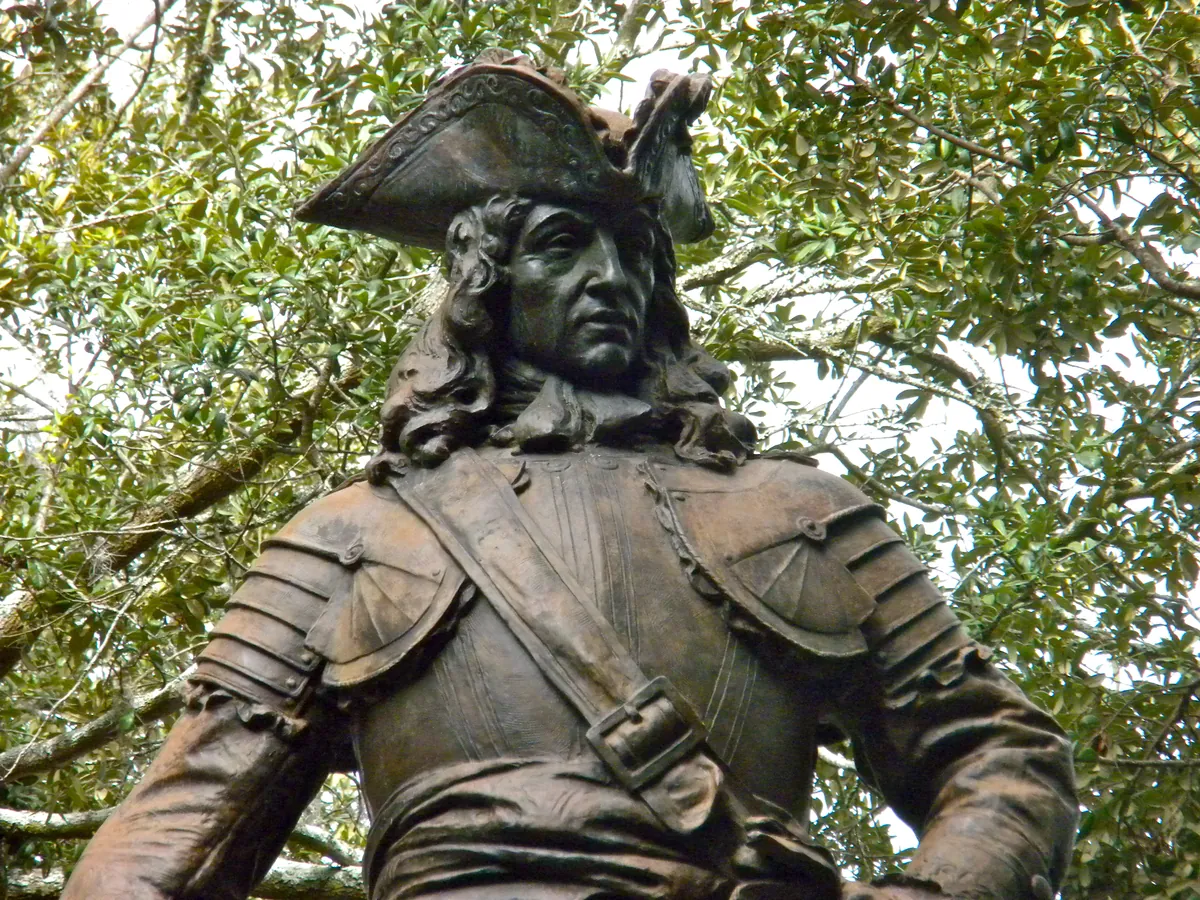
When James Oglethorpe landed at Yamacraw Bluff in 1733, he didn't just found a city — he drew a template. Johnson Square, laid out that same year, was the first of what would become 22 squares, each organizing the blocks around it into a repeating pattern of public space and private life. The plan held through a Revolutionary War occupation, a failed siege, and Sherman's army at the gates. Savannah's leaders surrendered peacefully in December 1864 rather than watch it burn. The squares absorbed the city's contradictions too: Wright Square honors the builder of Georgia's first railroad, while a granite boulder in its corner marks the grave of Tomochichi, the Yamacraw chief whose diplomacy made the founding possible without bloodshed. That tension — between what gets the monument and what gets the corner — is still visible if you know to look for it.