Top picks in Door County
The places most worth your time here.
Connect your Cour circle to see which places friends and family recommend here.
Connect Cour →Landmarks
43 places worth the detour
tap the eye to open · swipe or use buttons to browse
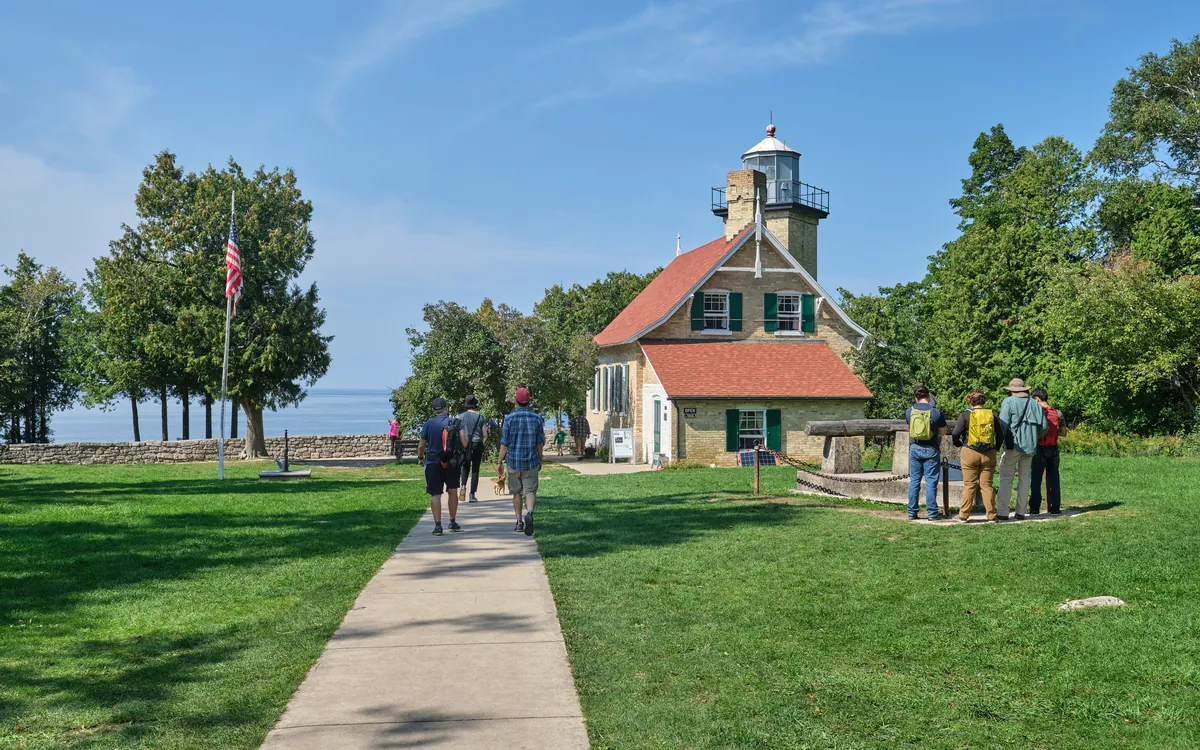
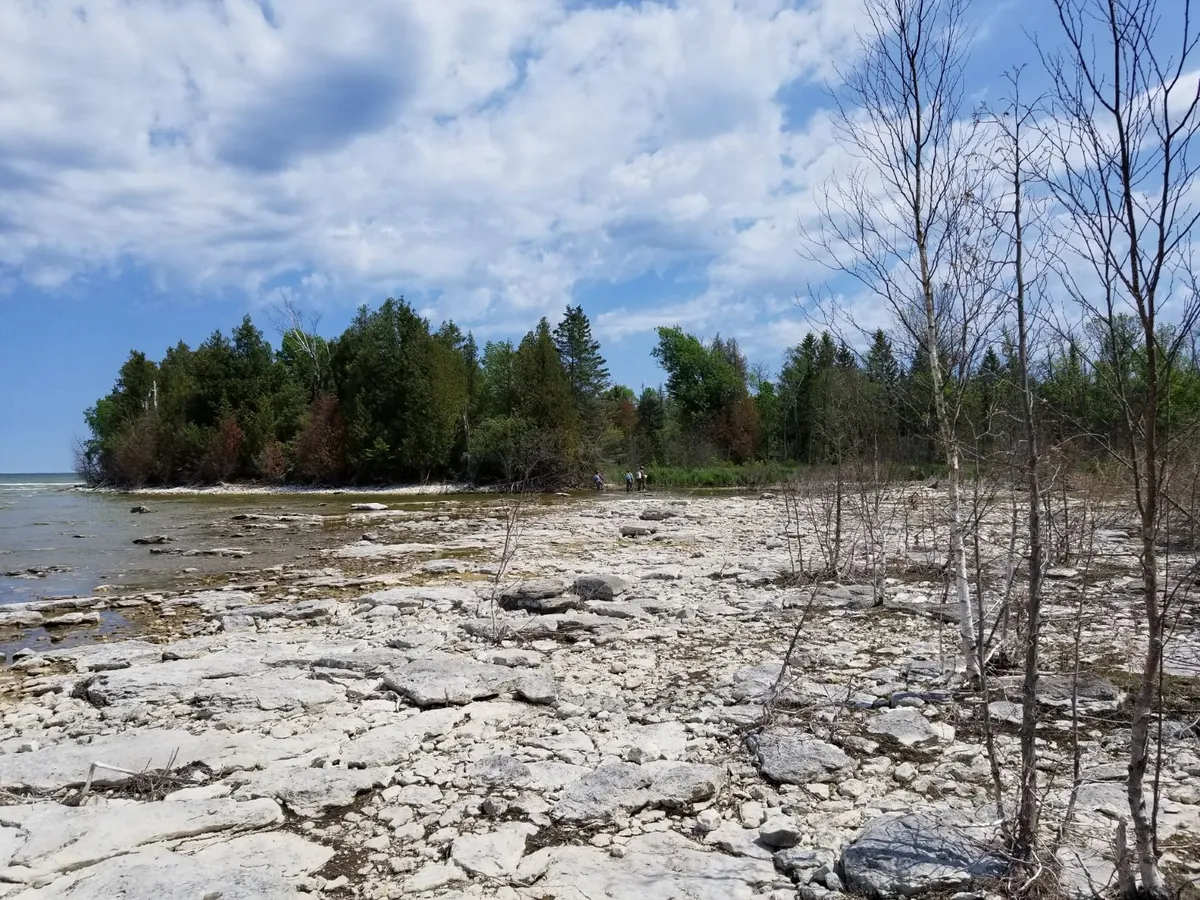
The Door Peninsula reaches fifty miles into Lake Michigan like a finger pointed at Michigan's Upper Peninsula — water on both sides, cold and deep, with Green Bay to the west and open lake to the…
Read the full storyReading
Elias Gill built a pier at Hedgehog Harbor in 1873 for the lumber trade, sold it a year later, and left behind a community anyway. Schooners crowded three competing piers there, loading cordwood and shingles bound for Milwaukee and Chicago; two of those vessels still rest offshore in ten to fifteen feet of water. That pivot from extraction to something more durable runs through Door County's whole story. Commercial fishermen founded the Maritime Museum in 1969 at Gills Rock because they watched the region's artifacts leave the peninsula and decided to stop it — what they built now draws around 95,000 visitors a year. Wilson's ice cream parlor has held its corner in Ephraim since 1906. The county pulls over $600 million annually in tourism impact. The lumber is long gone. What replaced it was built by people who decided to stay.
Before anyone called this place Door County, people lived here. The Potawatomi — Bo-De-Wad-Me, "keeper of the fire" — held the shores of Green Bay when Europeans arrived, and the strait those French explorers named Porte des Morts was already storied ground. At Whitefish Dunes, the evidence goes deeper still: eight successive prehistoric Native American villages, occupied in overlapping waves from 100 B.C. through the later 1800s, sit beneath the dunes on the National Register of Historic Places. The tallest dune, Old Baldy, rises 93 feet above ground that has held human presence for more than two thousand years. Potawatomi State Park in southern Door County carries the tribe's name forward — the federal government held the land for over ninety years before Wisconsin opened it as a park in 1928. The name on the sign is the least the place can offer.
Bob Lautenbach started with a roadside market just south of Fish Creek in 1955. That single fact tells you most of what you need to know about Door County's agricultural identity: someone grew fruit, sold it from the road, and the thing grew from there into a working orchard, vineyard, winery, and cider operation producing some 50 wines and hard ciders on-site. Cherry orchards line the WI-42 corridor the way other places have strip malls — they are not decoration, they are the peninsula's structure. Spring blossoms, summer fruit, roadside markets, u-pick farms: that is the county's actual calendar. The oldest winery on the Door Peninsula runs out of a former schoolhouse. No reservations at the tasting room. You show up, you drink what the land made. The agricultural identity here was built around the orchards, and it still runs on the same logic.
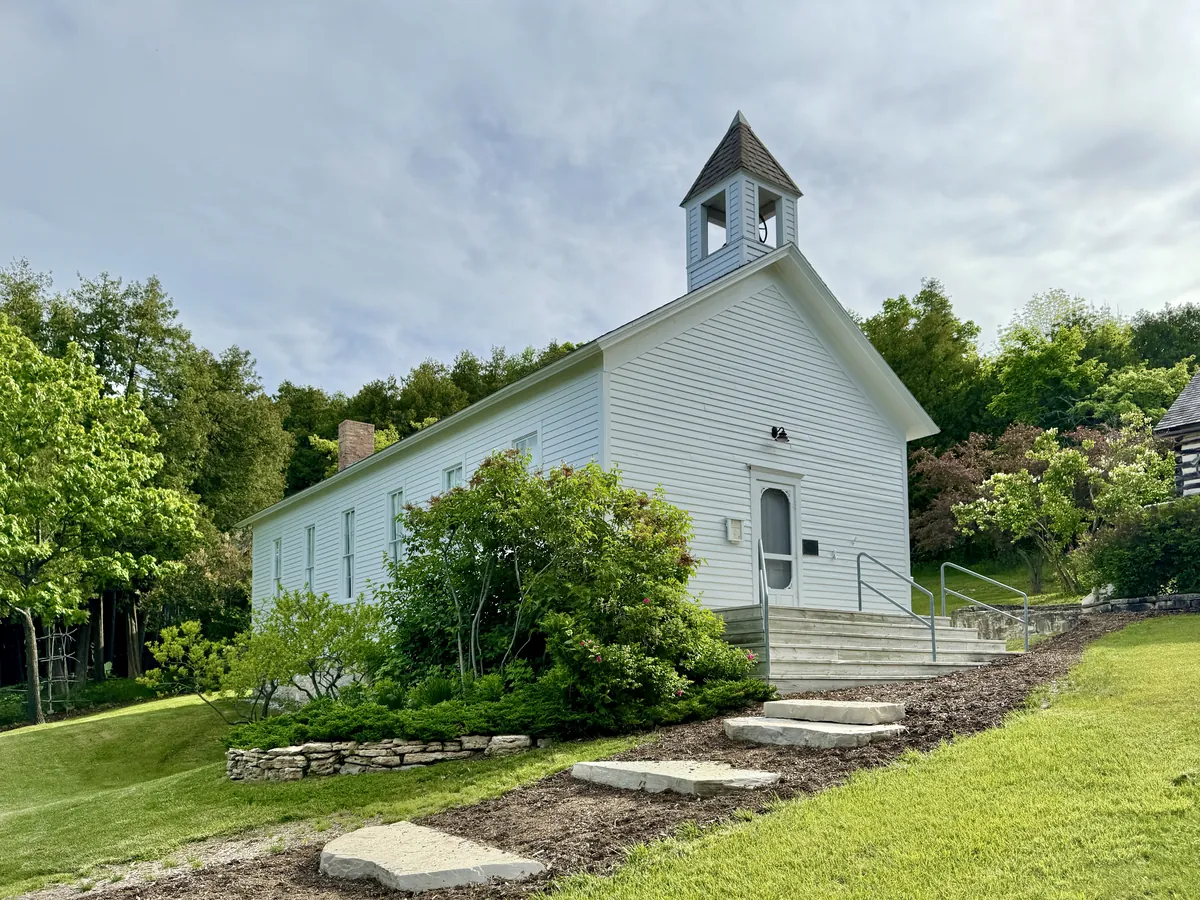
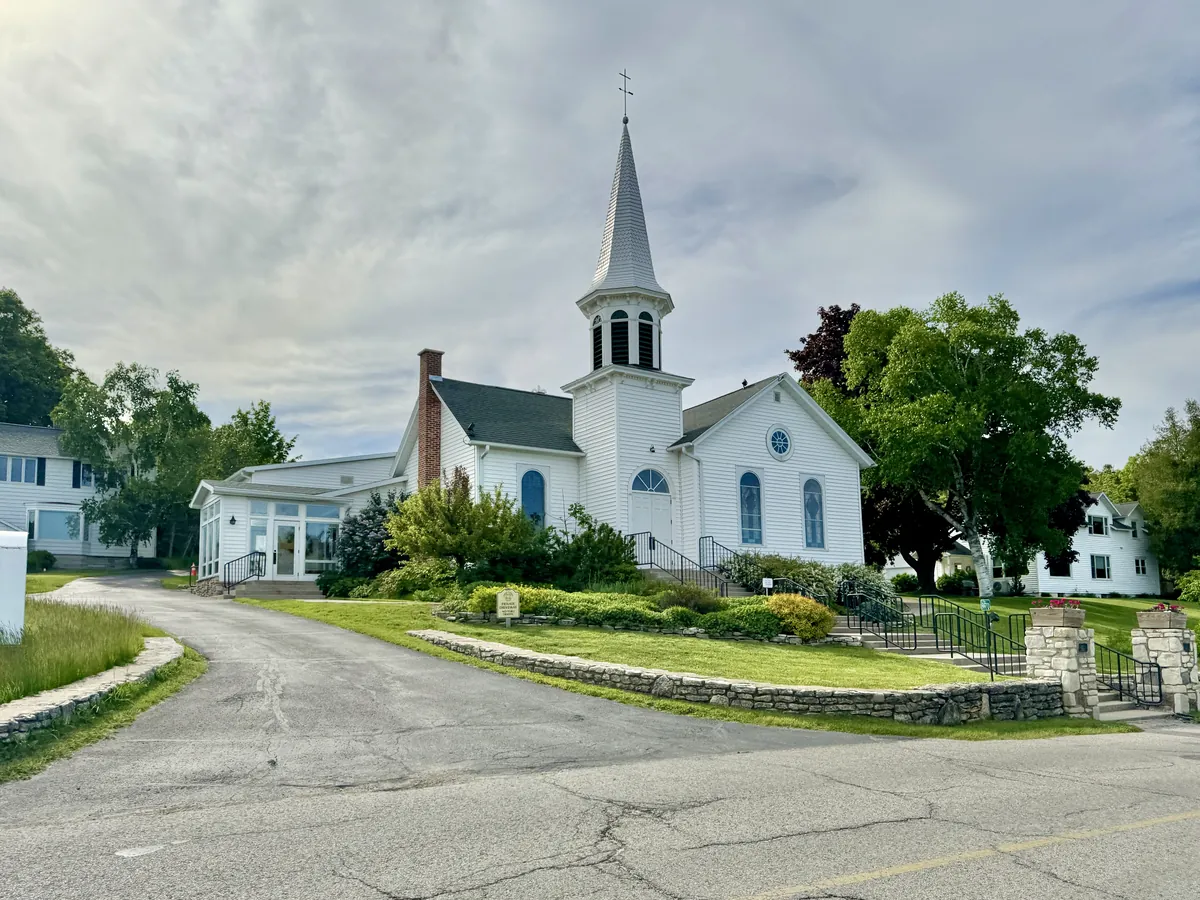
In 1853, Norwegian immigrant Andreas Iverson walked north over the ice from Green Bay to stake a claim on the horseshoe-shaped bay that would become Ephraim, founding a Moravian congregation and completing its church by 1859 — the first on the Door County peninsula. The settlement held its shape: zoning ordinances passed in 1948 still require every building to be white or naturally weathered wood, which is why one brown building remains the easiest address in town to give directions to. The Scandinavian inheritance runs deeper than paint codes. The fish boil — whitefish, red potatoes, salt, a cast-iron kettle — traces to the immigrants who fed lumberjacks and fishermen this way. On Washington Island, volunteer construction that began in 1983 produced a stave church modeled on Norway's 1150 Borgund, completed in 1995, its twelve 18-foot masts harvested locally. The settlers didn't just arrive. They kept building.
The French called it Porte des Morts — Death's Door — and the name was earned before it was written down. The earliest documented reference dates to 1728, but the passage between the tip of the Door Peninsula and Washington Island was already collecting wrecks: strong currents, rock-bound shores, winds that could pin a sailing vessel in place. A legend passed down here holds that a Native American war party was destroyed in a sudden storm crossing it, though the record has never fully separated that story from documented fact. The canal dug between 1872 and 1881 — 1.3 miles across the peninsula — was the eventual answer, letting ships reach Lake Michigan without the gamble. But for the roughly 700 people on Washington Island, the gamble never ended. The ferry still runs year-round from Northport Pier. For them, it's not a scenic crossing. It's the road.
Tickets & Shows
Before you go
A Chicago reporter moved to a chicken coop in Ellison Bay. These are the people who actually ran the place.
Shot in Ellison Bay's actual winter — frozen Lake Michigan, wary locals, zero tourists. The off-season Door County nobody sells you.
Plan your trip
The only thing left to do is go.
Some of these are partner links — if you book through them, Portage may earn a commission at no extra cost to you.
Editorial content compiled with AI assistance. Place details verified against public records.