Good forHistory buffs
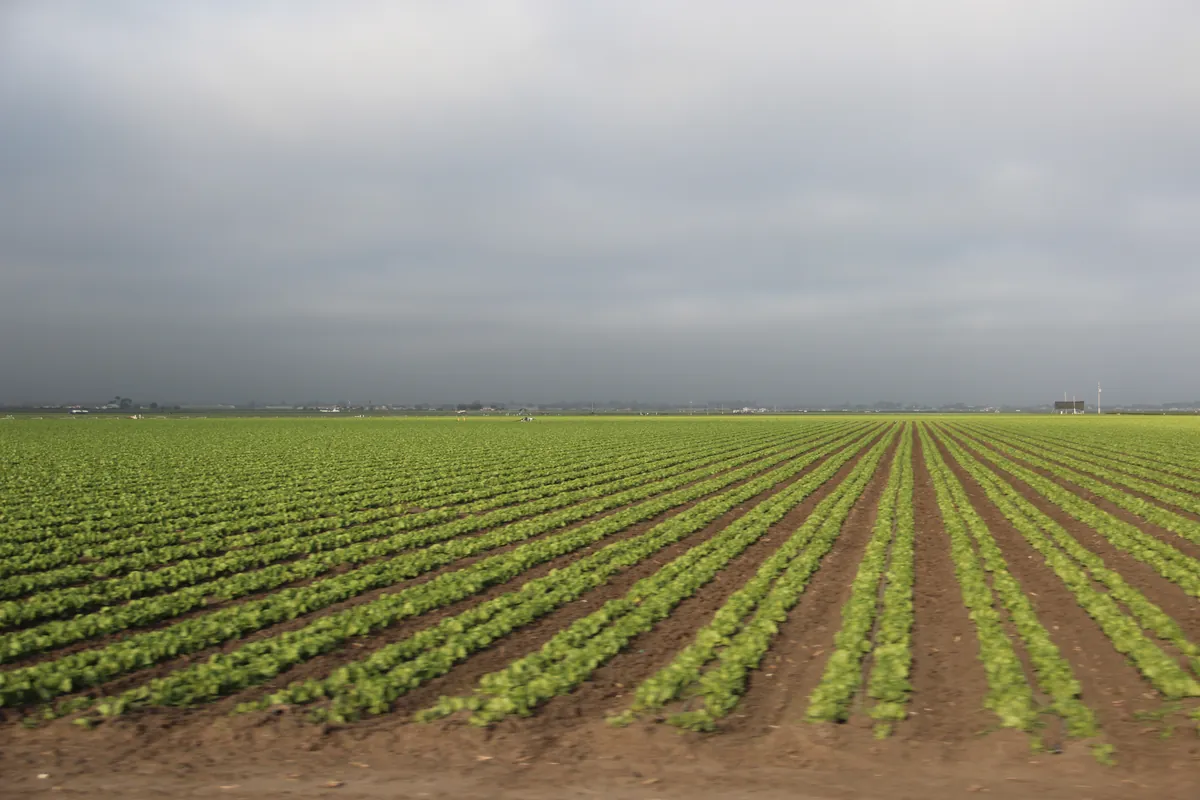
The Salinas River drains roughly 90 miles of valley between the Gabilan and Santa Lucia ranges before reaching Monterey Bay — and the flatlands it carved became what growers call America's Salad Bowl, producing a large majority of the salad greens consumed in the United States. Steinbeck knew this ground: the commercial farming landscape here is the setting of *East of Eden* and *Of Mice and Men*, and the labor conditions of its Dust Bowl–era fields run through several of his stories. The National Steinbeck Center in Salinas is the place to start.
Quick facts
- ·The Southern Pacific Railroad reached Salinas in November 1872 (confirmed by mchsmuseum.com: 'The Southern Pacific Railroad came to Salinas in November of 1872'), and Salinas secured the county seat from Monterey that same year (December 1872, per mchsmuseum.com: 'The following month, Salinas became the county seat'; corroborated by montereycountynow.com, which describes the railroad's land-deal politics as instrumental in Salinas winning the county seat over Monterey/Castroville in 1872).
- ·The commercial lettuce industry's rise in the Salinas Valley is tied to the introduction of ice-packed refrigerated railcars ('reefer cars') around 1921, which montereycountynow.com calls 'the game-changer for Salinas,' enabling the valley's row-crop export economy and its eventual dominance in lettuce production (by 1963, over 1 million boxcars of iceberg lettuce had shipped from Salinas). The general shift from sugar beets to lettuce as the dominant crop, and the 'Salad Bowl' nickname tied to the valley's agricultural output, is corroborated by multiple sources (Wikipedia's Salinas article explicitly confirms Salinas is 'known as the Salad Bowl of the World').
- ·Claus Spreckels built a large-scale beet-sugar refinery at Spreckels, near Salinas, which began operations in 1899 (multiple independent sources — mchsmuseum.com, Wikipedia's Spreckels Sugar Company article, and PCAD's building record — converge on 1899 as the opening/completion year), and it was widely described at the time as one of the largest beet-sugar refineries in existence (though sources conflict on whether it was literally the largest in the world or the largest in the US/third-largest globally).
Memories
Be the first to leave a memory at Salinas Valley (Steinbeck Country Agricultural Landscape).
Sign in to see memories your family has left at this place.
Editorial content compiled with AI assistance. Place details verified against public records.