Top picks in Monterey Bay & Big Sur
The places most worth your time here.
Connect your Cour circle to see which places friends and family recommend here.
Connect Cour →Landmarks
53 places worth the detour
tap the eye to open · swipe or use buttons to browse
The Ohlone, Esselen, Salinan, and Chumash peoples had been working this coastline for at least twelve thousand years before any European ship appeared on the horizon. They knew what the place…
Read the full storyReading
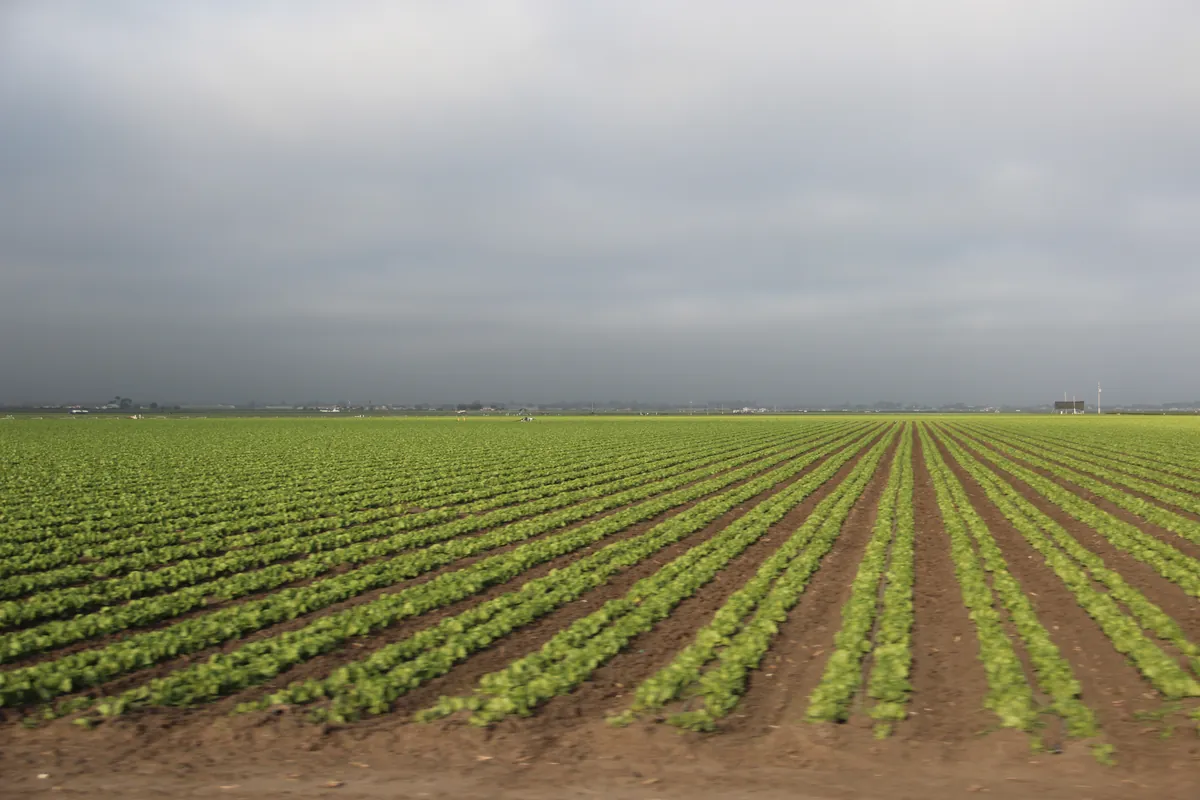
The Southern Pacific reached Salinas in November 1872, and within a month the town had pried the county seat away from Monterey — the railroad's politics reshaping the valley before a single crop was planted for export. Claus Spreckels opened one of the largest beet-sugar refineries in existence at nearby Spreckels in 1899. Then, around 1921, ice-packed refrigerated railcars arrived and changed everything: by 1963, more than a million boxcars of iceberg lettuce had shipped from the valley, earning it the name America's Salad Bowl. The infrastructure that made industrial scale possible was already in place when, in 1984, Drew and Myra Goodman started Earthbound Farm on 2.5 acres in Carmel Valley. The following year, the Rural Development Center opened on a farm eight miles south of Salinas. The valley that fed the country through sheer volume was beginning, in its margins, to ask different questions about how that work gets done.
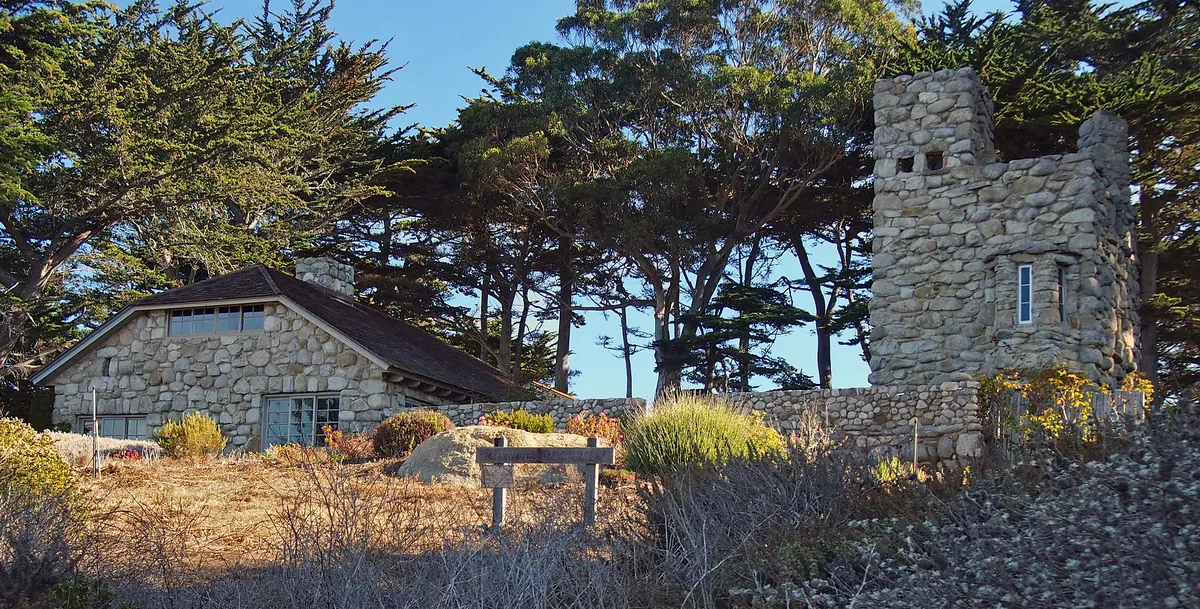
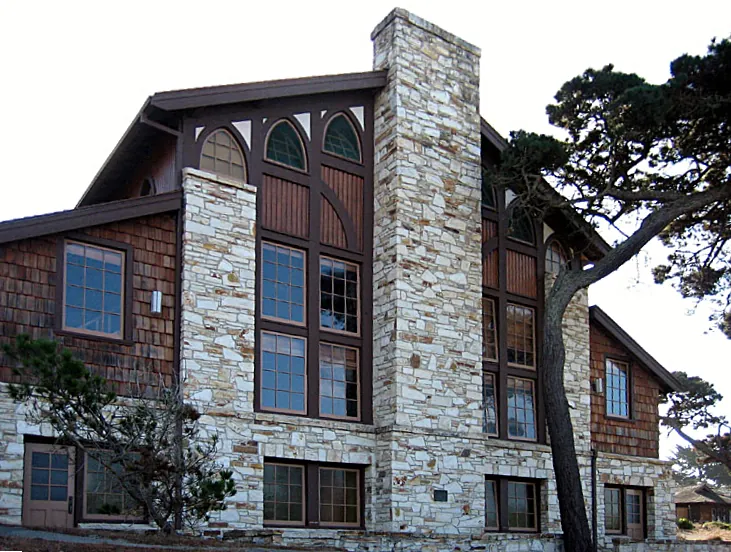
Robinson Jeffers arrived at Carmel Point in 1919, contracted a stonemason, then signed on as apprentice to learn the work himself. By mid-August the granite cottage stood. Then he spent four years dragging boulders up from the beach by wooden plank and block and tackle to raise Hawk Tower alone — and it was during that labor, the record suggests, that he found his voice as a poet. Something about this coast kept pulling people toward that kind of effort. In 1944, Orson Welles and Rita Hayworth bought a cliff-side cabin on a whim, measured the windows for curtains, and vanished; the Fassetts bought it in 1947, hired an architect trained under Frank Lloyd Wright, and opened Nepenthe on April 24, 1949, 800 feet above the Pacific. Esalen opened on the same coast in 1962. Henry Miller's friend Emil White turned his own house into a library after Miller died in 1980. The place keeps making keepers.
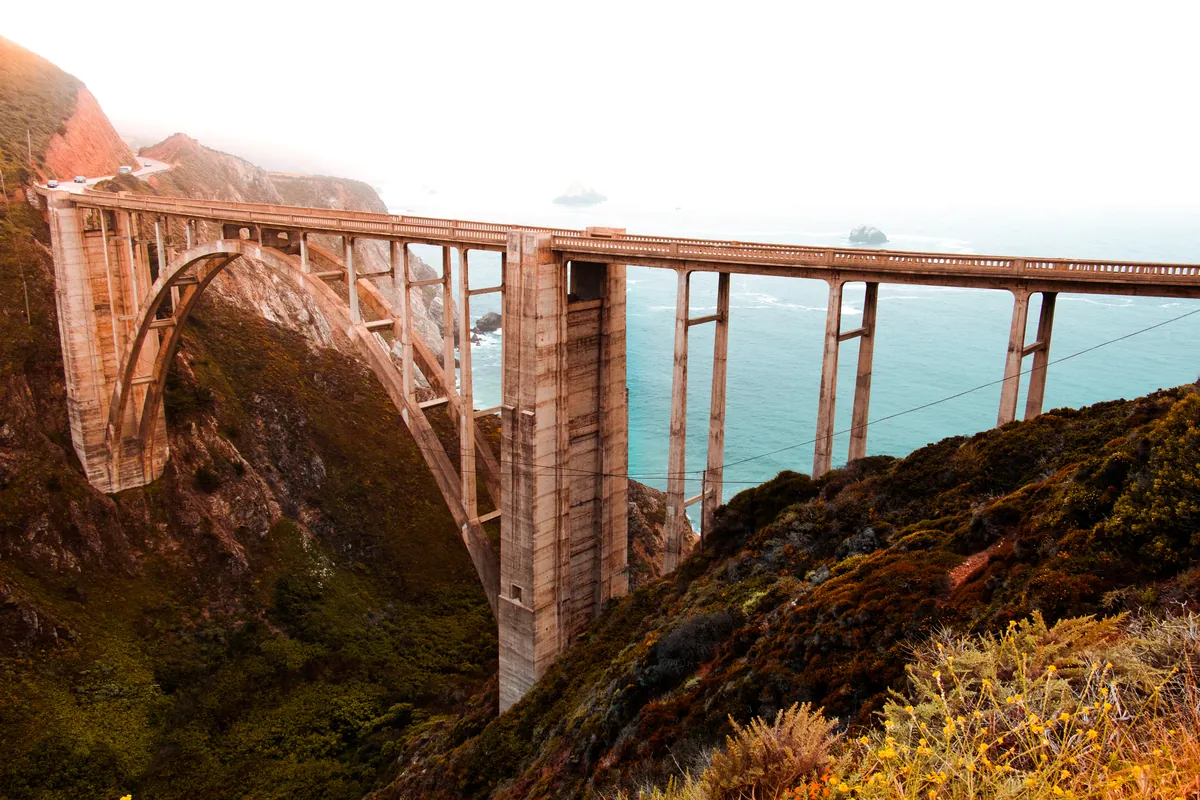
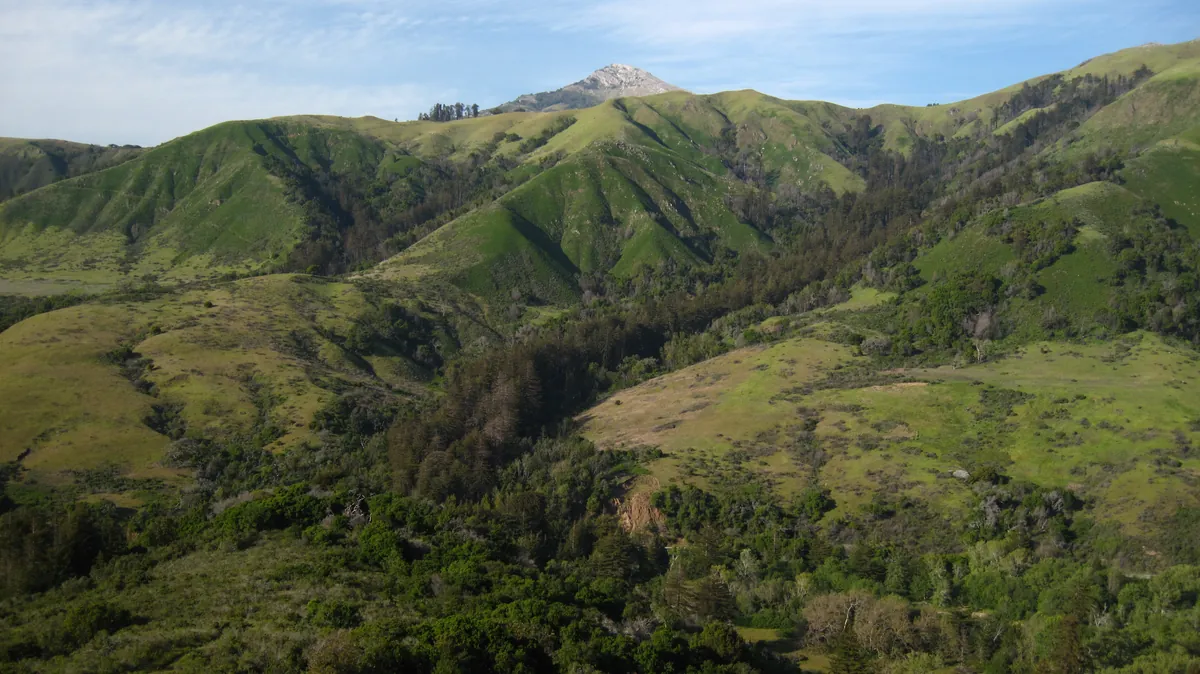
In 1894, Dr. John Roberts spent three and a half hours in a horse-drawn cart reaching shipwreck survivors near Point Sur, and left convinced a road had to exist. It took four decades to prove him right. The fog off this coast had already claimed enough ships to justify a lighthouse at Point Sur in 1889 — keepers and their families living on that volcanic rock 361 feet above the Pacific for the next 85 years. But a road required something harder: 18 years of construction, prison labor, and Depression-era federal money. The Bixby Creek Bridge came first, completed in October 1932 — a reinforced concrete arch spanning 360 feet, clearing the creek by 260 feet, the longest concrete arch span on the California State Highway System at the time. The highway it was built to carry didn't open until 1937. The cliffs didn't negotiate. They were simply endured.
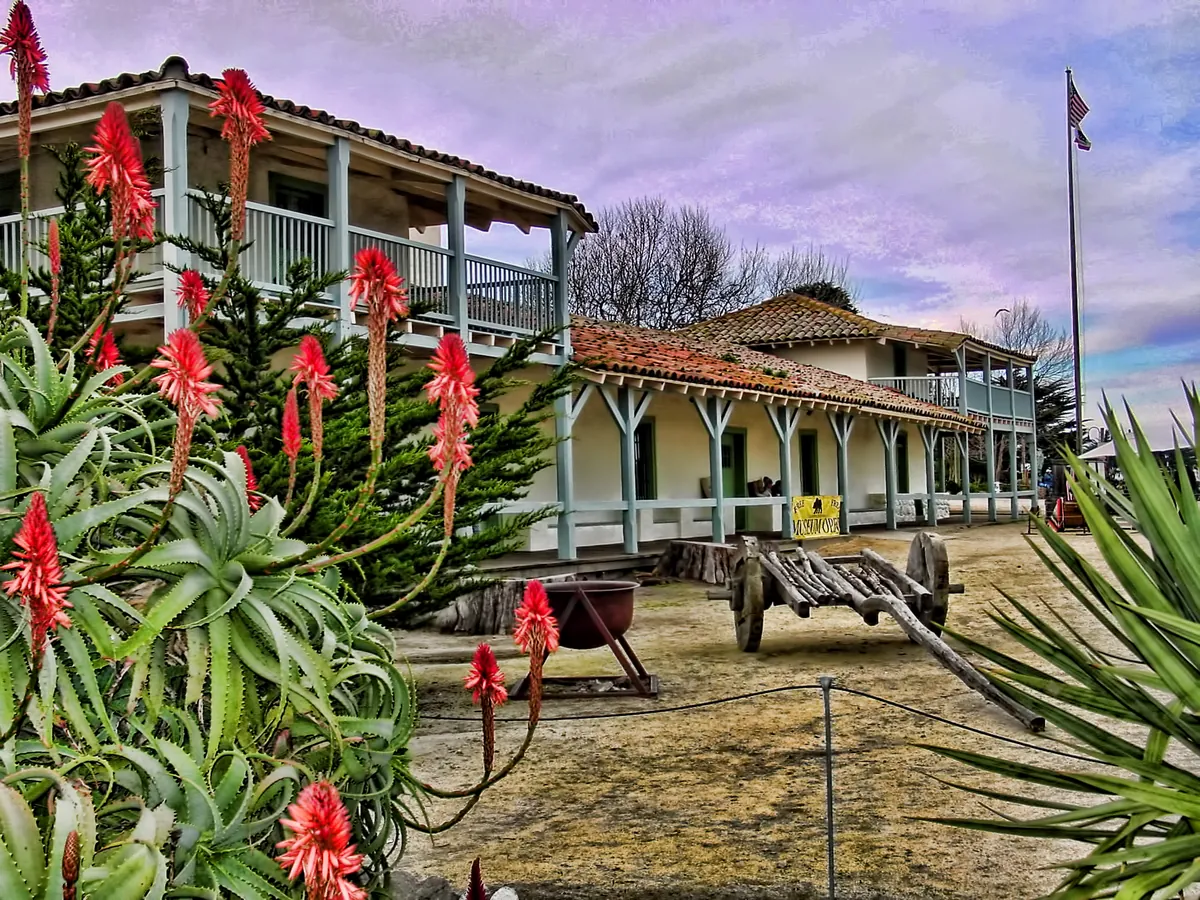
The path to the 1847 adobe's front door is paved with whale vertebrae — bones set into the ground as a casual reminder of what the building became. It started as a private residence, turned whaling headquarters in the 1850s, and the nearby beach did the processing. The bones stayed. A century later, more than 30 canneries were running along what was then called Ocean View Avenue, pulling sardines until production peaked in the early 1940s, collapsed after the war, and the last cannery closed in 1973. The street was renamed for Steinbeck in 1958. The Hovden Cannery site became the Monterey Bay Aquarium. Beneath all of it: a submarine canyon dropping 12,743 feet, deeper than the Grand Canyon, designated federal sanctuary in 1992 across 6,094 square miles. The canyon is the reason the bay is the bay — and the reason anything survived the industry at all.
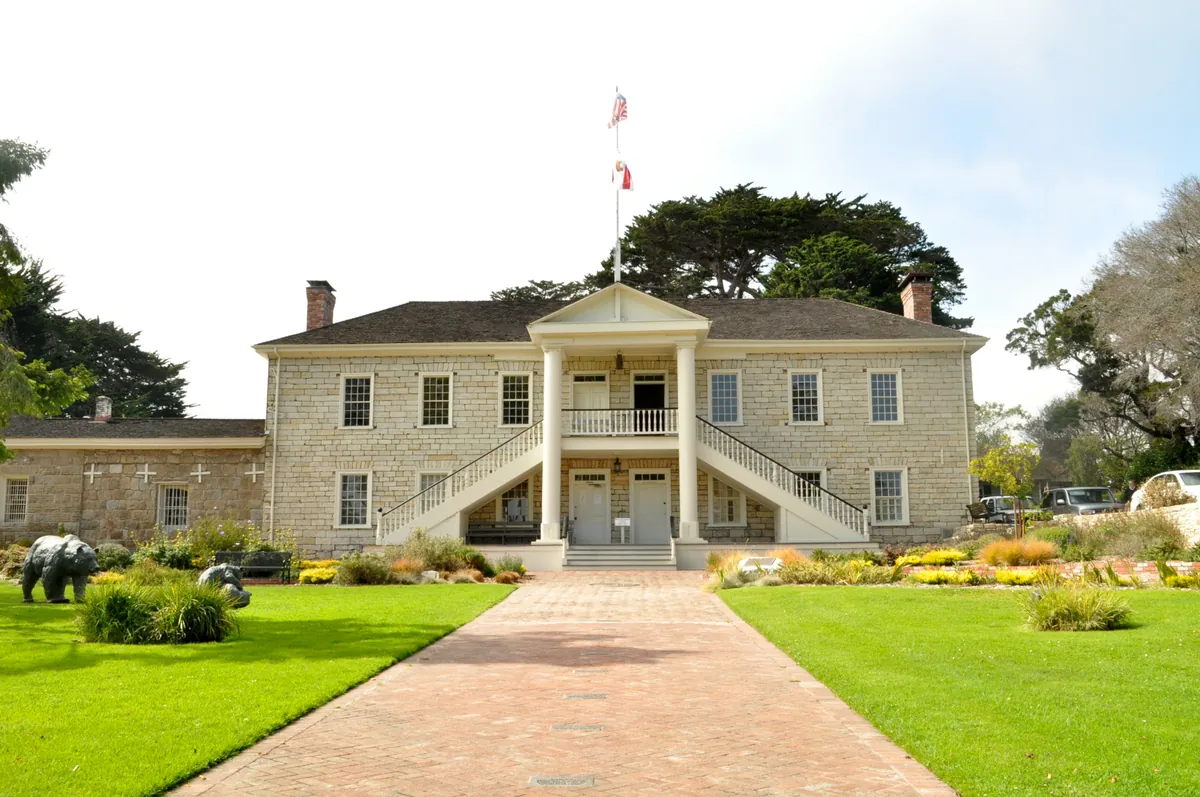
Monterey held California's fate before California knew it had one. Spain claimed the hill above the harbor in 1770 under Gaspar de Portolá, and the Presidio built there passed from Spanish to Mexican to American hands without a single shot fired when Commodore John Drake Sloat raised the flag over the Custom House on July 7, 1846. That Custom House — built by the Mexican government in 1827, collecting duties from foreign traders as Alta California's primary revenue — became California's first designated historic landmark. Three years later, delegates met on the upper floor of Colton Hall to write the state's first constitution, in a building Walter Colton had funded through fines on gamblers, cantina taxes, and convict labor. The Presidio still runs as an active Army post. These buildings didn't become museums by accident — they became museums because the decisions made inside them stuck.
Tickets & Shows
Before you go
Reads the waterfront as it was — sardines, grifters, a biologist who threw parties for everyone — before Monterey sold it back as atmosphere.
Eastwood shot his debut in his own backyard — real bars, real radio station, real Carmel cliffs. The place isn't set dressing; it's the whole argument.
Plan your trip
The only thing left to do is go.
Some of these are partner links — if you book through them, Portage may earn a commission at no extra cost to you.
Editorial content compiled with AI assistance. Place details verified against public records.