Good forHistory buffs
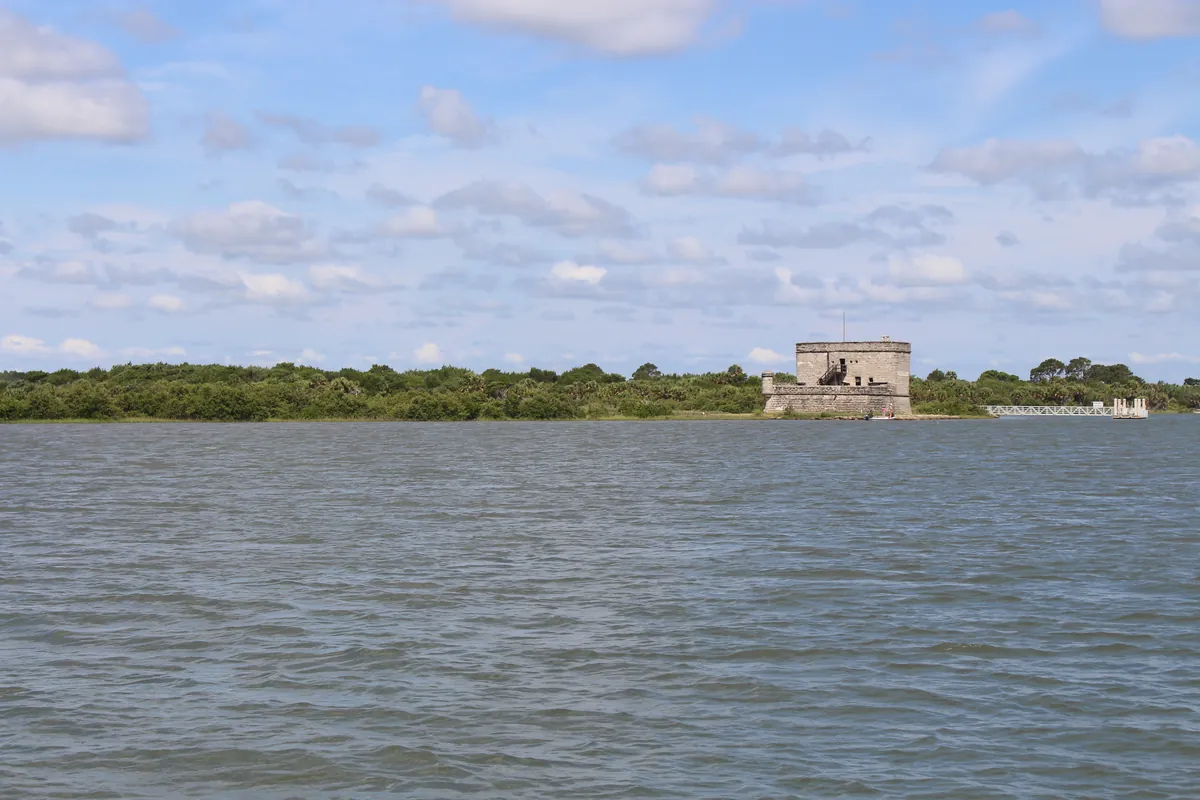
The name tells the story before the fort does. *Matanzas* is Spanish for slaughters — the inlet earned it in 1565, when the Spanish executed Jean Ribault and the surviving French Huguenot colonists from Fort Caroline on its north shore. The coquina watchtower the Spanish built here in 1742 came later, raised to guard the southern water approach to St. Augustine after a 1740 British siege convinced them the inlet needed defending. A free NPS ferry crosses to it from the visitor center on Anastasia Island. The only time the fort fired on an enemy, it worked.
Quick facts
- ·The inlet, river, and Fort Matanzas National Monument all take their name from the 1565 killings of French Huguenot survivors: 'Matanzas' is Spanish for 'slaughters.' (Confirmed verbatim by both NPS: 'the inlet where the deed occurred has been known as Matanzas, meaning slaughters in Spanish... Fort Matanzas, the Matanzas River, and the Matanzas Inlet all derive their name from the massacre' and Wikipedia's Massacre at Matanzas Inlet article, same wording.)
- ·After a hurricane wrecked the French fleet under Jean Ribault, leaving survivors shipwrecked south of St. Augustine (Wikipedia specifies 'between Matanzas Inlet and Mosquito Inlet'; NPS specifies 'between present-day Daytona Beach and Cape Canaveral' — consistent locations), Pedro Menéndez de Avilés marched to the site and, in two separate encounters, had a total of 245 French Huguenot survivors killed after their surrender: 111 on September 29, 1565 (the feast of St. Michael) and 134 on October 12, 1565. (Confirmed directly by the NPS FOMA source: '111 Frenchmen were killed... On October 12 Ribault and his men surrendered and met their fate. This time 134 were killed'; the September 29 date is corroborated by an independent secondary source quoting the same NPS figures.)
- ·Only sixteen were spared from the first encounter: a few who professed being Catholic, some impressed Breton sailors, and four artisans needed at St. Augustine. (Confirmed near-verbatim from NPS: 'Only sixteen were spared - a few who professed being Catholic, some impressed Breton sailors, and four artisans needed at St. Augustine.')
- ·This action followed Menéndez's earlier overland assault (departing St. Augustine, a multi-day march) that overwhelmed the French garrison at Fort Caroline itself, killing roughly 132 of about 240 defenders in under an hour. (Confirmed by Wikipedia's Spanish assault on French Florida: 500 Spanish soldiers attacked ~240 French defenders, 132 killed, 'the victory was won within an hour without loss to the Spaniards of a single man.')
- ·After capturing Fort Caroline, the Spanish occupied it and renamed it 'San Mateo' (for St. Matthew's feast day, the day of its capture), and the Matanzas killings followed as Menéndez, back in St. Augustine, learned of and moved against Ribault's shipwrecked, stranded survivors — making Matanzas the second phase of a single campaign against French Florida rather than an isolated incident. (Confirmed by Wikipedia's Spanish assault on French Florida: fort 'named San Mateo' after capture on St. Matthew's feast day; sequence of Fort Caroline capture followed by Menéndez learning of and attacking the shipwrecked Ribault survivors is explicitly laid out, supporting the single-campaign characterization as a reasonable synthesis of confirmed sequential facts.)
Memories
Be the first to leave a memory at Matanzas Inlet and Fort Matanzas National Monument.
Sign in to see memories your family has left at this place.
Editorial content compiled with AI assistance. Place details verified against public records.