Top picks in St. Augustine
The places most worth your time here.
Connect your Cour circle to see which places friends and family recommend here.
Connect Cour →Landmarks
45 places worth the detour
tap the eye to open · swipe or use buttons to browse
St. Augustine sits on a narrow strip of Atlantic coast in northeastern Florida, wedged between the Matanzas River and the sea. It is not a commanding position — no great harbor, no mountain pass, no…
Read the full storyReading
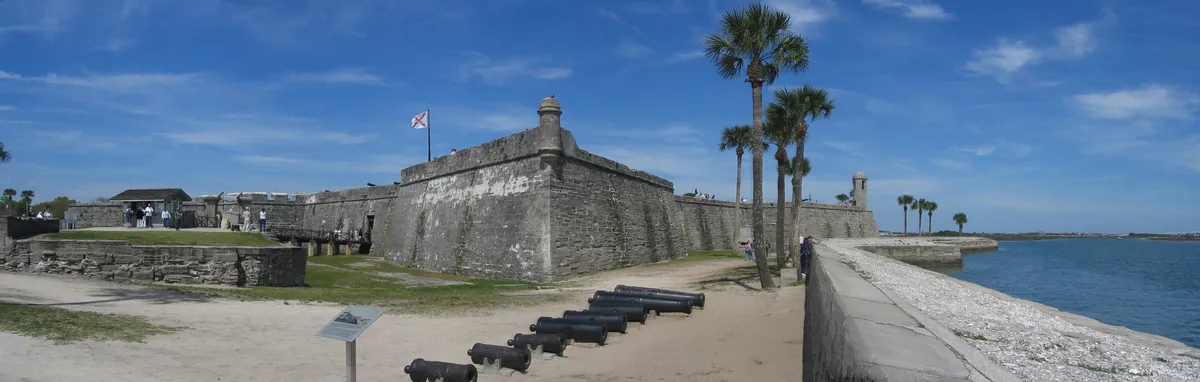
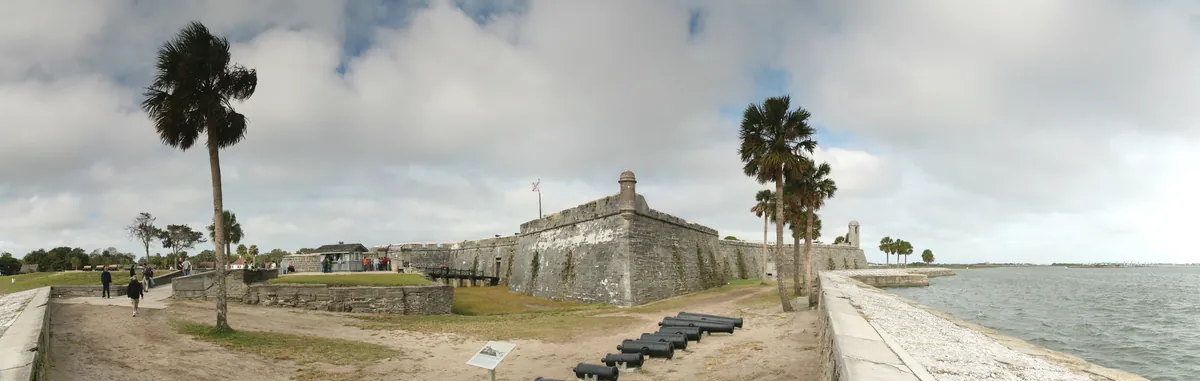
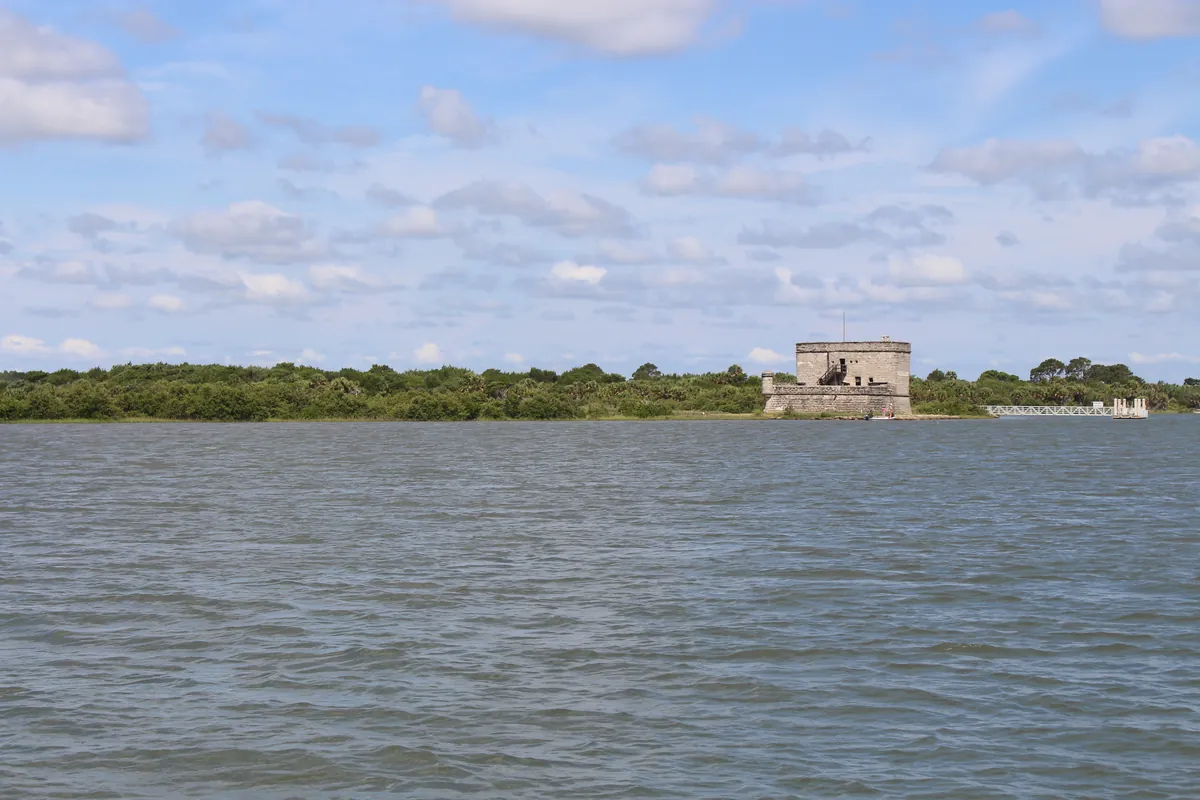
Pedro Menéndez de Avilés founded St. Augustine in September 1565, and before the month was out he had marched south and killed 111 shipwrecked French Huguenot survivors at an inlet his men would call Matanzas — slaughters. Thirteen days later, 134 more. The inlet, the river, and the national monument still carry that name. The settlement Menéndez planted on the Atlantic coast then spent its first century learning how much it needed defending: nine wooden forts on the same site, all lost to rot, termites, storms, tides, or fire. In 1668, English privateer Robert Searle raided the town, killed roughly 60 residents, looted silver, held daughters of wealthy families for ransom, and carried off Black and Native American residents to sell into slavery in the Caribbean. Spain's answer was masonry: construction on the Castillo de San Marcos began in 1672 and finished in 1695. When Carolina Governor James Moore's forces came in 1702, they burned the town but could not breach it.
In 1768, five hundred Greeks were contracted through the British Indentured Servitude Act to cultivate land near present-day New Smyrna Beach. The colony failed. They walked to St. Augustine. In 1777, Governor Patrick Tonyn gave the survivors sanctuary in the Avero House on St. George Street, and the second floor became their church. Menorcan settlers — refugees from that same failed colonial experiment to the south — had already found their way into the city's fabric during the same era. Two groups, brought across an ocean under contract by a colonial power, ended up shaping the place that outlasted the venture that imported them. The Greek Orthodox Archdiocese dedicated the Avero House as a national shrine in 1982; the frescoes and mosaics are still there, still free to enter. What the colony couldn't hold, the city absorbed and kept.
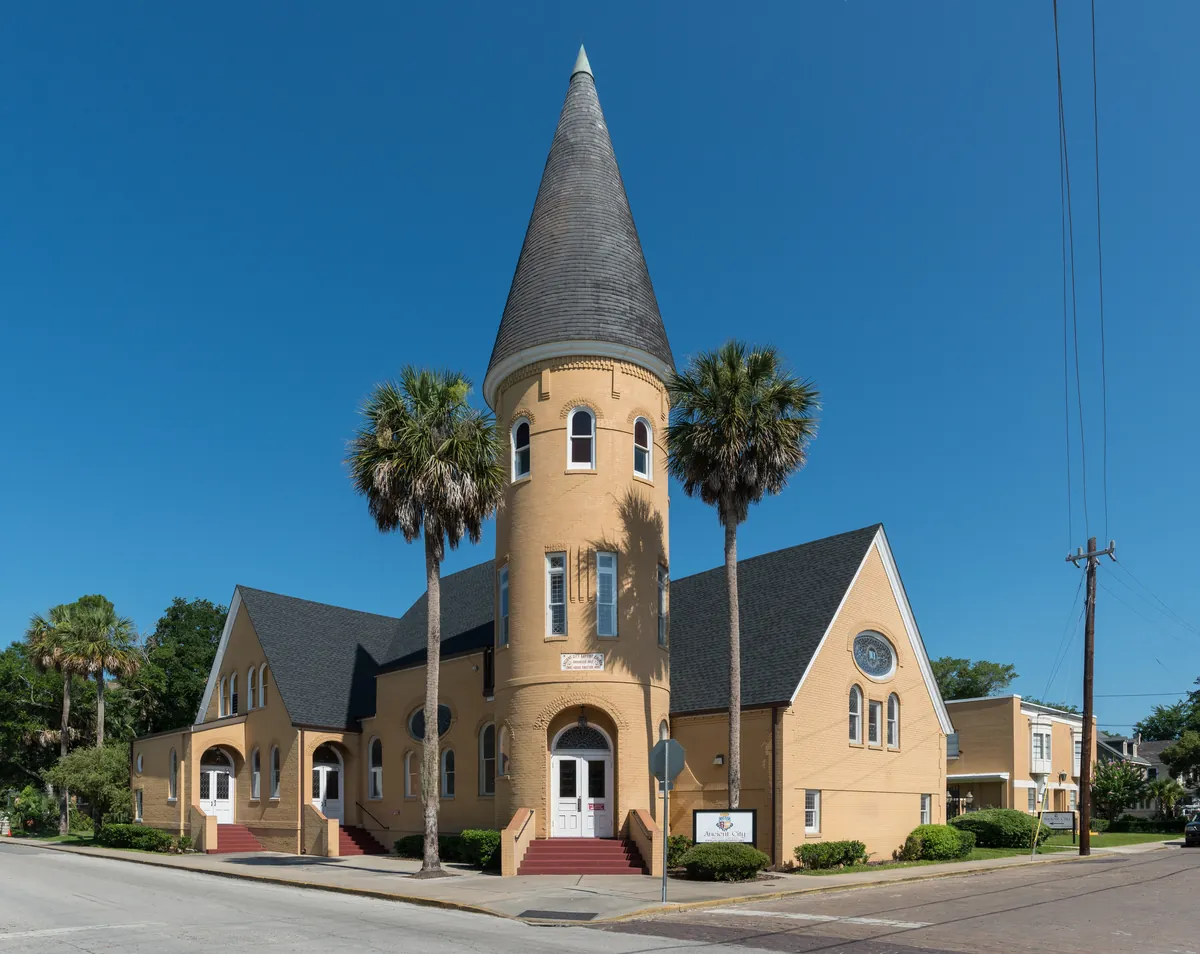
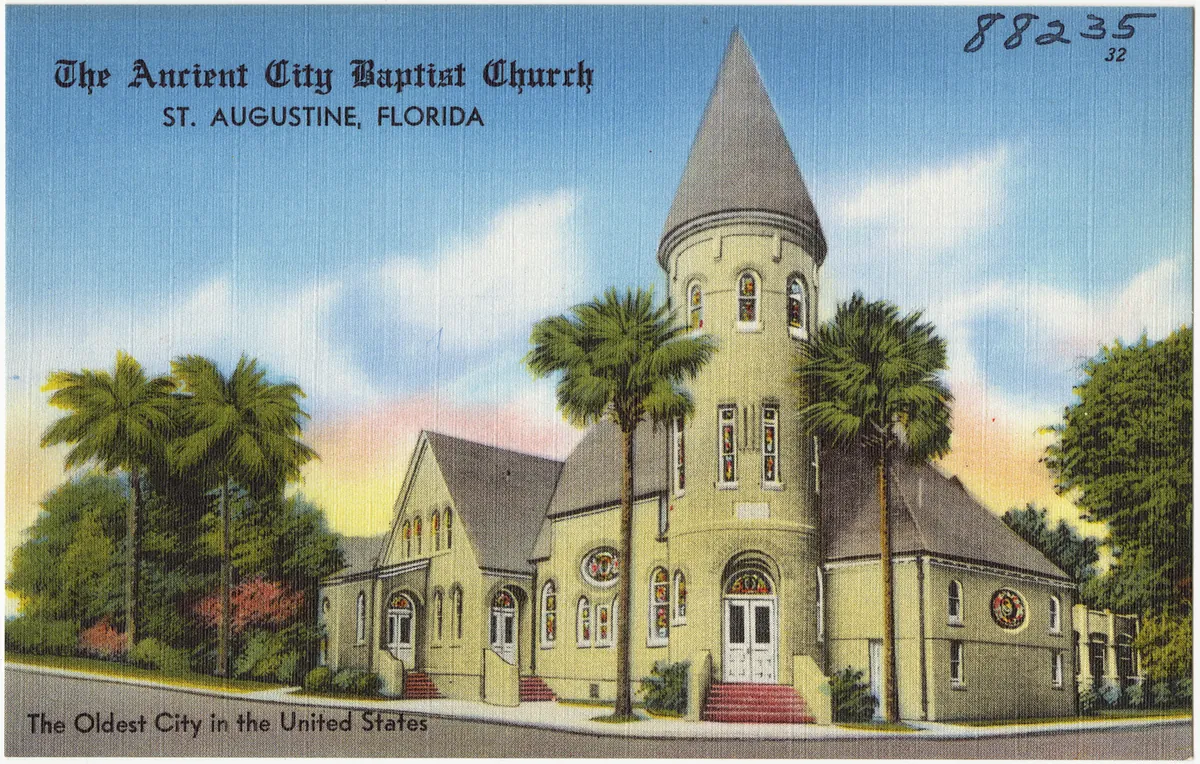
Robert Hayling ran civil rights operations out of Ancient City Baptist Church on Sevilla Street — a tan-brick Romanesque Revival building organized in 1887, still standing, still in use. Lincolnville, the freedmen's district founded in 1866 on land that bordered orange grove plantations, became the ground-level stage for what followed. In the spring of 1964, Hayling and local activists called for outside help; Martin Luther King Jr. and the SCLC came. Hundreds were arrested. Images of demonstrators facing violence — including muriatic acid poured into a segregated pool — went out to the world. Congress passed the Civil Rights Act of 1964. At the center of the old city, the open-air pavilion in the Plaza de la Constitución still stands, built in the early nineteenth century for food, goods, and enslaved people. It offers no announcement. The work done in 1964 cannot be separated from the history it was answering.
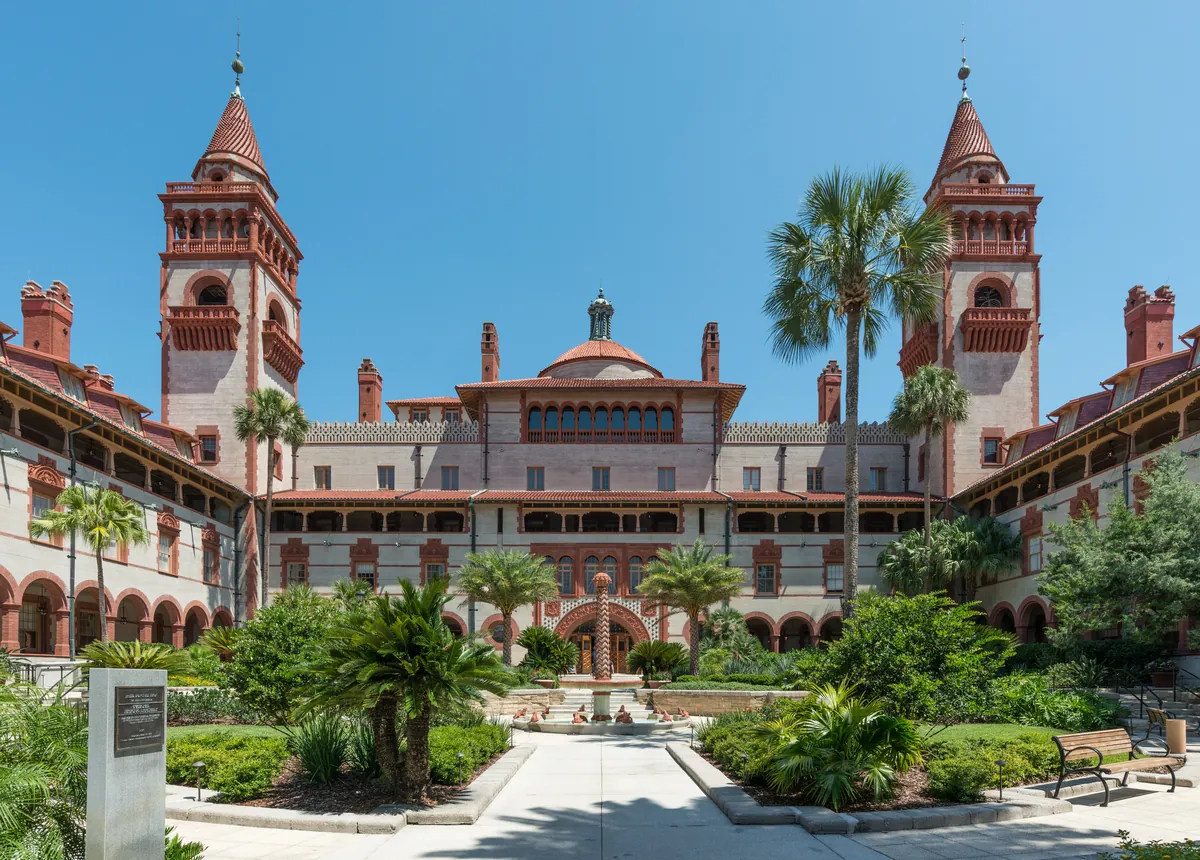
Henry Flagler arrived in St. Augustine in 1885 with railroad money and a clear idea of what a three-century-old Spanish colonial town could become: the first stop on a Gilded Age resort circuit built for wealthy Northerners riding his Florida East Coast Railway south. He commissioned two young, largely unproven architects — John Carrère and Thomas Hastings — to build the Hotel Ponce de León, a poured-concrete showpiece wired by Thomas Edison and decorated with Tiffany stained glass. Across the street went the Hotel Alcazar, complete with what the record calls the world's largest indoor swimming pool. When his daughter died in 1889, Flagler built a memorial church in Venetian Renaissance style, its copper dome cast in Italy, its baptismal font cut from a single block of Siena marble. The Depression closed the Alcazar in 1932. The Ponce de León became Flagler College in 1968. What Flagler built, the city kept.
In 1693, the Spanish crown made an offer: flee the British colonies, convert to Catholicism, serve in the militia, and Spain would grant you freedom. Enslaved Africans heard it and moved south. By 1738, roughly a hundred people were living in Gracia Real de Santa Teresa de Mose — two miles north of St. Augustine, the first legally sanctioned free Black settlement in what would become the United States. The Spanish had built the Castillo de San Marcos partly with enslaved African labor; they then sheltered freedom-seekers in its shadow. That tension runs through the whole city. The decree, the settlement, the fort — none of it was humanitarian in the modern sense. It was colonial policy, designed to destabilize British Carolina. What the people who walked south made of that opening is the story St. Augustine carries.
The Spanish quarried it from Anastasia Island beginning in the late 1600s — a sedimentary limestone made of compressed ancient shells — and what they built from it is still standing. The Castillo de San Marcos went up in 1672, and when English forces under Carolina Governor James Moore besieged it in 1702, they burned the city around it but couldn't breach the walls. When James Oglethorpe bombarded it for 27 days in 1740, same result. Coquina absorbed cannonballs rather than shattering. That material decision is why the fort flew five different flags and never fell by force. The same stone is in the González-Alvarez House, built around 1723, and in the Ximenez-Fatio House, built in 1798. Stand anywhere in old St. Augustine and you are standing inside a decision made at a quarry — one that held.
Before you go
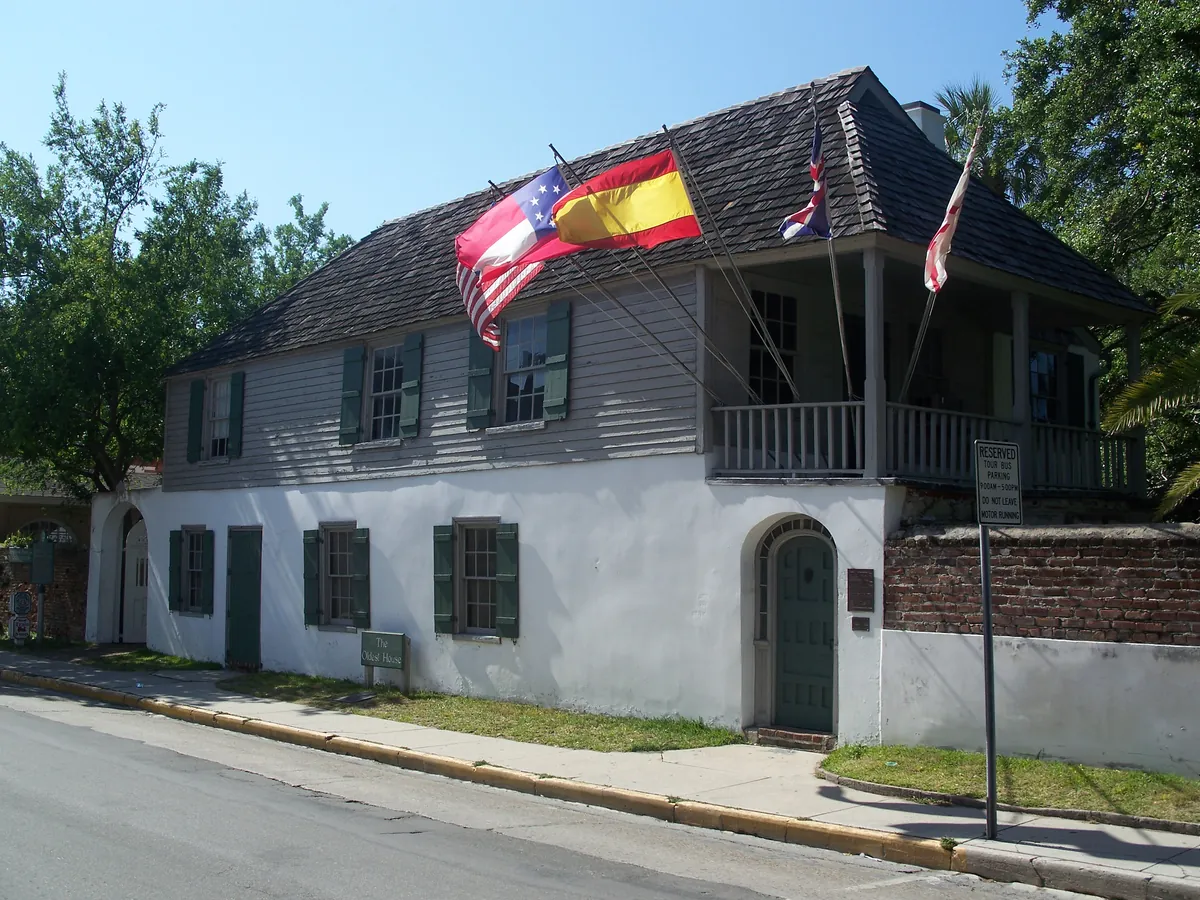
A real midwife who survived colonial St. Augustine's ownership changes — Spain, Britain, Spain. The Oldest House was hers.
The tourist town's cobblestones hide acid-in-the-pool violence. Watch it before the walking tour sanitizes everything.
Plan your trip
The only thing left to do is go.
Some of these are partner links — if you book through them, Portage may earn a commission at no extra cost to you.
Editorial content compiled with AI assistance. Place details verified against public records.