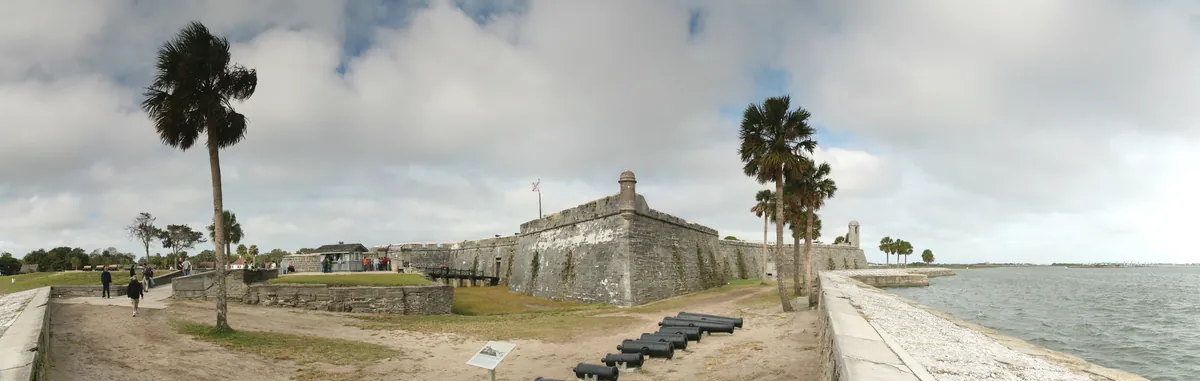
In 1693, the Spanish crown made an offer: flee the British colonies, convert to Catholicism, serve in the militia, and Spain would grant you freedom. Enslaved Africans heard it and moved south. By 1738, roughly a hundred people were living in Gracia Real de Santa Teresa de Mose — two miles north of St. Augustine, the first legally sanctioned free Black settlement in what would become the United States. The Spanish had built the Castillo de San Marcos partly with enslaved African labor; they then sheltered freedom-seekers in its shadow. That tension runs through the whole city. The decree, the settlement, the fort — none of it was humanitarian in the modern sense. It was colonial policy, designed to destabilize British Carolina. What the people who walked south made of that opening is the story St. Augustine carries.