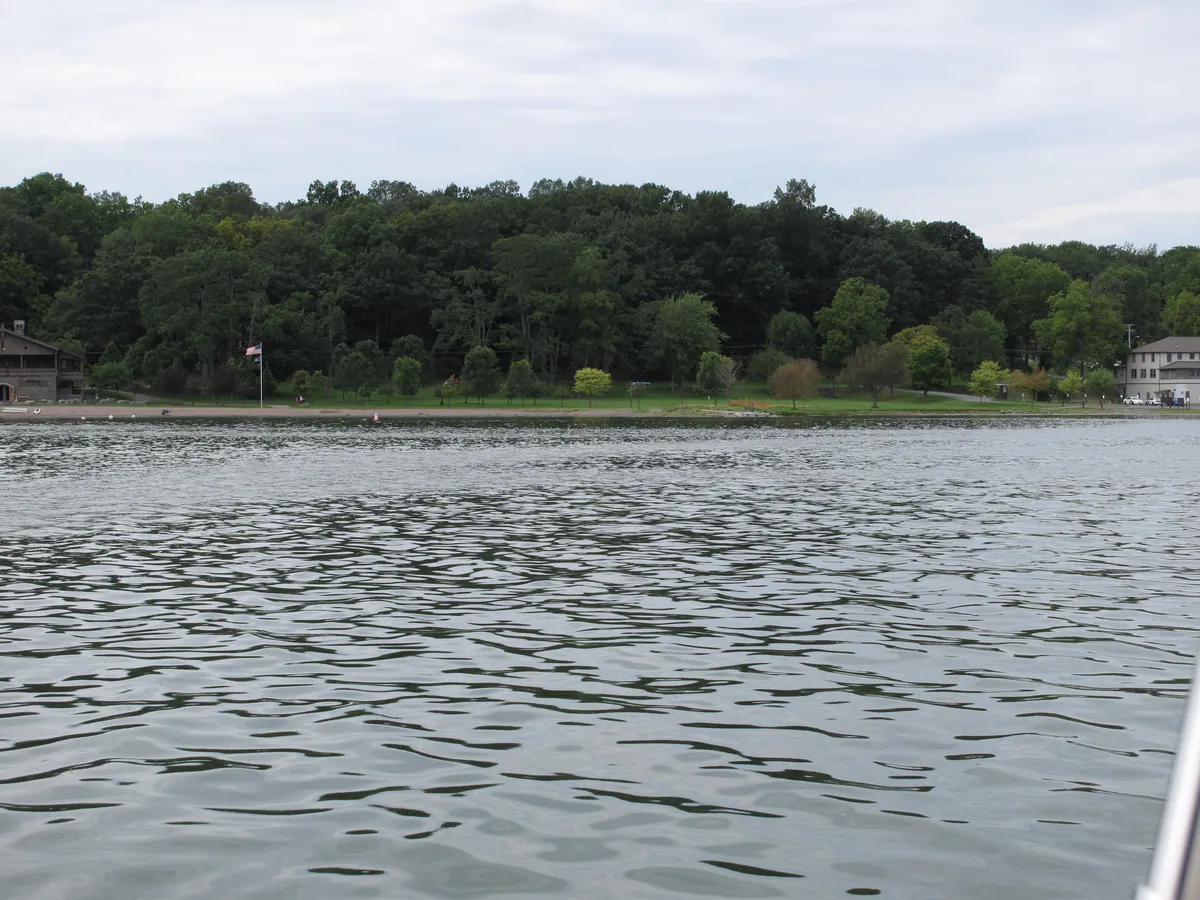
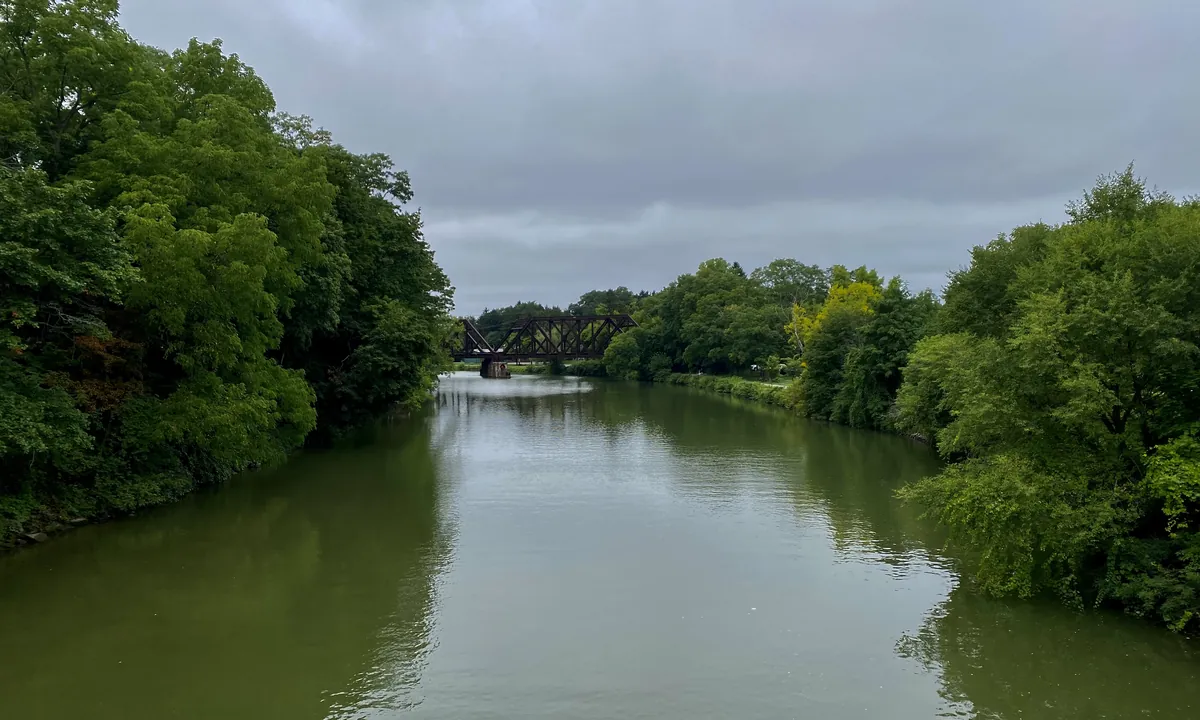
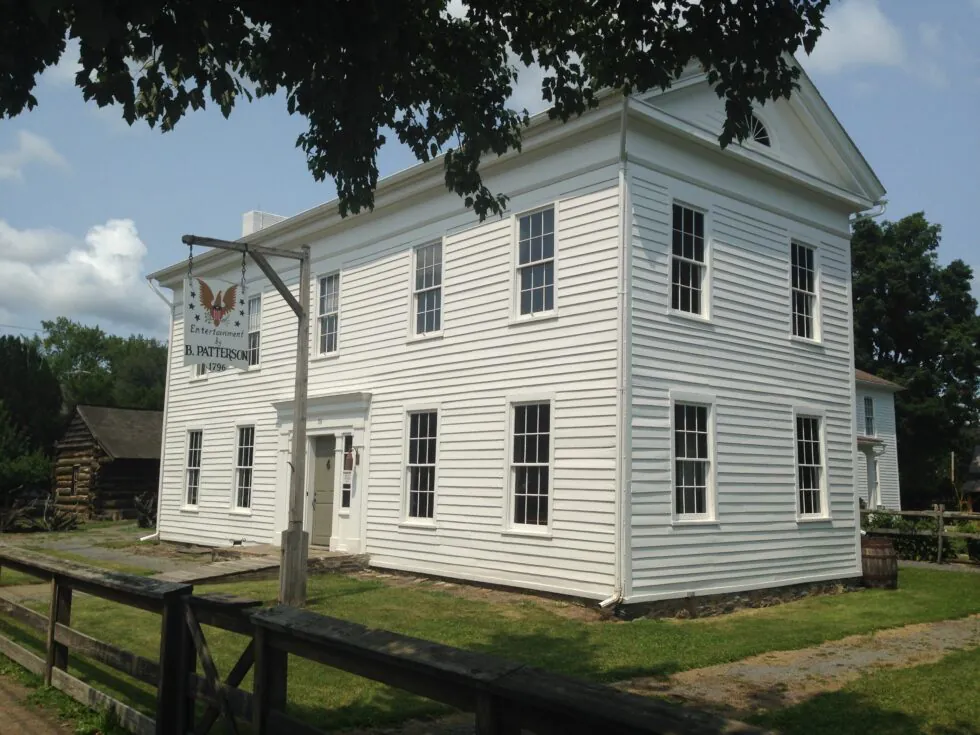
Around 1500, the Cayuga settled Skoi-Yase — "flowing water" — at the rapids of the Seneca River near present-day Waterloo, drawn by an abundant supply of fish, especially eels. They hunted, trapped, farmed, and fished these watersheds for centuries. Archaeologist Jack Rossen of Ithaca College has worked since 2000 on roughly ten major sites along the east side of Cayuga Lake, dating from the tenth to the eighteenth century, documenting how long this water sustained human life. Then commerce arrived. By 1823, eight boats a day moved through the Waterloo lock — flour, potash, pork, whiskey, lumber, wool. When the Erie Canal opened in 1825, the region locked into Atlantic trade: Aurora became a shipping point, Edwin B. Morgan built the Aurora Inn in 1833, and a newspaper praised its "uninterrupted view of the water scenery of the most enchanting kind." The same water. Different hands.