Good forHistory buffs
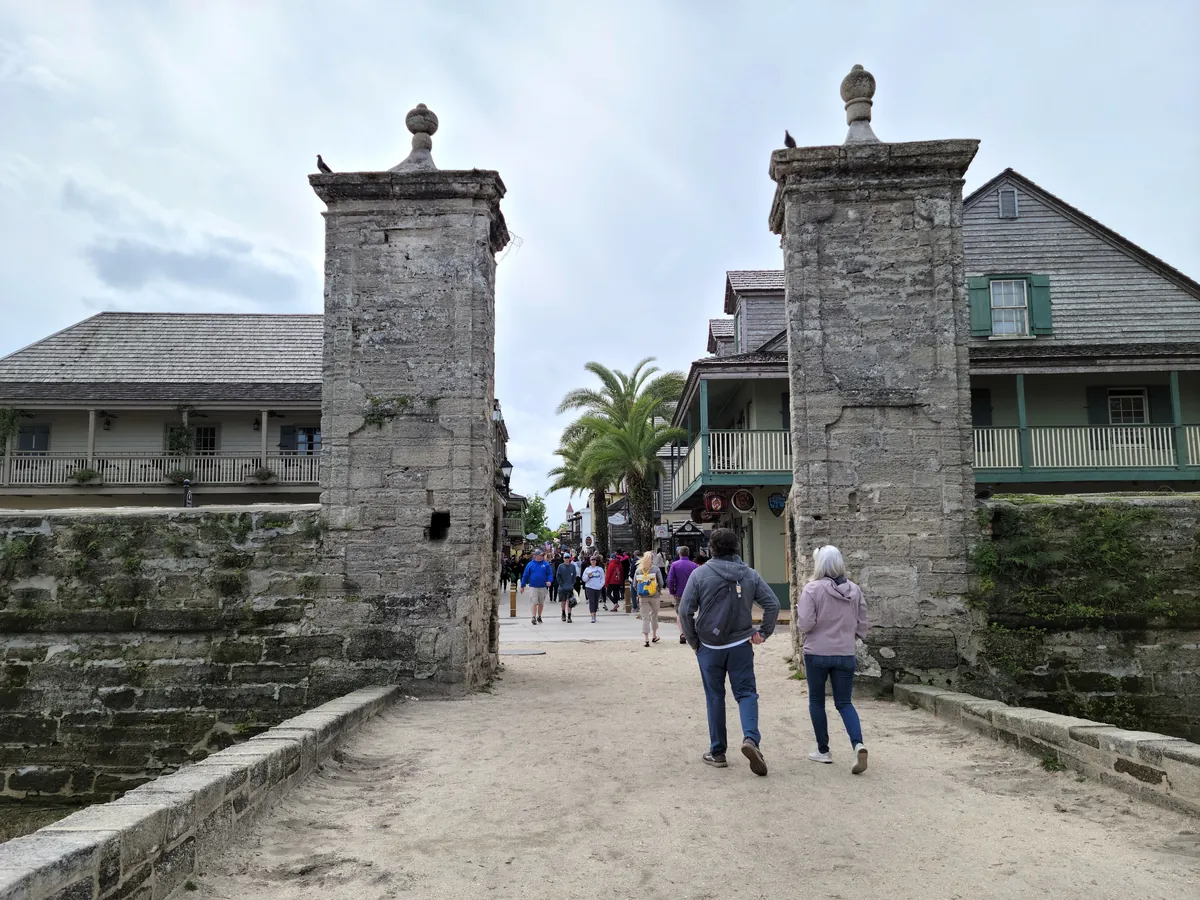
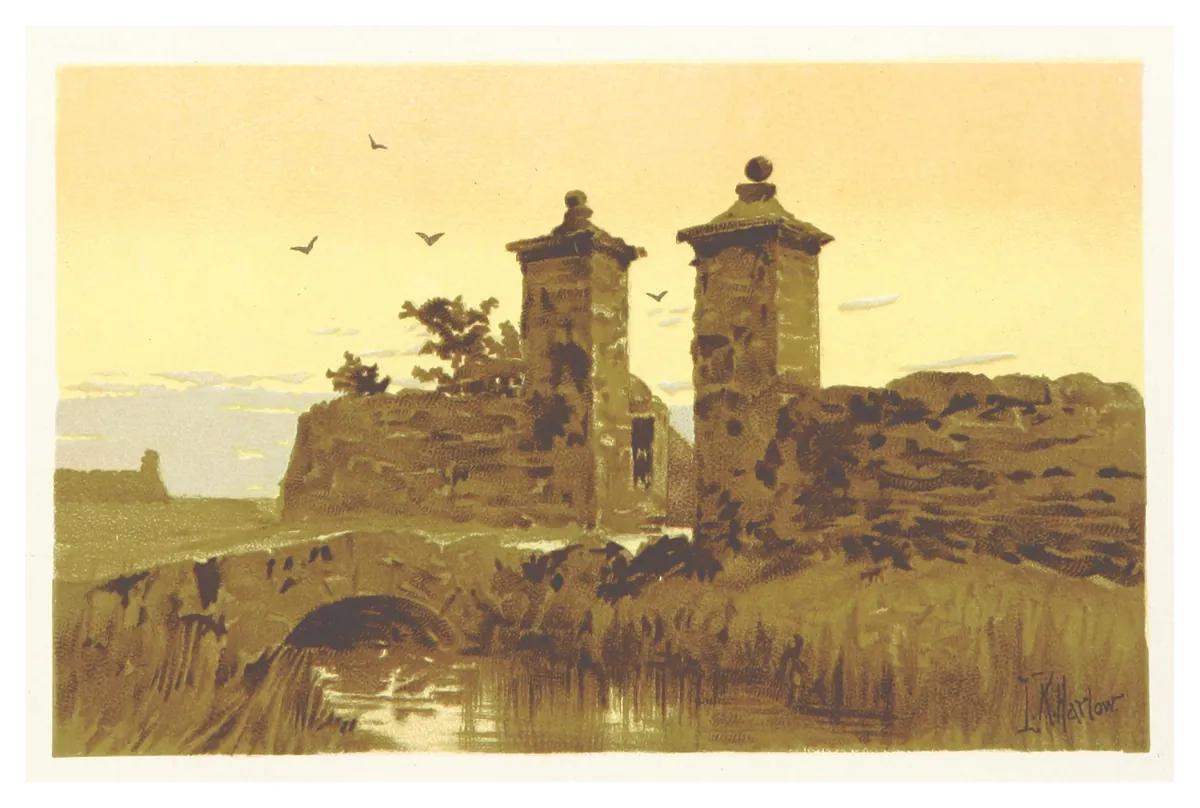
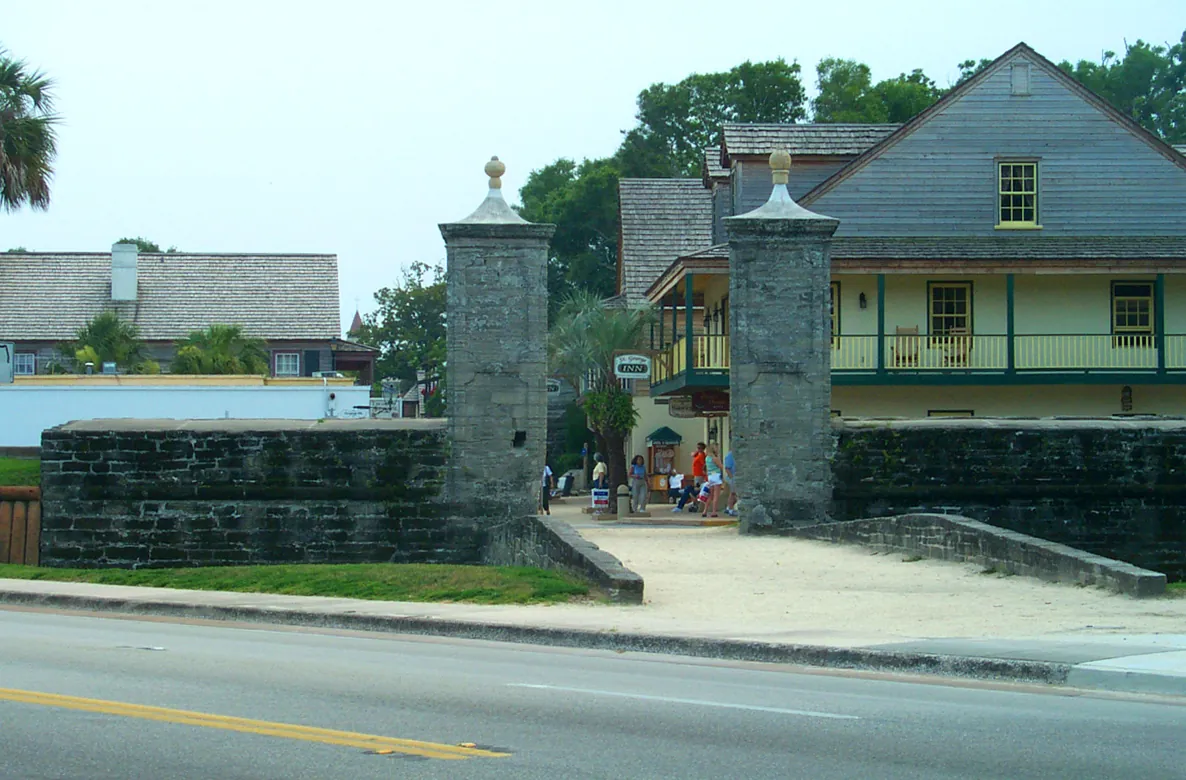
The gate at the north end of St. George Street was built in 1808 from coquina, replacing an earlier wooden structure that had already proven its worth — when St. Augustine was attacked by Carolinian Governor James Moore in 1702, the defensive line it anchored held. The wooden gate was later rebuilt with coquina and a drawbridge over the moat. A demolition attempt was stopped before completion, with stones removed from the pillars but not fully replaced for years. It still stands.
Quick facts
- ·The City Gates and the earthwork defense line they anchored (the Cubo Line) originated as a direct response to the 1702 English siege: after Carolina Governor James Moore's forces burned the town but failed to take the Castillo, the Spanish built the Cubo Line in 1704 — an earthen wall topped with sharp-leaved yucca and a nine-foot palm-log stockade running about half a mile from the Castillo de San Marcos to the San Sebastian River, fronted by a roughly 40-foot-wide moat with a drawbridge at the main gate. (Confirmed via floridashistoriccoast.com/blog/the-city-gate-and-the-cubo-defense-line/, corroborated independently by en.wikipedia.org/wiki/Cubo_Line and governorshouselibrary.wordpress.com/2020/01/02/the-city-gates/.)
- ·The gate at that location opened in 1739 and provided the only passage through the northern (Cubo Line) defense line of Spanish St. Augustine. Its surviving coquina pillars were built in 1808 by Royal Engineer Manuel de Hita, and the Cubo Line defenses were reconstructed at the same time. (Confirmed via the verbatim text of HMDB marker 'This Gate Opened in 1739' at hmdb.org/m.asp?m=127892 — retrieved via two independent search queries returning identical marker transcription, since direct fetch was blocked by a 403 — and corroborated by governorshouselibrary.wordpress.com/2020/01/02/the-city-gates/ describing the 1808 coquina reconstruction of the gate.)
More archive
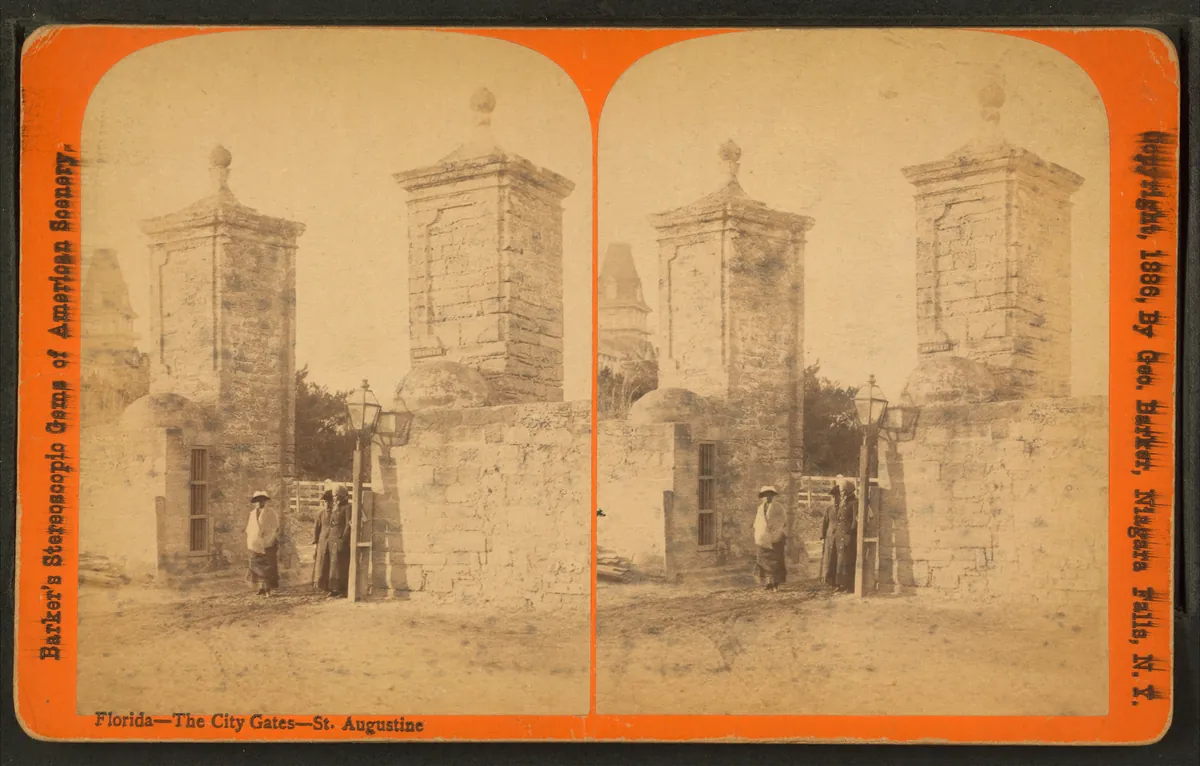
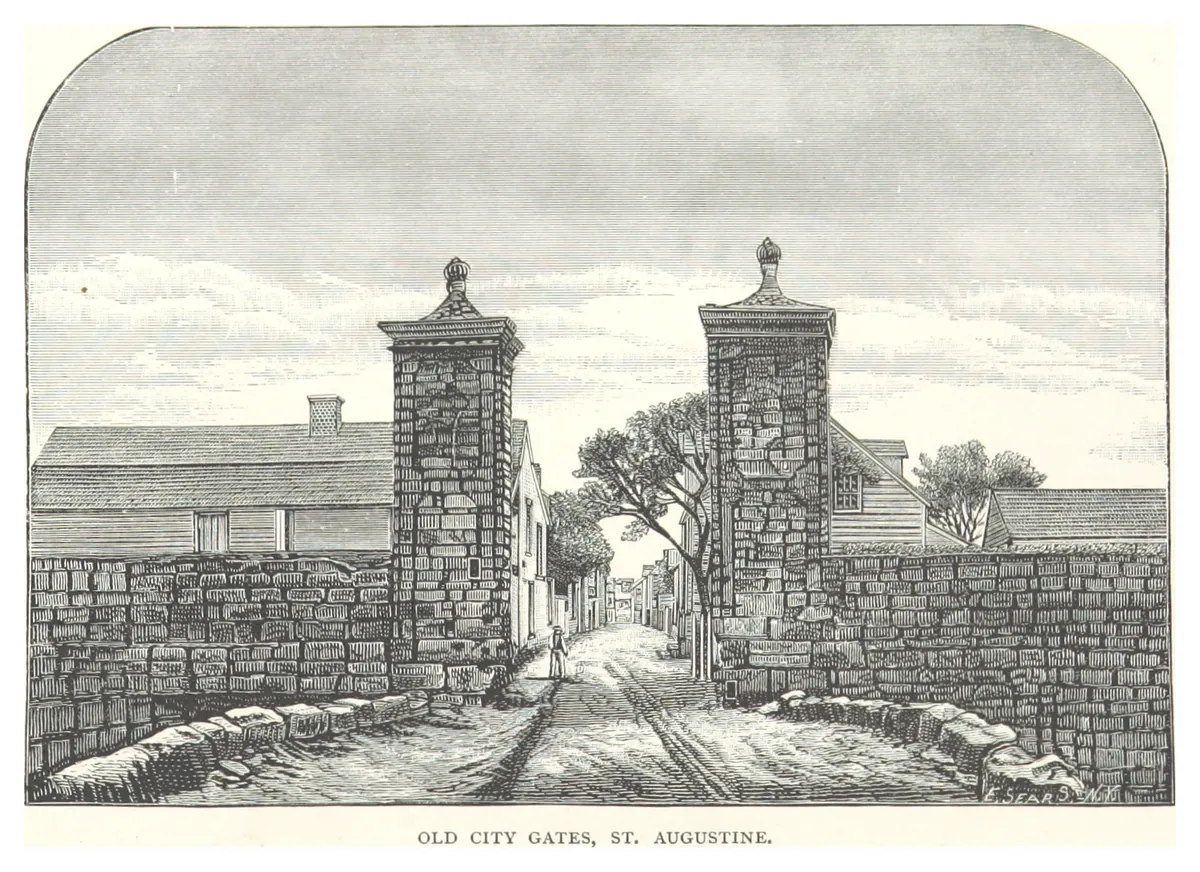
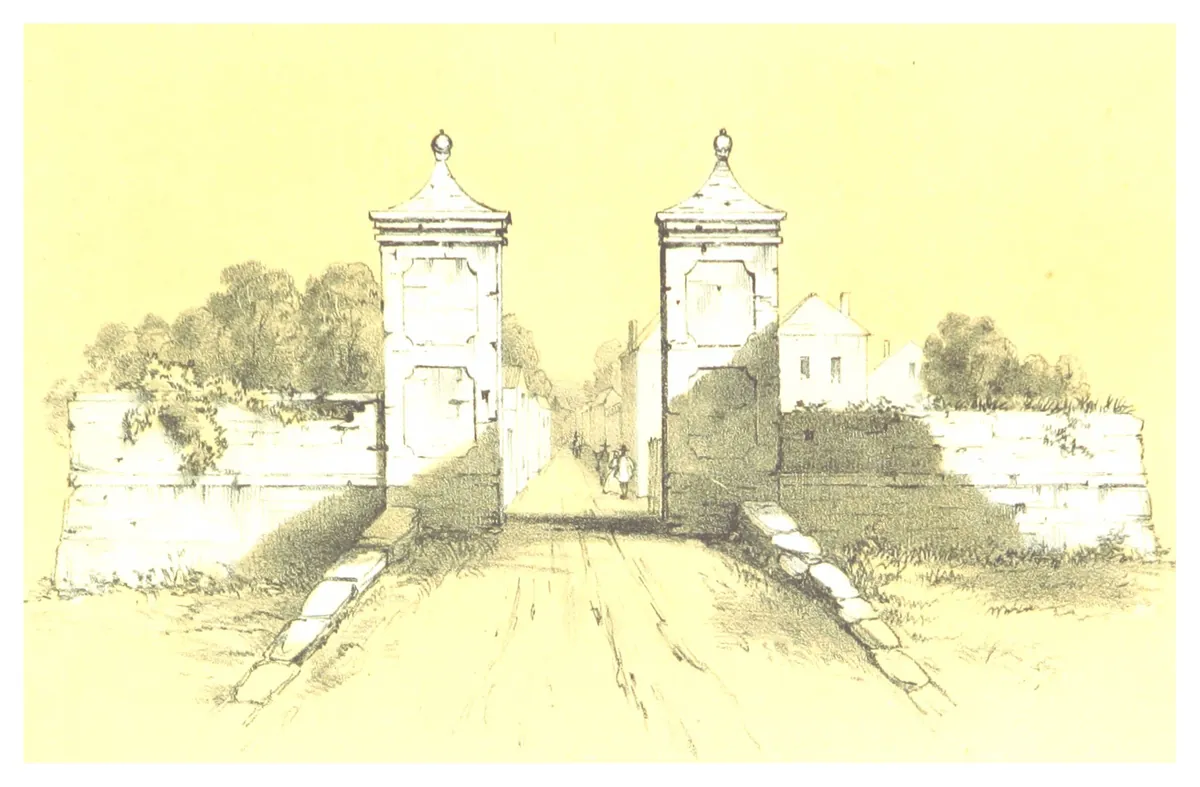
5 historical photographs.
Memories
Be the first to leave a memory at St. Augustine City Gates.
Sign in to see memories your family has left at this place.
Editorial content compiled with AI assistance. Place details verified against public records.