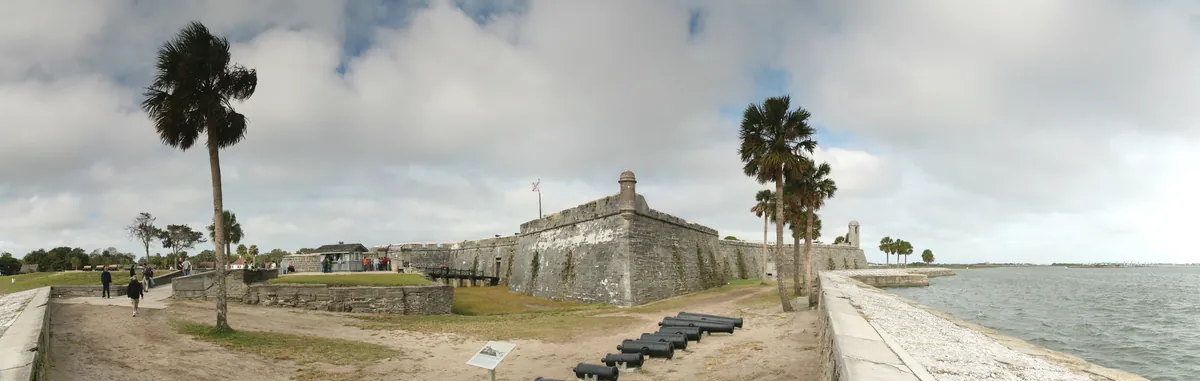
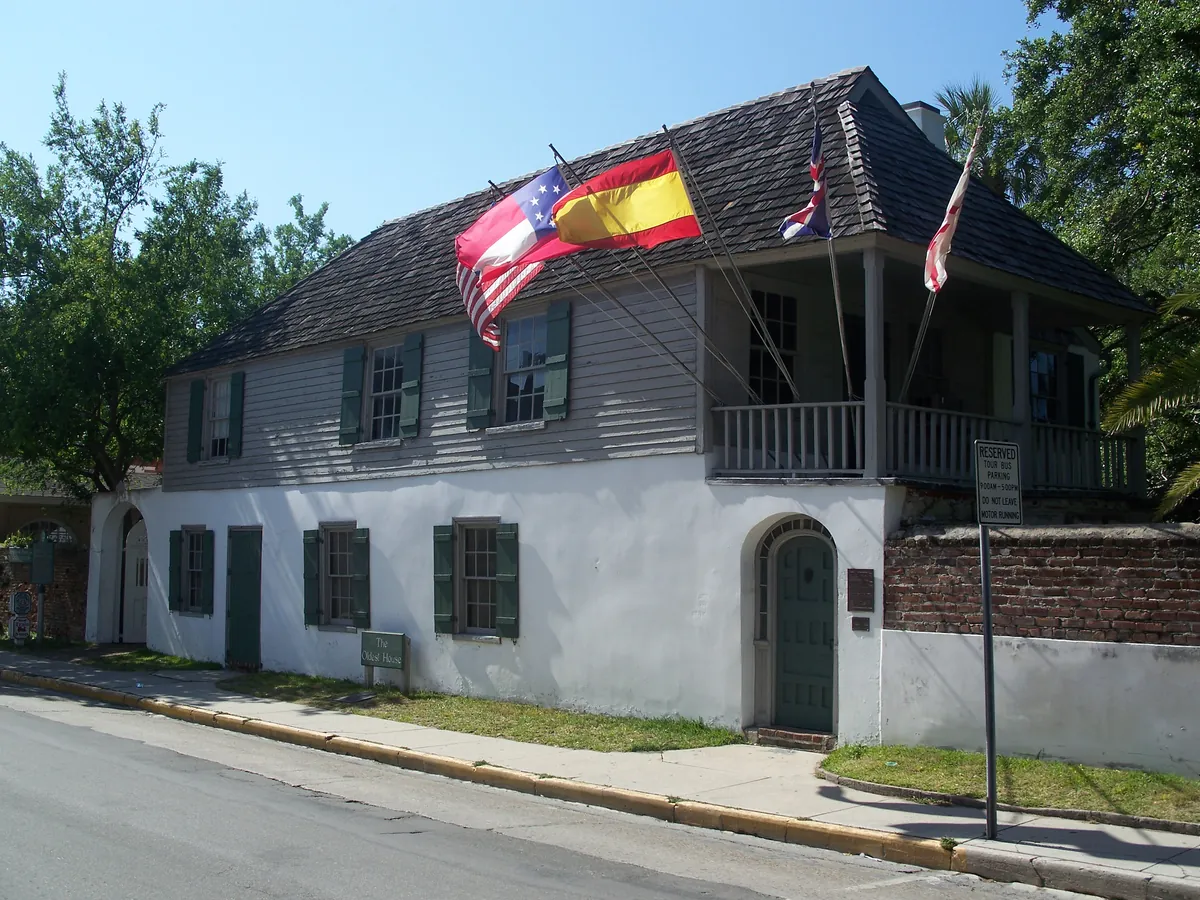
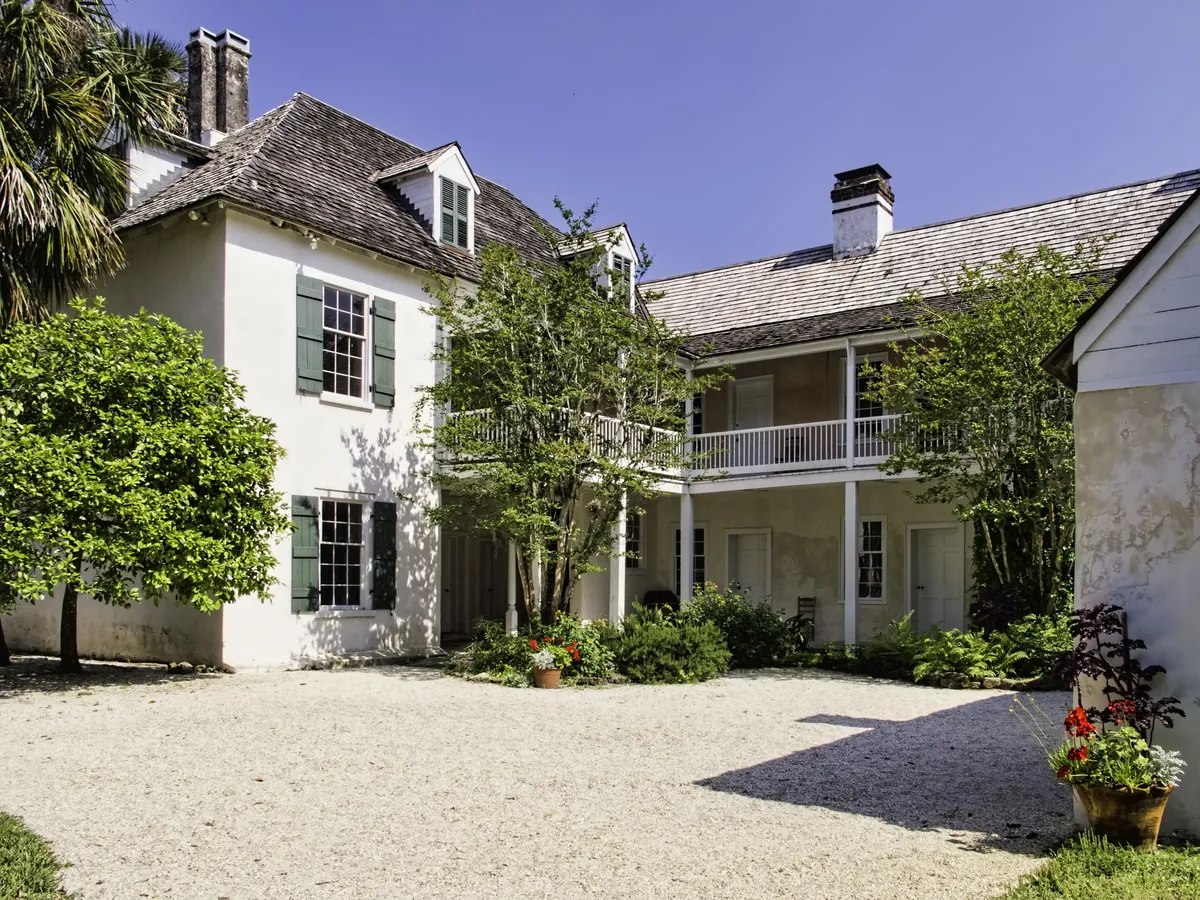
The Spanish quarried it from Anastasia Island beginning in the late 1600s — a sedimentary limestone made of compressed ancient shells — and what they built from it is still standing. The Castillo de San Marcos went up in 1672, and when English forces under Carolina Governor James Moore besieged it in 1702, they burned the city around it but couldn't breach the walls. When James Oglethorpe bombarded it for 27 days in 1740, same result. Coquina absorbed cannonballs rather than shattering. That material decision is why the fort flew five different flags and never fell by force. The same stone is in the González-Alvarez House, built around 1723, and in the Ximenez-Fatio House, built in 1798. Stand anywhere in old St. Augustine and you are standing inside a decision made at a quarry — one that held.