The blues was invented in the Delta and recorded in Memphis. This trip drives the river-flat road between them — the cotton fields where Charley Patton taught Howlin' Wolf to play, the train platform at Tutwiler where W.C. Handy first heard a man play slide guitar with a knife, the three contested graves of Robert Johnson, the prison farm Alan Lomax recorded at, the last rural juke joint, and then up to Memphis — Beale Street, Sun, Stax — where the studios took what the Delta had started and put it on tape that the rest of the country could hear. Eleven stops, two states, about three days if you take it seriously.
The route
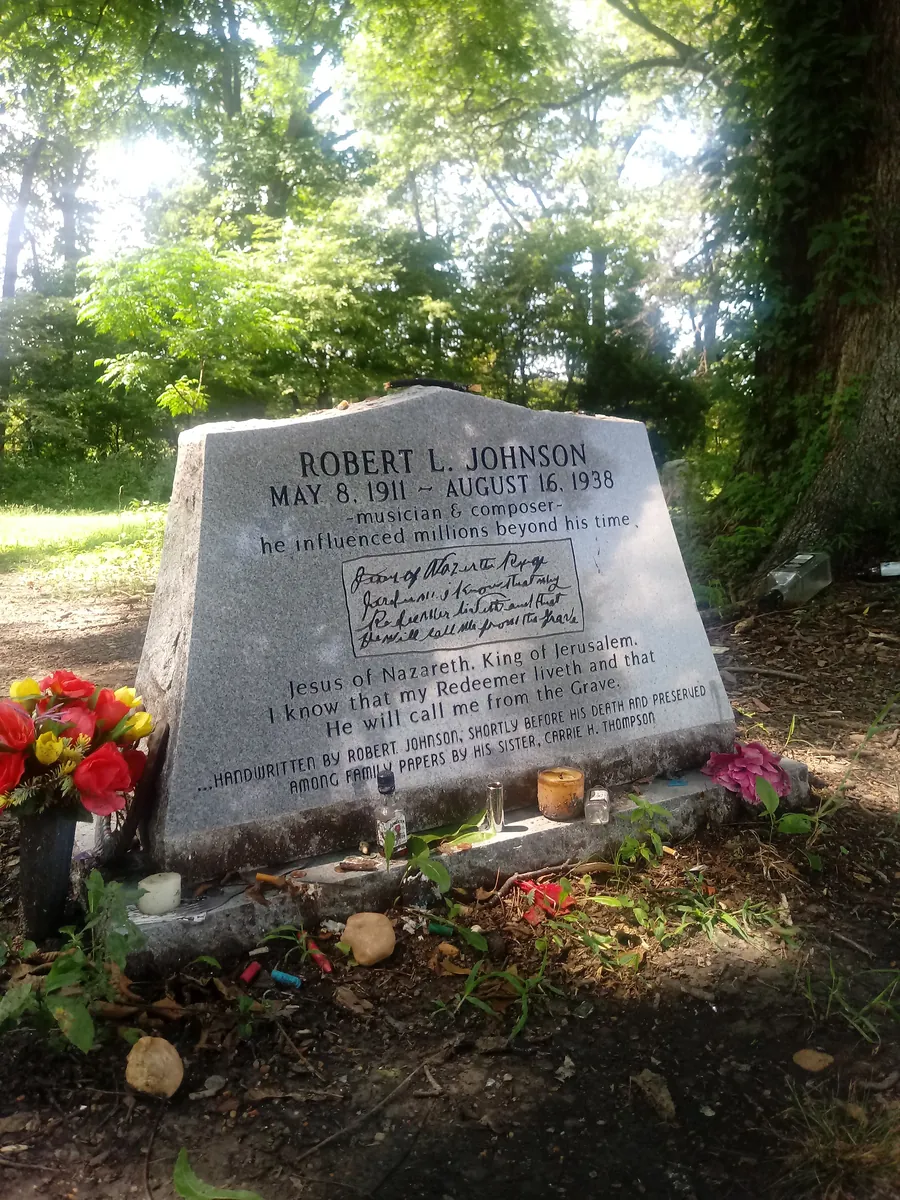 1Historic Site·Johnson died Aug 16, 1938; markers 1990s onwardRobert Johnson's Three Graves
The wrong Wikipedia came through—Tommy Johnson, not Robert. They aren't related, though Tommy claimed the crossroads story first. I have no verified facts about Robert Johnson's death, grave locations, or the 1991 monument beyond what's in the key facts section. I can't describe the churches, the roads, the distances, or what researchers believe without sourcing. I can't describe what pilgrims do. I have a death date, a death certificate detail, three church names, a monument date, and a county. That's forty words of substance. Three churches in Leflore County claim the grave: Little Zion in Money, Mt. Zion in Morgan City, Payne Chapel in Quito. Johnson died August 16, 1938. His death certificate names "Zion Church." Mt. Zion erected an obelisk in April 1991. The question stays open.
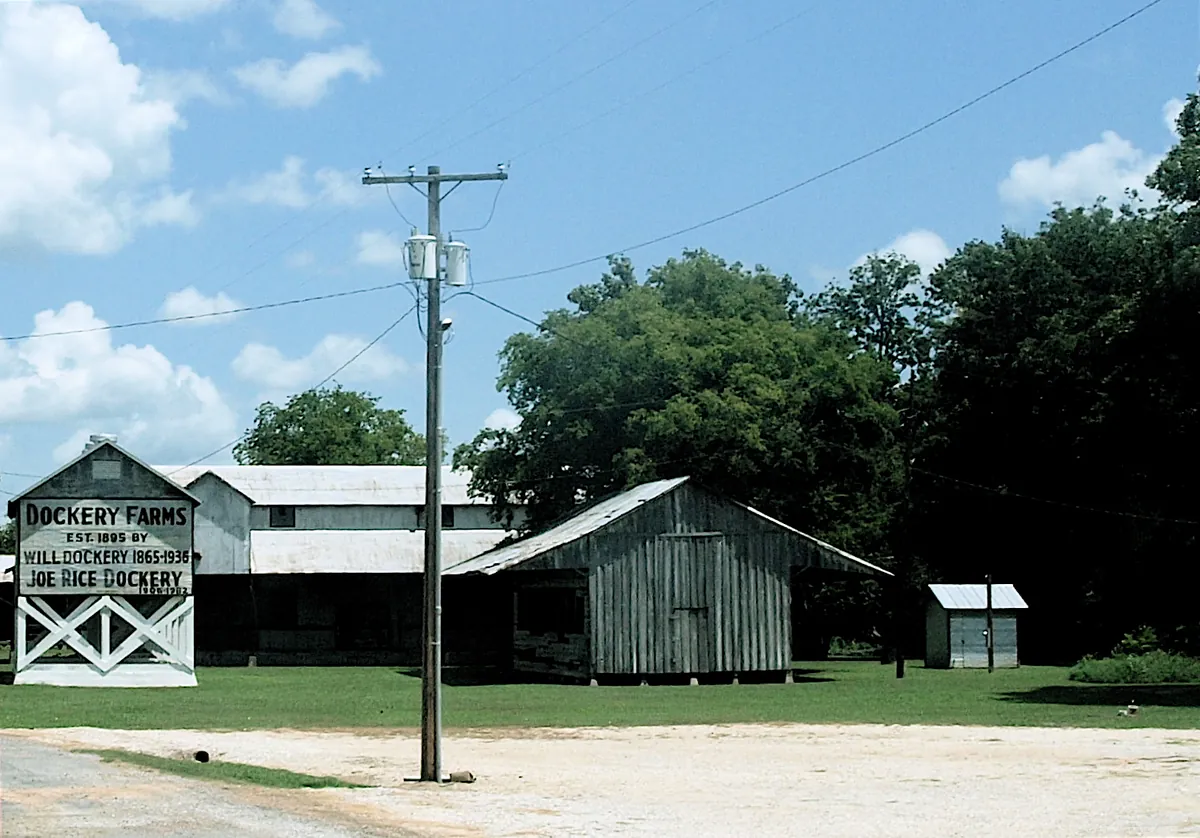 2Historic Site·founded 1895; still standing; NRHP 2006·NRHPDockery Farms — Birthplace of the Blues
Will Dockery graduated from Ole Miss and bought land on the Sunflower River in 1895 for its timber. He recognized the richness of the soil and cleared cypress and gum swamp for cotton. At peak the plantation ran 25,600 acres and supported over two thousand workers—sharecroppers and itinerants who came from across the South because Dockery paid fair and let people move as they pleased. Around 1900 he built a rail terminal on the property, connecting the plantation to the main line at Rosedale via the Yellow Dog's circuitous branch, locally called the Pea Vine. The plantation had its own store, post office, school, doctor, churches, and scrip currency. Workers lived in boardinghouses where they played guitars, accordions, banjos, mandolins, and harmonicas. Dockery took no interest in the music. He made it easy to travel and spend leisure time however they wanted. Charley Patton and his family moved to Dockery around 1900. He came under the influence of an older musician, Henry Sloan. By the mid-1920s Patton had become the central figure of a group that included Willie Brown, Tommy Johnson, and Son House. The plantation sat central to Sunflower County's black population of thirty-five thousand and became known as a center for informal musical entertainment. A younger generation arrived: Robert Johnson, Chester "Howlin' Wolf" Burnett, Roebuck "Pops" Staples, David "Honeyboy" Edwards. Some were itinerant; others stayed. Will Dockery died in 1936. His son Joe Rice Dockery inherited the operation. Mechanization and the pull of northern cities drained the settlements. Some of the historic buildings remain. The farm still works—soybeans, rice, corn. The property was added to the National Register of Historic Places in 2006. A Mississippi Blues Trail marker stands in Cleveland. The site hosts private tours and events in partnership with the Thelonious Monk Institute of Jazz and Delta State University.
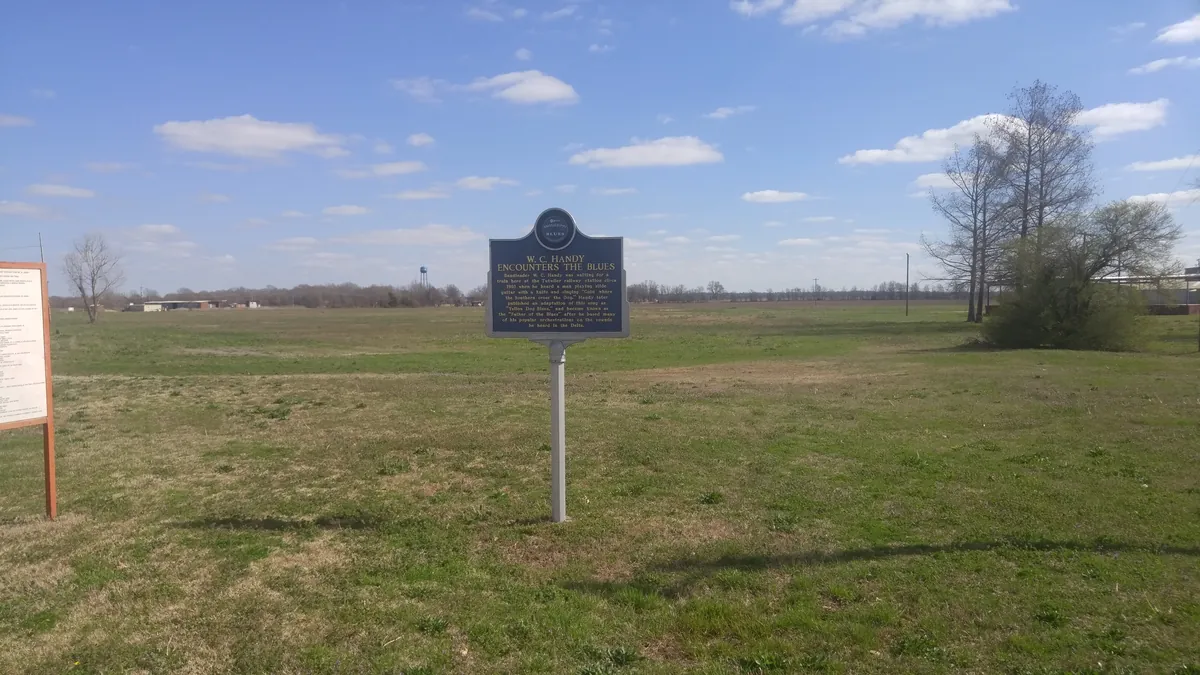 3Historic Site·1903 (Handy's encounter); marker erected Nov 25, 2009Tutwiler — Where Handy Heard the Blues
W.C. Handy was waiting for an overdue train to Memphis at the Tutwiler station in 1903 when he heard an itinerant bluesman playing slide guitar with a knife and singing about "goin' where the Southern cross the Dog" — the junction of the Southern Railway and Yazoo & Mississippi Valley Railroad farther south. The Y&MV was locally called the Yellow Dog. Handy called it "the weirdest music I had ever heard." Legend says the guitarist was a local field hand named Henry Sloan. The song became Handy's published "Yellow Dog Blues." Handy had heard something akin to the blues as early as 1892, but Tutwiler was the encounter he remembered, the one he wrote down. He and his family lived in the town for six years. The original train station does not survive. A Mississippi Blues Trail marker stands where it stood, erected November 25, 2009 with funding from Robert Plant, who attended the dedication and spoke about how Sonny Boy Williamson II had changed his life. "The first record my mom bought me was by Sonny Boy," Plant said. "I played it until there were no more grooves on the record." Sonny Boy's grave lies just at the edge of town, maintained by the Catholic nuns who have operated community services in Tutwiler since 1993. The marker is the reason to come: to stand where the music was heard and transcribed, in a town that also raised John Lee Hooker and Frank Stokes. The train yard that once made Tutwiler a crossroads moved to Clarksdale in 1929, and the town has been declining since. But what happened on that platform — a lean, loose-jointed man pressing a knife to guitar strings, repeating a line three times — became the document of a sound that had been traveling the Delta without a name.
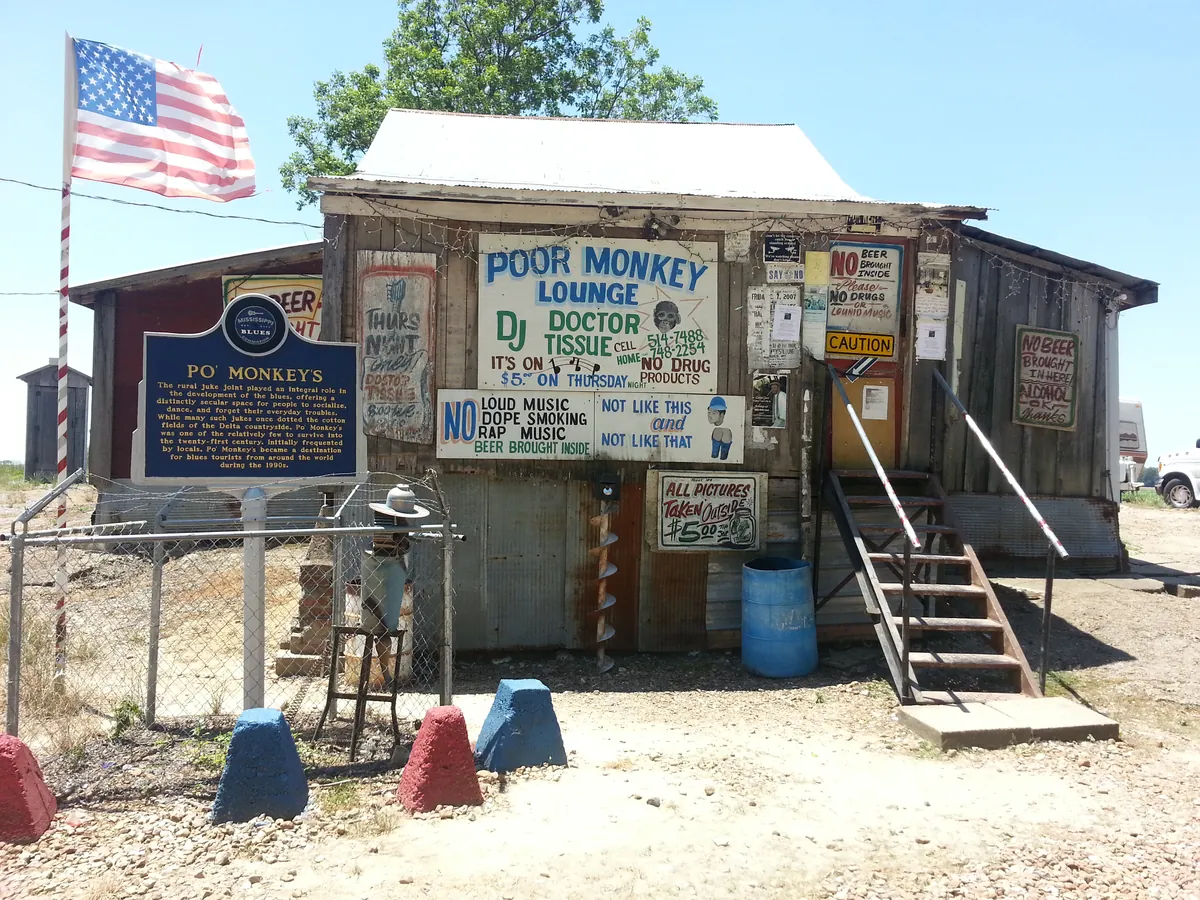 4Music·1963 – July 14, 2016Po' Monkey's Lounge — The Last Juke Joint
Willie Seaberry ran Po' Monkey's from 1963 until he was found dead on July 14, 2016. The shack was sharecroppers' quarters — tin and plywood held together by nails, staples, and wires, loosely fashioned and made by Seaberry himself. He lined the low ceilings with Christmas lights, naked baby dolls, street signs, wrapping paper, disco balls, and dozens of stuffed-animal monkeys. Outside he posted a sign: "No Loud Music, No Dope Smoking, No Rap Music." In its earlier years, Po' Monkey's was an incubator for the Delta Blues scene. Birney Imes featured the club in his 1990 book *Juke Joint*. By the 1990s it drew college students from Delta State University in Cleveland, blues pilgrims, and people who wanted to see what a juke joint actually felt like. Seaberry was best known for his colorful suits — he would change several times a night, sometimes adding humorous or sexually charged items. The crowd got raunchier as the decades turned: provocative dancing, strippers, $2 cans of beer. Annie Leibovitz photographed it in 2000. In 2009 the Mississippi Blues Commission placed a historic marker at Po' Monkey's, designating it as a site on the Mississippi Blues Trail. In May 2014, Anthony Bourdain featured it on *Parts Unknown*. Richard Grant's 2015 book *Dispatches from Pluto: Lost and Found in the Mississippi Delta* put a photo of the juke joint on its cover. By then it was one of the last rural juke joints in the Mississippi Delta. Seaberry held a life estate in the property — he owned it during his lifetime, and upon his death, the land reverted to the Hiter family. Billy Nowell, the mayor of nearby Cleveland at the time, called Seaberry a "positive influence" on Bolivar County. Po' Monkey's ceased operating after his death. In 2018 the contents were sold at auction to Shonda Warner, a former Clarksdale resident who had frequented the joint. The night it held is gone.
 5Historic Site·founded July 12, 1887Mound Bayou — The Self-Governing Black Town
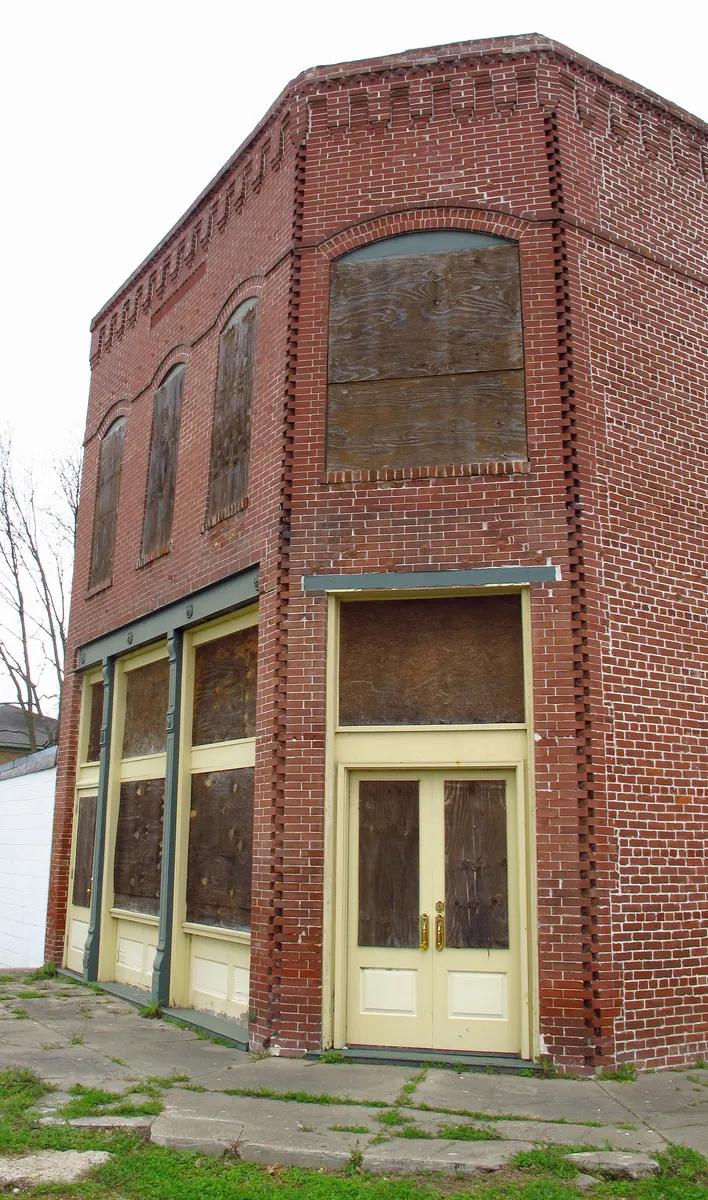
On July 12, 1887, Isaiah T. Montgomery, his cousin Joshua P. T. Montgomery, and Benjamin T. Green bought 840 acres of Delta swampland and founded Mound Bayou. All three were freed people from Davis Bend Plantation in Warren County. Isaiah Montgomery served as the first mayor. They built it to be self-governing: Black elected officials, Black law enforcement, Black-owned banks and businesses. At its peak, Mound Bayou became the largest and most self-sufficient all-Black town in the United States. In 1908, Theodore Roosevelt ordered his train to make a special stop. From the platform he called it "an object lesson full of hope for the colored people and therefore full of hope for the white people, too." Four years later, Booker T. Washington told a crowd of thousands that Mound Bayou was a place "where a Negro may get inspiration by seeing what other members of his race have accomplished." The town weathered decades of decline through the leadership of Mayor Benjamin A. Green, son of founder Benjamin Titus Green and the first person born in the community. A Harvard Law School graduate, he won the mayoral election overwhelmingly in 1919 and served until his death in 1960. In the 1920s, Green volunteered to be a possible attorney for use by the NAACP in legal cases—a public alignment that was not exceptional here. Mound Bayou had a higher NAACP membership as a percentage of the Black population than any other Mississippi community. In 1942, the Taborian Hospital opened, providing low-cost health care to thousands of Black people in the Delta for more than two decades. The chief surgeon was T.R.M. Howard, who became one of the wealthiest Black men in the state. In 1952, Medgar Evers moved to Mound Bayou to sell insurance for Howard's Magnolia Mutual Life Insurance Company. Howard introduced Evers to civil rights activism through the Regional Council of Negro Leadership, which organized a boycott against service stations that refused to provide restrooms for Black people. The RCNL's annual rallies between 1952 and 1955 drew crowds of ten thousand or more. During the trial of Emmett Till's killers, Black reporters and witnesses stayed in Howard's Mound Bayou home, and Howard gave them an armed escort to the courthouse in Sumner. As author Michael Premo wrote: "At a time when Blacks faced repercussions as severe as death for registering to vote, Mound Bayou residents were casting ballots in every election." The town is still here, smaller than it was, still 96.8% Black. You stand in a place that ran itself when the country mostly would not let Black towns function.
 6Historic Site·opened 1901; still operatingParchman Farm — Mississippi State Penitentiary
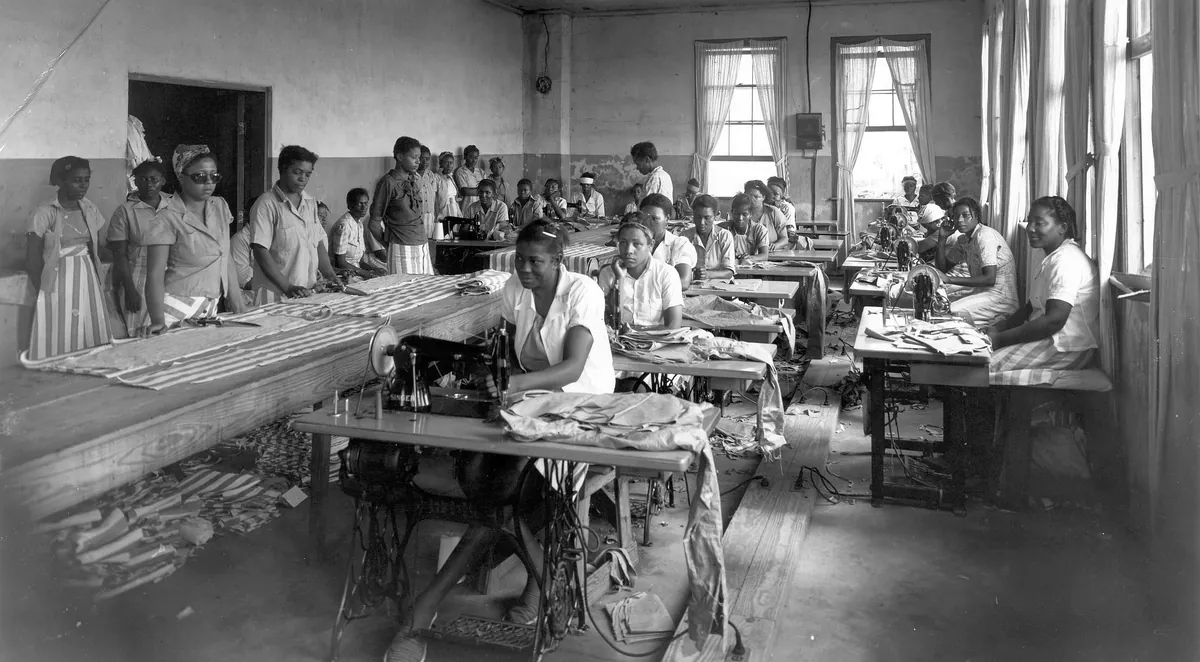
In 1901 the State of Mississippi opened a penal farm on sixteen thousand acres of Sunflower County bottomland. Prisoners cleared forest and broke ground for cotton; the state earned the equivalent of more than $4.6 million in 2009 dollars from Parchman's first year of operations. The Mississippi Department of Archives and History says the institution "was in many ways reminiscent of a gigantic antebellum plantation." Most prisoners were Black men serving long sentences for violent crimes; they worked ten-hour days, six days a week, in ring-around uniforms — horizontal black-and-white stripes. Women worked in the sewing room making clothes, bedding, and mattresses, and when sewing labor was not available, they chopped cotton. An armed trustee system — prisoners deemed reliable were given rifles and made into guards — ran the camps. David Oshinsky wrote that from the outside, early Parchman "looked like a typical Delta plantation, with cattle barns, vegetable gardens, mules dotting the landscape, and cotton rows stretching for miles." The men sang. Work chants paced the labor — a leader called and the others followed, a tradition traced to West Africa. Alan Lomax visited in 1933 with recording equipment and kept coming back. The 1936 and 1939 sessions with female inmates in the sewing room produced what Samuel Charters called invaluable recordings — a document of how the music sounded at its source. Bukka White was incarcerated in 1937; he recorded 'Parchman Farm Blues' in 1940. In 1959 a gospel song called 'Po Lazarus' was recorded at the prison; it appeared on the *O Brother, Where Art Thou?* soundtrack in 2000. Lomax later wrote: "I had to face that here were the people that everyone else regarded as the dregs of society, dangerous human beings, brutalized and from them came the music which I thought was the finest thing I'd ever hear coming out of my country." In 1961, 300 Freedom Riders were sent to Parchman after arrests in Jackson. The governor ordered them kept in maximum security, away from other inmates, and told guards to "break their spirit, not their bones." They sang freedom songs — direct descendants of slave spirituals — in their cells. In 1972 a federal judge found that Parchman violated the Constitution and was an affront to modern standards of decency; the trusty system was abolished and the state was required to integrate the facility. The prison is still operating. A Mississippi Blues Trail marker stands at the main entrance on U.S. Route 49W.
 7Historic Site·Robert Johnson legend, c.1930s; monument erected laterThe Crossroads — Highways 61 and 49
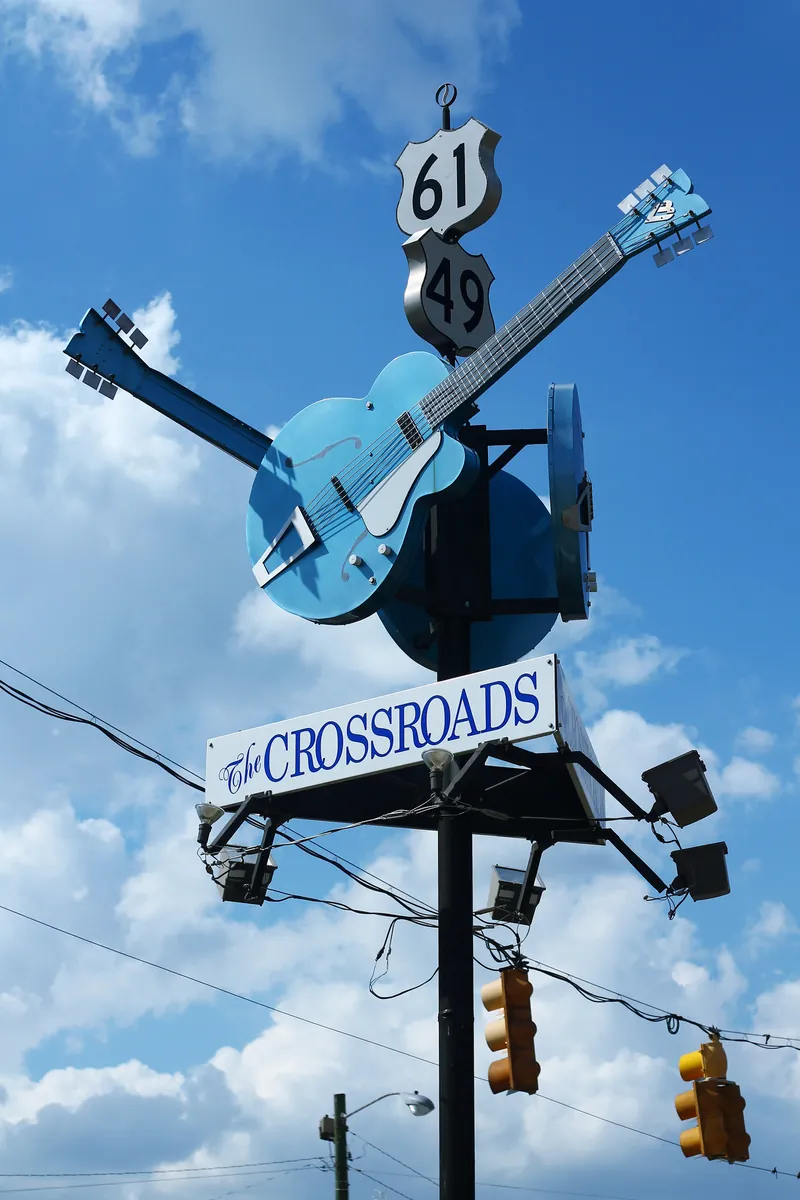
Highway 61 runs north-south through the Delta; Highway 49 crosses it in Clarksdale. Three giant blue guitars mark the intersection next to Abe's BBQ. This is one of several sites claimed as the crossroads where Robert Johnson met the devil and traded his soul for mastery of the guitar. Other places make the same claim: the intersection of Highways 8 and 1 near Rosedale, Dockery, Beulah. No one knows which, if any, is the actual spot. What's verified is that Johnson recorded "Cross Road Blues" in San Antonio in November 1936, and that Highway 49 was the subject of songs by Big Joe Williams and Howlin' Wolf. The crossroads story predates Johnson—Tommy Johnson and others told versions of the same myth. The legend stuck to Robert Johnson and to this intersection because Clarksdale became the Delta's blues capital, the place where the music that came out of the cotton fields got heard. The monument is here. Stand under the guitars at dusk and the story becomes less a tourist hook than a way of naming what happened in this region—music so good it required an explanation beyond technique or talent. The Delta drained into the Gulf; the highways moved people and sound out. What moved through here changed American music. The guitars mark the spot where people decided the story started.
 8Museum·Handy lived here from 1909; moved to Beale St mid-1980sW. C. Handy Home & Museum
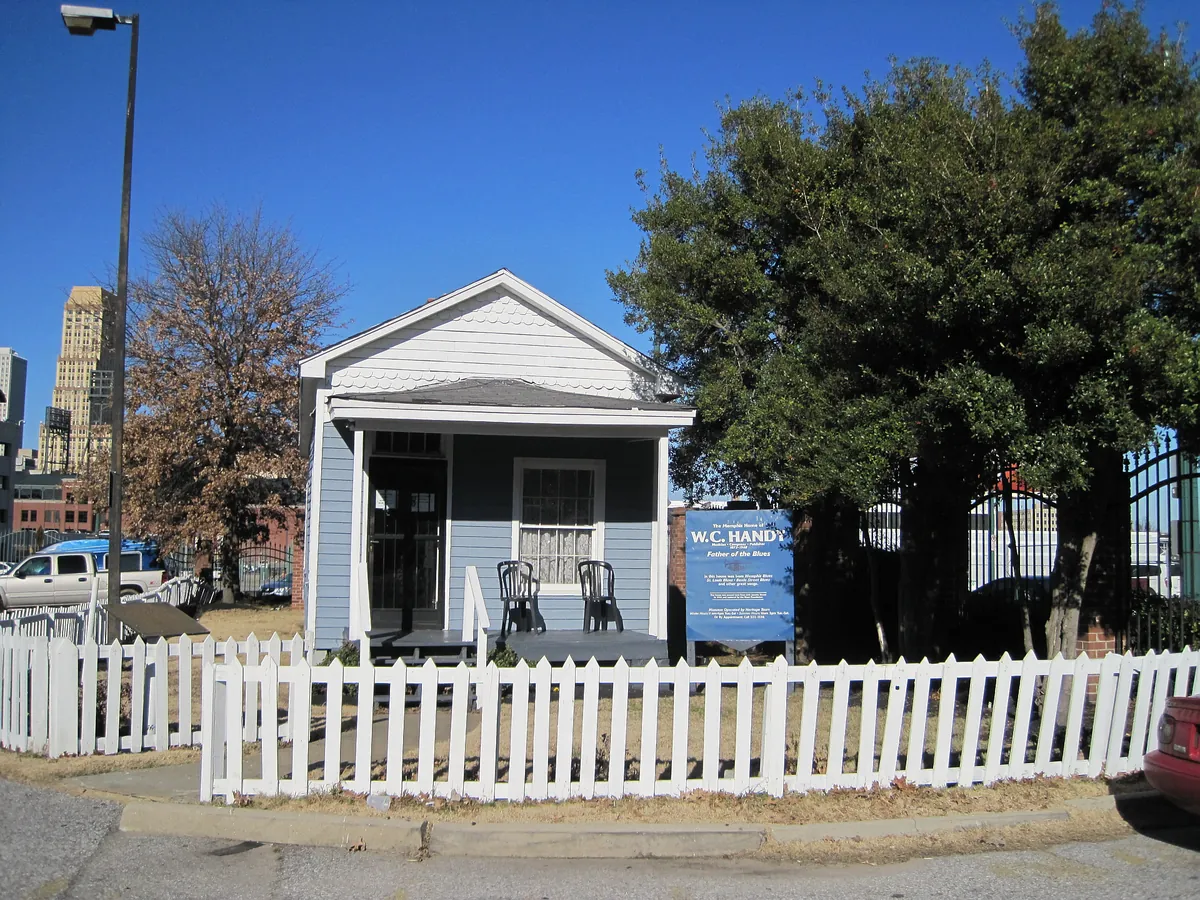
W. C. Handy was living in a two-room shotgun house on Jeanette Place in South Memphis when he wrote "The Memphis Blues," "St. Louis Blues," and "Beale Street Blues" — the three compositions that opened a national market for the music and earned him a title that stuck: Father of the Blues. He had moved to Memphis from Alabama in 1909, after years of touring the Delta, and the house he rented was as plain as they come: narrow floor plan, one room opening into the next, no hallway. Memphis by then was already the world's largest spot cotton market and hardwood lumber center, a river city built on commodities and the labor that moved them. The blues had been traveling north out of the Delta for years, but Handy gave it a commercial shape — notation, arrangement, publishing — that made it legible to an industry that had never taken it seriously. He did that work from Jeanette Place. In the mid-1980s the house was lifted off its original site and moved to 352 Beale Street, where it was restored and opened as a small interpretive museum. Heritage Tours runs it now. Inside: photographs, a few instruments, the desk he wrote on. It is the simplest building on Beale and the most consequential. You go because the songs that changed American music were written in a house this small, and because the house is still here.
 9Historic Site·laid out 1841; National Historic Landmark 1966·NHLBeale Street — The Home of the Blues
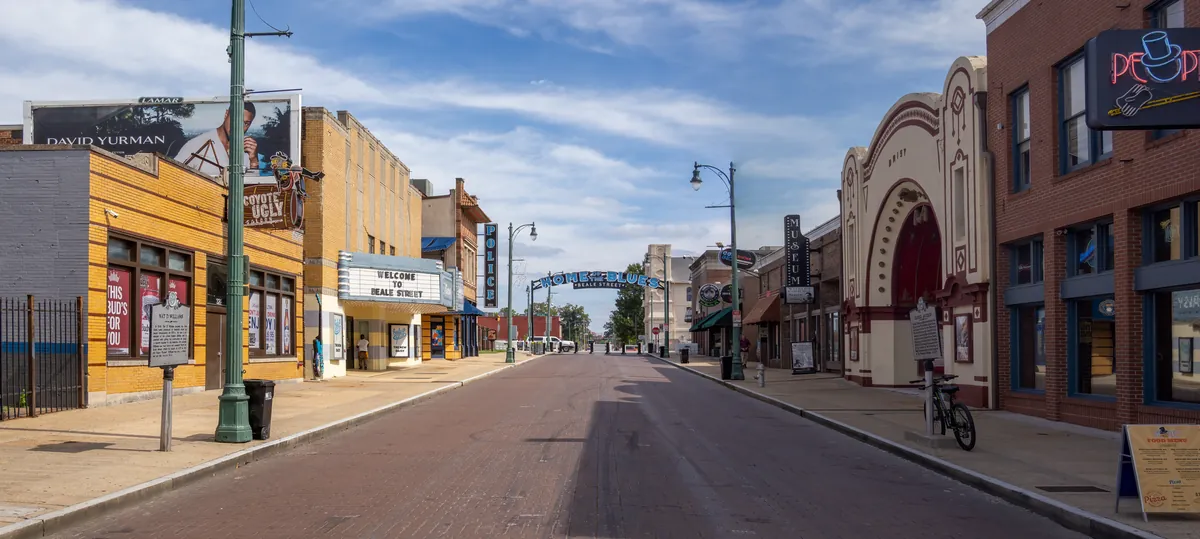
Robertson Topp laid out this street in 1841 and named it for Edward Fitzgerald Beale, a Mexican-American War officer. Its western end drew traders working the Mississippi River docks; the east end became an affluent suburb. Black traveling musicians began performing here in the 1860s. The Young Men's Brass Band, formed in 1867, were the first to call it home. The yellow fever epidemics of the 1870s killed thousands and forced Memphis to forfeit its city charter in 1879. During that collapse, Robert Church bought land around Beale and became the first Black millionaire from the South. In 1899 he paid for Church Park at Fourth and Beale — a recreational and cultural center with an auditorium that seated two thousand. Blues musicians gathered there. Woodrow Wilson, Booker T. Washington, and Franklin D. Roosevelt spoke from its stage. In 1903 the mayor needed a music teacher for his Knights of Pythias Band and called Booker T. Washington at Tuskegee, who recommended a trumpet player in Clarksdale named W. C. Handy. Handy moved to Memphis and worked Beale roughly 1905 to 1917. In 1909 he wrote a campaign song for political boss E. H. Crump, later renamed "The Memphis Blues." In 1916 he wrote "Beale Street Blues," which influenced the city to change the name from Beale Avenue to Beale Street. From the 1920s to the 1940s, Louis Armstrong, Muddy Waters, Albert King, Memphis Minnie, B. B. King, Rufus Thomas, and Rosco Gordon played here and developed the style called Memphis Blues. B. B. King was billed as "the Beale Street Blues Boy." By the 1960s the street had emptied. Urban renewal razed surrounding blocks. On May 23, 1966, the stretch from Main to Fourth was designated a National Historic Landmark. On December 15, 1977, Congress declared it the Home of the Blues. The title was Congress formalizing what musicians had already made true.
 10Music·opened January 3, 1950; converted back to studio 1987·NHLSun Studio — Memphis Recording Service
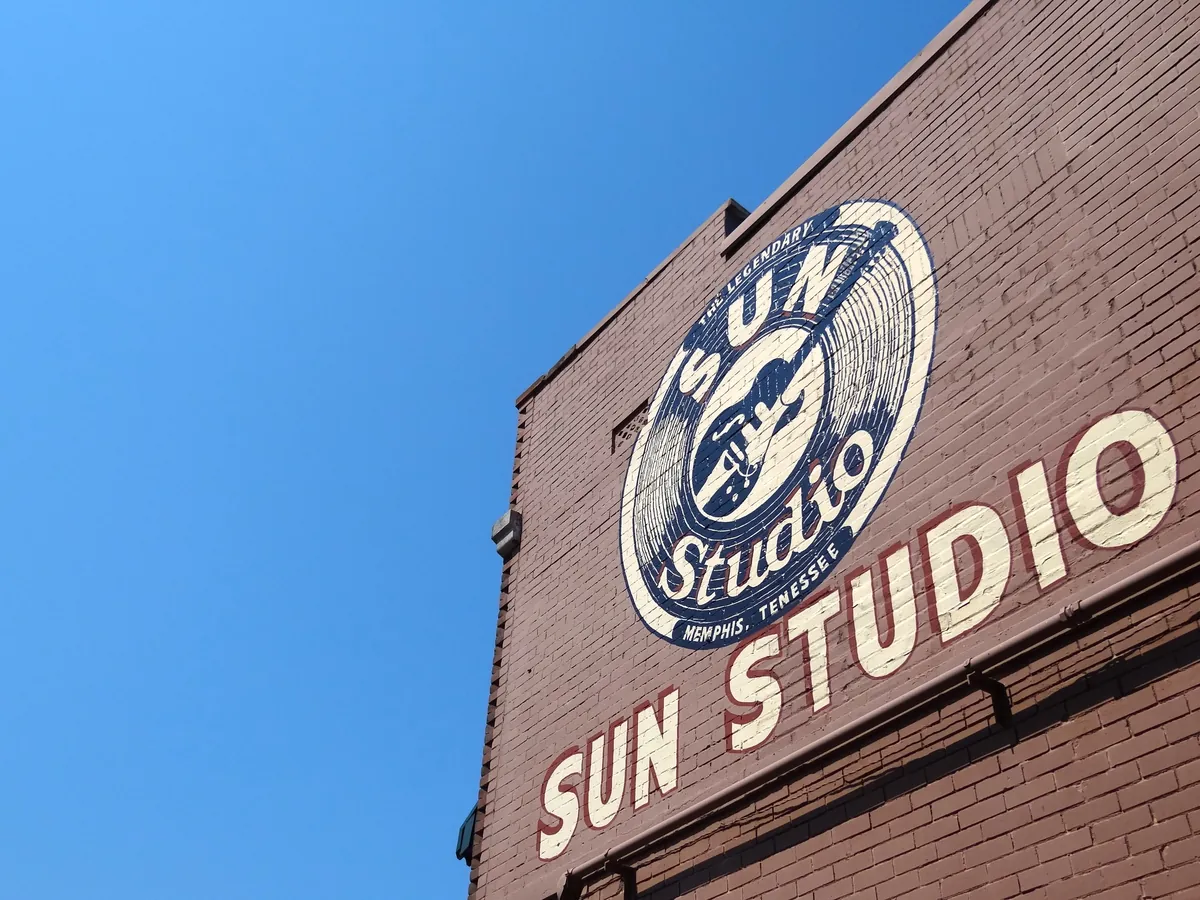
Sam Phillips opened Memphis Recording Service at 706 Union Avenue on January 3, 1950. He was a WREC radio engineer; his assistant was Marion Keisker. To make money at first, Phillips recorded conventions, weddings, choirs, funerals — anybody who walked in and could pay. His slogan was "We Record Anything, Anywhere, Anytime." In 1951, Phillips recorded Jackie Brenston and his Delta Cats — Ike Turner on keyboards — doing "Rocket 88." The song is often called the first rock and roll single. The amplifier was broken; the tour guides say it was stuffed with newspaper, which gave the track its fuzzy sound. Phillips launched Sun Records in early 1952. He recorded B.B. King, Howlin' Wolf, Rufus Thomas, Junior Parker, Little Milton, James Cotton, Rosco Gordon — the first Delta blues records cut in Memphis. In August 1953, an eighteen-year-old named Elvis Presley walked in to cut a two-sided acetate: "My Happiness" and "That's When Your Heartaches Begin." He told Keisker he sang all kinds; when she asked who he sounded like, he said, "I don't sound like nobody." She wrote on the ledger: "Good ballad singer. Hold." Phillips had said, over and over, "If I could find a white man who had the Negro sound and the Negro feel, I could make a billion dollars." In June 1954, he called Presley back and asked two local musicians — guitarist Scotty Moore and bassist Bill Black — to work something up for a session. On the evening of July 5, 1954, the session was going nowhere. Late at night, Presley picked up his guitar and started singing Arthur Crudup's "That's All Right," fooling around. Moore and Black joined in. Phillips stuck his head out of the control booth and said, "What are you doing?" They said, "We don't know." He said, "Well, back up, try to find a place to start, and do it again." Phillips rolled tape. Three days later, Memphis DJ Dewey Phillips played "That's All Right" on his show; listeners called in to find out who the singer was. The phone kept ringing. Dewey played it for two hours straight. By late 1955, Phillips knew Sun wasn't big enough to break Presley nationally. He sold Presley's contract to RCA Victor for thirty-five thousand dollars — an unheard-of sum for a recording artist who hadn't yet proven himself on the national stage. Phillips used the money to advance Johnny Cash, Carl Perkins, Jerry Lee Lewis, Roy Orbison. On December 4, 1956, Perkins came in to record; Jerry Lee Lewis was on piano. Presley dropped in to pay a casual visit, accompanied by his girlfriend, Marilyn Evans. After listening to playback in the control room, Presley went into the studio. A jam session started. At some point Johnny Cash arrived. Engineer Jack Clement thought, "I'd be remiss not to record this," and ran tape. Phillips called the Memphis Press-Scimitar; a reporter and photographer came over. The next day, the paper ran a story under the headline "Million Dollar Quartet," with a photograph of Presley at the piano, Lewis, Perkins, and Cash around him. The photo proves Cash was there; the audio tape doesn't confirm he sang. By the mid-1960s, Phillips had lost interest in recording and opened radio stations instead. Sun released its last record in 1968. In 1969, Shelby Singleton bought the label; the building was sold to a plumbing company, then an auto parts store. The studio was used for inventory storage. In 1987, Gary Hardy reopened 706 Union Avenue as Sun Studio — a working studio and tourist attraction. U2, Def Leppard, John Mellencamp, Chris Isaak recorded there. It still records. Memphis was the world's largest spot cotton market and the world's largest hardwood lumber market; it was also where the Delta blues came north and met a white kid who didn't sound like nobody. You can still stand in the room where that happened.
 11Museum·Satellite Records 1957; Stax 1961–1975; museum opened 2003Stax Museum of American Soul Music
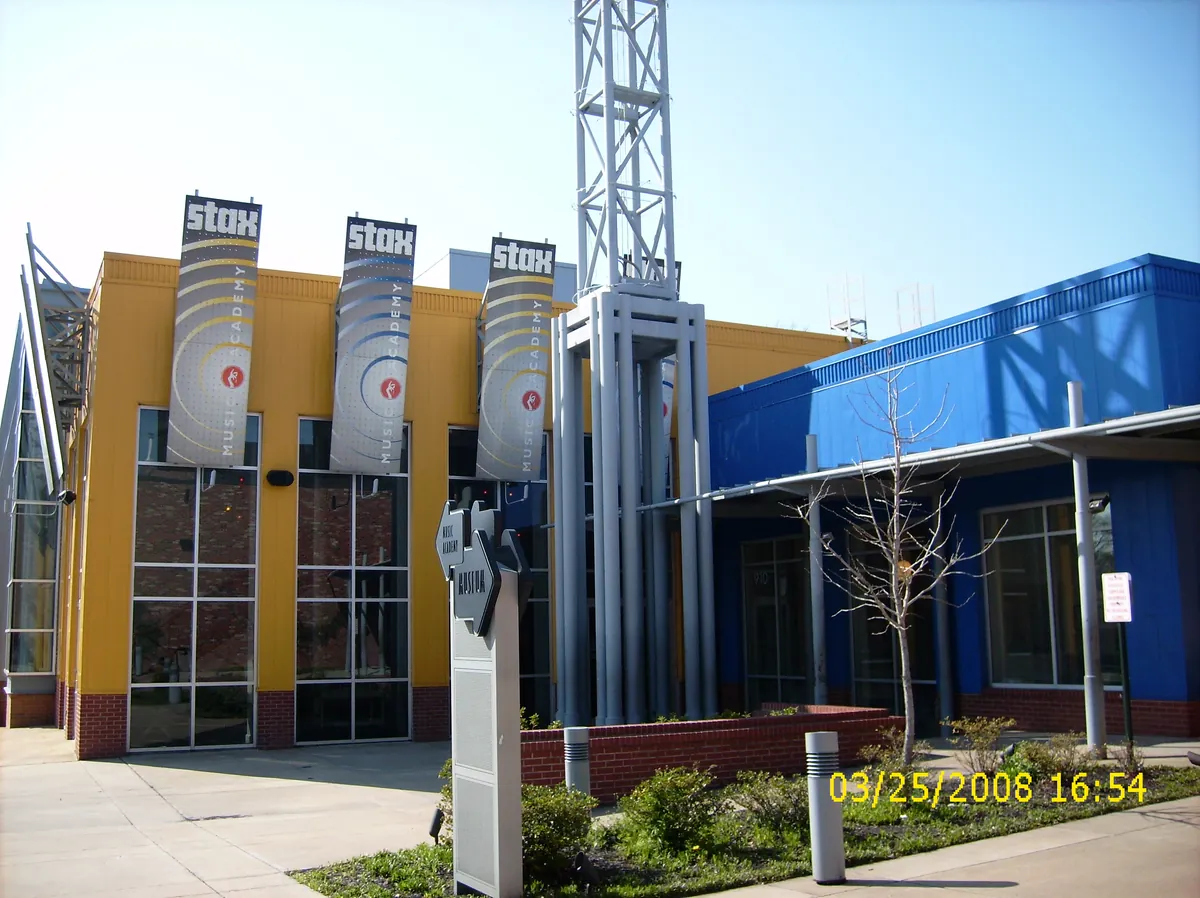
Jim Stewart and his sister Estelle Axton started Satellite Records in Memphis in 1957. They renamed it Stax — Stewart plus Axton — in September 1961. A year earlier, in 1960, they'd moved into the former Capitol Theater at 926 East McLemore Avenue. They built a recording room over the old theater's sloped floor. The slope stayed. That tilt gave Stax records the deep, slightly off-center sound that defined Southern soul. What came out of that room: Otis Redding, Booker T. & the M.G.'s, Sam & Dave, the Staple Singers, Isaac Hayes, Wilson Pickett, Albert King, Rufus Thomas, Carla Thomas. On December 10, 1967, Redding's plane went down, killing him and four Bar-Kays. Stax was forced into bankruptcy and closed in 1976. The Union Planters Bank sold the building to Southside Church of God in Christ for ten dollars. The church never used it. The building was demolished in 1989. By 1998, the neighborhood had collapsed. Former Stax artists, Memphis business people, and anonymous donors launched a nonprofit effort to revive it. Construction on the Stax Museum and the adjacent Stax Music Academy began in April 2001. The museum opened in 2003 on the original site — same address, same slope rebuilt in Studio A. It's a 17,000-square-foot replica holding more than 3,000 items: Isaac Hayes' gold-trimmed peacock-blue 1972 Cadillac Eldorado, Jim Stewart's original violin, Skip Pitts' wah-wah pedal from "Theme From Shaft," a circa-1906 Mississippi Delta church reconstructed inside to show gospel's root in soul, the Soul Train dance floor, Hayes' 1972 Academy Award for Best Musical Score. The Stax Museum is one of a handful of museums in the world dedicated to soul music. It celebrates Stax artists and covers Motown, Hi Records, Atlantic, Muscle Shoals — footage of Aretha Franklin, Al Green, James Brown, Marvin Gaye. TIME called it the most authentic American experience in Tennessee. It won the 2015 Tennessee Governor's Arts Award. In February 2022, it was added to the United States Civil Rights Trail. The Soulsville Foundation runs the museum, the Stax Music Academy next door, and The Soulsville Charter School. Since 2008, every senior enrolled in the Music Academy has been accepted to college. Since 2021, every senior has received a music scholarship. The Charter School has sent every senior to college or post-secondary education since its first graduating class in 2012. Justin Timberlake installed a permanent songwriting lab there in 2019. Memphis built its economy on cotton and hardwood in the early 20th century — the world's largest spot cotton market, the world's largest hardwood lumber market. The wealth was built on plantations worked by enslaved people. Yellow fever killed more than 5,000 residents in 1878 and forced the city into bankruptcy. By the 1960s, Memphis was a center of civil rights struggle. Dr. Martin Luther King Jr. came to support striking sanitation workers in 1968. He was assassinated at the Lorraine Motel on April 4. The museum stands in Soulsville, a historically Black neighborhood where the sound that came out wasn't protest music — it was the sound of what people built when they had a sloped floor, a few microphones, and something to say. Go to hear what survived.